33-99No. Mufu E Rd. Gulou District, Nanjing, China [email protected] | [email protected]
33-99No. Mufu E Rd. Gulou District, Nanjing, China [email protected] | [email protected]

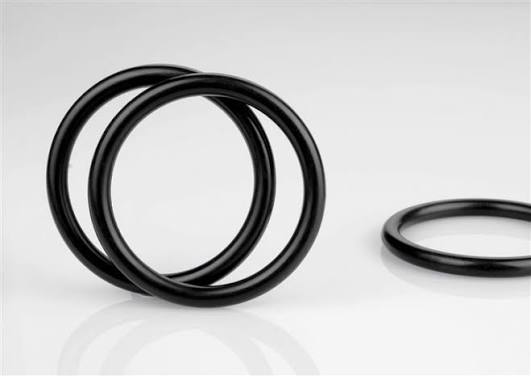
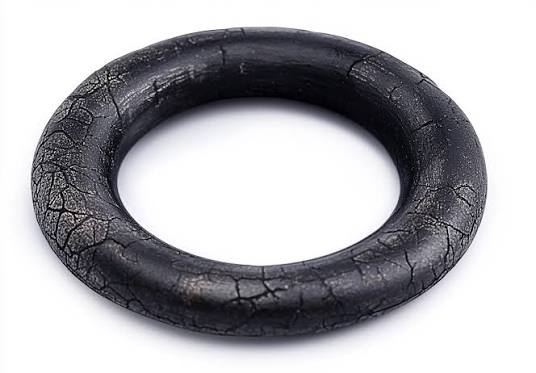
High temperature → oxidation/post-crosslinking/chain-scission/additive volatilization/media diffusion effect → hardening, modulus change, elongation drop, stress relaxation, compression permanent deformation, tortoise-cracking → long-term sealing force declines → leak or failure.
Rubber under high temperature and oxygen action undergoes thermal oxidative aging. Different compound systems have different main reactions: some systems dominated by further crosslinking, manifest as hardness and modulus rise; some systems dominated by chain scission, manifest as softening, elongation and rebound elasticity dropping; many actual reactions occur simultaneously, only which is primary occurs first. High-temperature air aging testing's basic purpose is to evaluate the change of rubber physical properties after high-temperature and oxygen exposure; ASTM D573 also clearly states the method applies to evaluating relative heat-resistant qualities of rubber compound, but laboratory results do not necessarily fully correspond to actual service condition performance, because service conditions differ greatly.
For sealing, increased crosslinking is not necessarily a good thing. It may make the material harder, more resistant to deformation in the short term, but long-term will lower flexibility, causing the O-ring to be unable to continue compensating for groove clearance, flange roughness, thermal expansion difference and pressure fluctuation. Chain scission directly weakens the elastic network, causing rebound and crack resistance ability to decline; the two ultimately both diminish sealing reliability.
A common appearance result of high-temperature aging is hardness rising, surface variation, elongation dropping. Hardened O-rings even if their outer shape remains in the groove, may also lack micro-fitting ability. Sealing not only relies on "having compression amount," but also needs materials to continuously exert appropriate contact stress, and follow micro-displacement.
Typical consequences include:
Aging Phenomenon |
Effect on Life |
Hardness rising |
Initial contact may be higher, but long-term compensation ability declines |
Elongation dropping |
Assembly stretching, thermal cycling or pressure pulse more easily tears |
Surface oxidation layer |
Cracks revealed after leak channel forms |
Tortoise-cracking |
After cracks reveal, leak channel restores sealing force |
Rebound dropping |
Groove reservation or after pressure fluctuation cyclic cannot restore sealing force |
ISO 188:2023's heat aging/thermal resistance testing idea also concentrates test samples exposed to specified high-temperature air conditions, and considers actual aged post-measurement performance comparison will be affected by real service conditions; this shows aging problems are not just single temperature, results will also be affected by oxygen supply and test setup conditions.
Compression permanent deformation essentially reflects the extent rubber cannot restore original thickness after long-term compression. ASTM D395 is used for evaluating rubber compound's ability to maintain elastic properties after long-term compression stress, and points out testing mainly for evaluating static compression, and also commonly conducted under high temperature. ISO 815-1:2019 also indicates compression permanent deformation testing usually undergoes physical or chemical change, chemical change is more important, and can cause permanent deformation. This standard is more updated and evaluates aging under high compression permanent deformation testing, e.g. 1000 h, common for considering aged rubber material performance ceiling.
But there is a key point here: compression permanent deformation is not equal to sealing force itself. One O-ring even if compression permanent deformation value is very high, in certain static working conditions may still not leak briefly; conversely, compression permanent deformation numeric may not be extreme, but if material has already hardened, become brittle or seal is severely relaxed, may also fail. So life verification cannot only look at CS.
O-rings in the groove are under long-term compression, truly determining sealing force margin is the accompanying-time decay of contact stress. Compression stress relaxation CSR test aim is fixed compression deformation and specified temperature down, react force decays over time. ISO 3384-1:2024 is exactly for compression stress relaxation testing at vulcanized rubber and thermoplastic rubber under fixed compression deformation, specified temperature decline testing; this standard also indicates it can be used for continuous or non-continuous mode testing, and the ring-shaped sample is especially applicable to liquid environment stress relaxation testing.
Industry, if target is 'material aging status', suggest CSR/sealing force retention as primary indicator, not exclusively compression permanent deformation. European sealing associations related research also mentions, only using tensile properties aging predict elastomer life may not be reliable, therefore treating heat aging's impact on compression stress relaxation CSR and compression permanent deformation CS's influence work as closer to life prediction data.
O-rings when initially installed rely on compression rate to produce contact stress. Under high temperature, material molecular chain movement accelerates, viscoelastic relaxation intensifies; simultaneously oxidation, crosslinking or chain-scission changes network structure. Result:
Initial compression force F₀ → declines over time to F(t) → contact stress lower than media pressure, roughness compensation demand or pressure fluctuation demand → leak.
This is also why heat-aging life verification should focus on "long-term sealing force," not just aged hardness or thickness recovery.
O-rings need a certain hardness to resist extrusion, high pressure, but also need sufficient elasticity and elongation rate to compensate for gaps. High-temperature aging, hardness and modulus can rise, surface variation, elongation drops. Result is sealing surface can no longer continue fitting sealing surface, installation defects, parting line, flash, scratches will amplify into crack sources.
This kind of failure is usually not sudden, but experiences:
Performance gradually changes → sealing force margin shrinks → thermal cycling or pressure fluctuation triggers micro-leak → crack extends → obvious leakage.
Real working conditions, O-rings are not usually alone exposed in air, but contact oil, water, steam, fuel, refrigerant, acid-alkali, cleaning fluid or other media. Temperature rising will simultaneously accelerate two processes.
One is media diffuses into rubber faster; two is media reacts with polymer, crosslinking bond or filler faster. Result may be dissolution, softening, hardening, shrinkage, additive extraction, strength decline or wire generation. For life verification, air heat-aging can only answer "material heat-resistant capability," if actual media couples in, verification must be done.
Thick cross-section O-rings age at high-temperature air, oxygen enters rubber interior from outer surface, if oxygen diffusion speed is slower than internal oxygen consumption speed, then a diffusion-limited oxidation DLO will occur: outer aging severer, inner is relatively lighter. Compressed configuration together with metal flange at the same time, oxygen can also enter face area smaller, DLO effect is more likely present. Related HNBR and EPDM O-ring research indicates, 10 mm cross-section O-ring aging non-uniformity; this uneven aging affects material and compression permanent deformation and compression stress relaxation and other overall performance data.
This is very important for life prediction: the higher the high-temperature accelerated test temperature, the more possibly it produces an oxygen gradient not so severe under real low-temperature service, leading to inaccurate extrapolation error.
Thermal aging commonly uses the Arrhenius model to describe reaction speed, for a fixed failure criteria, e.g. "sealing force drops to 50%" or "compression permanent deformation reaches a certain limit value," can write as:
tf = C·exp(Ea/RT)
Where:
Symbol |
Meaning |
Tf |
Time reaching failure criteria |
Ea |
Apparent activation energy |
R |
Gas constant |
T |
Absolute temperature, K |
C |
Constant related to material and criteria |
The method is: obtain the same failure criteria time at multiple high-temperature points, then plot the relationship, using slope to extrapolate to the usage temperature estimate standard, containing Arrhenius and WLF two methods, and simultaneously emphasizing different performance's degradation speed in thermal aging differs, therefore different rubbers between comparisons must be based on the same performance indicator.
Example description: if assuming a certain material's failure mode reaches the same failure criteria time, then 150°C relative to 100°C's acceleration multiple is approximately 21 times. This means: 150°C aging 1000 h corresponds to failure mode approximately 21000 h of 100°C aging. But this is only a mathematical example, the premise is failure mechanism has not changed.
Arrhenius extrapolation's most easily made mistake is not the formula itself, but the failure criteria selection. Common criteria include:
Criteria |
Advantage |
Risk |
Hardness change ΔHA |
Test simple |
Not necessarily directly related to leaking |
Tensile strength or elongation retention rate |
Reflects material aging |
Not equal to static sealing function |
Compression permanent deformation CS |
Correlated with rebound |
Not equal to long-term sealing force, test cycle long, fixture demand high |
Compression stress relaxation CSR |
Closer to sealing force |
Test complex, repeatability requires attention |
Leak rate |
Most closely tied to function |
Engineering complex, repeatability difficult |
In engineering, leak rate or long-term sealing force should preferentially be selected as the main criteria, CS, hardness, elongation retention rate as auxiliary judgment. Some related ESA research also mentions Arrhenius method needs to first fix operational functional selection, e.g. one performance change limit; common practice can use 50% change as judgment, but can also base on specific application requirements; this research also points out, some author has some O-ring CS endpoint set at approximately 80%–90% region, but this kind of criteria must be stated with specific applications.
Same material, same temperature interval, different performance indicators may give different activation energies. ESA's research on a 75 Shore A FKM, at 50% endpoint criteria, CS's obtained apparent activation energy is approximately 117 kJ/mol, while CSR's obtained apparent activation energy is approximately 38 kJ/mol; researchers believe the difference is related to aging conditions, sample dimensions and CSR fixture being closer to actual seal, limiting oxygen contact.
This shows: using compression permanent deformation data to extrapolate "sealing life," risk is very high. Conversely, using CSR life to substitute for hardening or crack results is also not rigorous, every life model must state corresponding failure mode and criteria.
The key hypothesis of accelerated aging extrapolation is: raising temperature only accelerates the same reaction, and doesn't change failure mechanism. But actual rubber aging, high temperature may introduce new reactions, oxidation gradient, additive volatilization or media coupling reactions differences; Gillen, Bernstein and Celina's summary on elastomer life prediction repeatedly emphasizes, life estimation usually relies on high-temperature accelerated to lower service temperature extrapolation, but need to verify test time-temperature superposition, confirm degradation mechanism has no change; simultaneously DLO can interfere with accelerated aging results, many research also shows Arrhenius extrapolation possibly transitions toward lower activation energy in the low-temperature region. Arrhenius is a life prediction tool, not a proof of life.
Recommend defining the target as:
Under specified temperature, media, pressure, compression amount, groove dimension and thermal cycling conditions, evaluate O-ring's long-term ability to maintain sealing force and low leak rate, and establish thermal aging life prediction model.
Do not write the target as "testing compression permanent deformation." Compression permanent deformation is only one of its indicators.
Recommend at least including three sample types:
Sample Type |
Purpose |
Standard sample piece/standard button |
Get hardness, tensile, compression permanent deformation and other basic data |
Actual O-ring |
Observe dimension, cross-section, parting line, surface crack, actual rebound |
Assembled state O-ring |
Test CSR, leak rate, media coupled aging, closer to real working condition |
If only testing standard sample, easily overlooks O-ring cross-section dimension, groove restraint, oxygen restriction, sealing surface pressure and media diffusion path's influence.
Recommended settings:
Condition |
Recommendation |
Temperature |
At least 3 accelerated temperatures + 1 close-to-usage-temperature long-term verification point |
Time |
24 h, 72 h, 168 h, 336 h, 672 h, 1000 h, 2000 h or longer |
Compression rate |
Use actual design compression rate; without clear operating condition can reference 25% as common starting point |
Environment |
Air, actual media, when necessary add sealed/lacking oxygen state |
State |
Free state, compressed state, actual groove assembly state |
Thermal cycling |
If actual condition has starting/stopping, should add high-low temperature cycling, not just constant temperature |
ISO 815-1:2019's compression permanent deformation method usually uses 25% fixed strain, but high-hardness rubber will use lower compression response; actual engineering should still preferentially use real groove compression rate.
Recommended indicators split into four levels:
Level |
Indicator |
Material Properties |
Hardness, tensile strength, breaking elongation rate, modulus, quality change, volume change |
Sealing Related Properties |
Compression permanent deformation CS, compression stress relaxation CSR, rebound rate |
Failure Observation |
Surface crack, cross-section hardness gradient, appearance micro-crack, color/surface state |
Function Verification |
Leak rate, pressure holding, pressure cycling leakage, thermal cycling leakage |
Among these, CSR + leak rate should serve as the primary life axis; CS + hardness + elongation rate as auxiliary explanatory data.
Recommended process is as follows:
High-temperature aging is not simply making the O-ring "compressed flat," but through changing rubber network structure, oxidation state, hardness, rebound elasticity and sealing force maintenance ability, gradually depleting sealing margin; life verification should center on long-term sealing force and leak rate, compression permanent deformation as auxiliary indicator.

Welcome to HOVOO, a Chinese seal factory. Production of PU, Rubber and PTFE seals. The seals include O-ring, piston seal, rod seal, Gray ring and gas seal.


 EN
EN
 AR
AR CS
CS DA
DA NL
NL FI
FI FR
FR DE
DE EL
EL IT
IT JA
JA KO
KO NO
NO PL
PL PT
PT RO
RO RU
RU ES
ES SV
SV TL
TL IW
IW ID
ID LV
LV SR
SR SK
SK VI
VI HU
HU MT
MT TH
TH TR
TR FA
FA MS
MS GA
GA CY
CY IS
IS KA
KA UR
UR LA
LA TA
TA MY
MY
