33-99No. Mufu E Rd. Gulou District, Nanjing, China [email protected] | [email protected]
33-99No. Mufu E Rd. Gulou District, Nanjing, China [email protected] | [email protected]

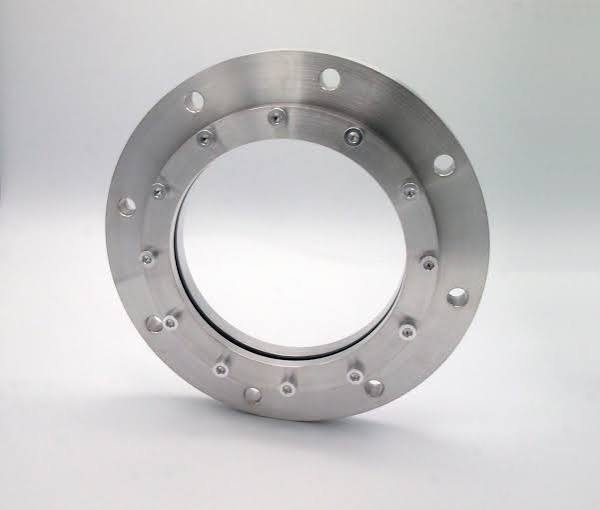
Vacuum sealing O-rings cannot be selected only by "material + dimension + hardness." Under vacuum operating conditions, sealing failure is often not simple leakage, but a gas load formed jointly by true leakage, rubber permeation, material outgassing, surface contamination, lubricant volatilization, and groove structure emptying. For high vacuum, ultra-high vacuum, semiconductor, plating, spectroscopy, optical cavity and other customers, the response strategy should be upgraded from "can it hold pressure" to "can total gas load and contamination risk be controlled."
Ordinary hydraulic and pneumatic seals mainly care about pressure difference, wear resistance, media compatibility; vacuum seals should focus more on:
First, true leakage. Flange, groove, scratches, machining marks, trapped particles will form a micro-channel toward the outside of the seal ring. Gas leaks through this small gap more easily than liquid, so vacuum seals should pay more attention to sealing face quality. Parker's vacuum sealing material clearly indicates gas or micro-gap surface roughness at the vacuum sealing groove is especially sensitive, and recommends the sealing contact surface use 16 RMS grade, while avoiding perpendicular processing lines crossing the sealing line.
Second, permeation. Even without mechanical defects, gas can still form a large amount of gas load when diffused through elastic structure into the low vacuum side of the vacuum. Kurt J. Lesker's technical instructions state that elastomer permeability allows gas to diffuse and expand at low pressure, permeation speed varies with temperature, pressure, gas type and elastomer type; Pfeiffer also indicates elastomer sealing rings inherently have somewhat higher permeation, and even when the system has no obvious leakage, elastic seals themselves may still affect the vacuum limit pressure.
Third, outgassing and volatile matter. Low-molecular substances, plasticizer, uncured residual and adsorbed moisture in O-rings will be desorbed after extraction into high vacuum. NASA's material outgassing data warehouse uses ASTM E595 method to evaluate the total material loss in real vacuum environment TML and re-condensable volatile matter CVCM, with common guideline values being TML ≤ 1%, CVCM ≤ 0.1%, but this response is a general industrial cleaning benchmark, not something all industrial vacuum scenarios have strict compliance standards for.
Fourth, contamination. Semiconductor, plating, spectroscopy and optical mirrors fear most not "leaking a little gas," but volatile matter deposited on wafers, targets, optical lens surfaces, contact points and analyzing cavities. Parker indicates that under vacuum, some elastomer compound oil types or their component may migrate and form thin films on nearby surfaces, causing sensitive surface quality loss.
Before selection, must first inquire three indicators from the customer:
Low vacuum, rough vacuum equipment can tolerate relatively larger gas load; high vacuum equipment beyond high vacuum systems will be sensitive to this permeation limit. Pfeiffer's example shows: at DN 500 ISO-K flange, FKM sealing ring under vacuum air and 60% humidity conditions, permeation gas load can become the pressure-limiting bottleneck, and points out FKM elastic seal permeation gas load can reach a value at the order of 4×10⁻⁷ Pa·m³/s.
Vacuum leak detection commonly uses mbar·L/s or SI unit Pa·m³/s. Pfeiffer's leakage rate instructions also note, helium detection mainstream unit is mbar·L/s or Pa·m³/s to express leak rate. Leybold's leak detection data indicates, different vacuum grades' tolerance for leakage differs greatly, low vacuum can accept complete non-tightness; its example: <10⁻⁷ mbar·L/s can be called "gas tight," <10⁻¹⁰ mbar·L/s is closer to the expression "absolute tight."
Pressure rise testing can estimate total gas load through unit time pressure rise in the vessel; if pressure rise curve tends toward divergence, more likely to be true leakage; if approaching straight line but is more gently converging, more likely to be gas load. Leybold's comparison of pressure rise testing and permeation/outgassing curve differences also explicitly stated, and pointed out that gas load below 10⁻⁶ mbar·L/s usually needs helium leak detection instruments for accurate detection.
FKM fluorine rubber is one of the most common vacuum O-ring materials, applicable to most high-vacuum equipment, instruments, coating equipment, vacuum pump interfaces, observation windows, KF/ISO flange static seals, etc. Kurt J. Lesker points out FKM is one of the most widely used vacuum sealing elastomers, with good high-temperature resistance, ozone resistance, oxygen resistance and multiple oil/solvent compatibility, and has relatively low gas permeability, but its low-temperature performance is generally weaker.
When selecting FKM, need to emphasize "vacuum-grade FKM" or "low outgassing FKM," not ordinary industrial FKM. Ordinary FKM, if post-vulcanization is insufficient, surface has mold release agent, or contains volatile matter or packaging contamination, may still cause higher outgassing in vacuum systems.
Applicable scenarios: high-vacuum cavity, coating equipment, laboratory instruments, vacuum pump interfaces, ordinary semiconductor auxiliary cavity.
Risk points: strong ion, strong corrosion process, high-temperature baking, high-cleanliness optical spectrum equipment, need further verification or upgrade.
FFKM perfluoroelastomer is suitable for high temperature, strong corrosion, plasma, semiconductor etching/deposition and other harsh processes. Kurt J. Lesker's explanation of Kalrez 4079 mentions, it is used in many dry and wet method semiconductor process environments, has excellent chemical resistance, thermal stability, and manifests relatively lower loss in reactive plasma.
Applicable scenarios: semiconductor etching, CVD/PVD, ALD, corrosive process gas, frequent high-temperature baking cycle.
Risk points: high price; different FFKM formulation differences are large, must clearly specify equal metal ion, low metal, low particulate, low outgassing and other grade requirements.
EPDM is suitable for water, steam, ozone, some radiological environments. Parker's vacuum sealing material recommends, in hot water, steam or radiation-present time consider EPDM material. Kurt J. Lesker also points out EPDM has good resistance to water, steam, ozone, weather aging, ability with mineral oil, fuel and hydrocarbon fluids, but not oil-resistant.
Applicable scenarios: water vapor relatively many, ozone, steam cleaning, partial radiological environment.
Risk points: contacting vacuum pump oil, hydrocarbon solvents, oil mist when not applicable.
NBR nitrile rubber is common in low-cost vacuum sealing, applicable to ordinary vacuum, low vacuum, general equipment door seals, non-cleanliness environments. But it is not the preferred material for high vacuum/ultra-high vacuum. Kurt J. Lesker points out that NBR is one of the relatively low-cost standard materials in vacuum service, but its water vapor permeability rate is about 20 times that of FKM, and should not be used in oxygen or oxygen-plasma processes.
Applicable scenarios: rough vacuum, low vacuum, general machinery equipment, cost-sensitive equipment.
Risk points: water vapor, ozone, oxygen ions, high cleanliness, high vacuum limit pressure requirements.
Silicone rubber resistant to low temperature, soft, suitable for some low-temperature sealing or non-contamination-sensitive applications, but in high vacuum systems need caution. Kurt J. Lesker points out silicone rubber water vapor permeability rate is about 200 times that of FKM, and can develop elastic decline, hardening, adhesion issues after long-term high-temperature exposure.
Applicable scenarios: low temperature, high softness requirements, vacuum grade not high end, contamination risk acceptable.
Risk points: water vapor permeation, volatile matter, semiconductor/optical contamination, high-temperature long-term compression.
Butyl rubber's gas permeability rate is low, is a valuable material in traditional vacuum sealing. Parker material explains that butyl rubber's characteristic long-term applicable in vacuum sealing, mainly because of its excellent gas permeation resistance, while having low outgassing, low mass loss and good moisture resistance. But butyl's high temperature, chemical media, radiation and process compatibility is not as broad as FKM/FFKM, needs corresponding application verification.
Applicable scenarios: static vacuum, low gas permeation priority, temperature and chemical environment moderate.
Risk points: high temperature, acid, strong oxidizer, ozone and special processes.
If the customer requires ultra-high vacuum, long-term high-temperature baking, extreme cleanliness, strong radiation, extreme permeation or limit pressure very low, should consider metal seals, such as CF copper gaskets, indium wire, elastomer, metal C-ring, metal O-ring, etc. Pfeiffer explicitly states, under high vacuum, long-life, high radiation load or requiring extreme permeation rate applications, should use metal sealing elements instead of elastomer.
Vacuum O-ring compression amount directly affects leakage rate. Parker's vacuum O-ring test instructions show, in end-face sealing, raising compression amount can obviously reduce leakage; its mechanism is increasing gas passage path length, reducing gas entry face area, and letting the rubber better fill metal surface micro-defects.
But compression ratio is not the bigger the better. Too great compression can cause O-ring over-compression, groove filling rate too high, thermal expansion no space, compression permanent deformation faster rising, later reverse leakage; Parker also reminds, extreme compression can cause pressure to over-compress; if using shallow groove to raise compression ratio, groove must have sufficient space to accommodate O-ring volume.
Practically this can be understood as:
Working Condition |
Compression Ratio Recommendation Idea |
Ordinary static vacuum sealing surface |
Most designs fall within 20%–30% range |
High vacuum sealing surface |
Can lean toward higher compression, but must check groove fill rate and heat expansion |
Radial vacuum sealing |
More difficult to control leakage than end-face sealing, need to emphasize lubrication, surface and coaxiality |
Dynamic vacuum seal |
Not recommended to simply use static grooves, must use dual-channel pumping or dedicated sealing structure when necessary |
In Parker's vacuum end-face groove design table, different cross-section O-ring compression rates roughly cover the 19%–32% range, specific dimensions should be calculated according to cross-section, groove depth, groove width, and inner/outer vacuum orientation and assembly form.
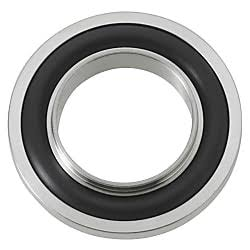
What vacuum sealing fears most is scratches and tool marks across the sealing line. Even if O-ring material is correct, if the flange surface has cross-cutting groove marks, scratches, particle traces, can also form "invisible leakage."
Parker recommends the vacuum sealing flange surface use circumferential lathing texture, and avoid processing lines perpendicular to the O-ring sealing line. Kurt J. Lesker also points out, damage to metal or glass surface crossing the O-ring contact print, from tool scratches to the outer side leading vacuum side can cause leakage.
Practical recommendations:
Sealing contact surface should clearly mark roughness, cannot only write "machine finish." High-vacuum end-face seal can reference 16 RMS grade; if drawing uses Ra, should confirm with customer conversion and acceptance method, cannot equate RMS with Ra mechanically. Groove bottom, groove side, flange combination surface should all check for burrs, cutting marks, corrosion pits and coarse particle indentation.
Vacuum static seal should preferably first use end-face seal (face seal). End-face seal is easier to form stable compression, is also easier for helium detection and cleaning. Parker recommends static vacuum seal preferentially use end-face groove or face seal, and matching appropriate vacuum grade and higher compression amount; if radial seal or path seal must be used, cannot provide as good performance.
Dovetail grooves are suitable for doors, vertical sealing, maintenance times need to be reduced, feature is small footprint area, but not friendly to heat expansion and material solvent resistance. Parker also indicates, dovetail is applied outside microelectronics industries less frequently, because its shape characteristics limit voidable volume, temperature range, tolerance and quality soluble state all more likely affected.
Dual O-rings are not naturally better, Kurt J. Lesker clearly indicates, if two O-rings between there is no differential pumping, dual O-rings are not necessarily better than single O-rings, for high vacuum door valve, load lock, semiconductor gate valve, can adopt "dual O-ring + intermediate pumping groove" pumping structure, but this belongs to system design, not simply adding one.
"Low outgassing" is not a certain rubber name maintained naturally, but is jointly determined by compound system + formulation + vulcanization system + post-curing + cleaning + packaging + batch control.
NASA's outgassing data explains, ASTM E595 is used for measuring vacuum environment TML and CVCM, can be used for verifying material low outgassing performance. Parker Chemomerics' low NASA outgassing material data also explains, ASTM E595 measures TML and CVCM, and NASA applications commonly guideline values are TML ≤ 1%, CVCM ≤ 0.1%.
Should require the supplier for procurement:
Item |
Why It Matters |
Material grade/compound code |
Cannot just write FKM, FFKM, EPDM |
Hardness Shore A |
Affects compression stress, installation force and sealing recovery |
Post-vulcanization condition |
Reduce low-molecular residual and outgassing |
Vacuum baking record |
Helps reduce initial outgassing, but may change dimension and low temperature performance |
ASTM E595 or same outgassing data |
Used to evaluate TML/CVCM and possible condensation risk |
Batch traceability |
Semiconductor, instruments, aerospace and medical customers usually require |
Clean packaging |
Prevent particulate contamination, hand contact, oil contamination, silicone oil contamination |
Parker also reminds, vacuum baking can help remove residual volatile matter, but may cause O-ring shrinkage, and change elastic and low-temperature performance. Therefore cannot simply treat "baking one time" as risk-free processing, need to confirm dimensional change, hardness change and compression permanent deformation.
In vacuum systems, hand oils, dust, fiber, mold release agent, oil contamination, cleaning agent residual can all become gas load or leak point sources. Kurt J. Lesker's high vacuum cleaning recommendations point out, vacuum component contamination sources include machining cooling fluid, human touch and improper storage, water-soluble contamination, soap liquid, moisture and alcohol residual, and finally need using thermal drying and proper packaging.
Practical operation recommendations:
Do not directly touch O-rings and sealing surfaces before installation. Use lint-free gloves, non-woven fabric, clean solvents or dedicated fixtures. O-ring surface must not have talcum powder, fiber, metal shavings, cutting fluid, ordinary lubricant, transport oil. Semiconductor and optical customers usually require cleanroom cleaning, double clean bag packaging, batch label and unpacking deadline.
Vacuum grease's function is filling in metal surface micro-unevenness, reducing micro-channel leakage, assisting installation. Parker's experiments show, high vacuum grease can significantly reduce compressed O-ring's permeation; but under excessive compression amount, benefits brought by grease will become variable. Pfeiffer also points out, small amount of lubrication grease can raise surface micro-defect filling and reduce leakage, but excess lubricant grease will spread contamination, occupy heat expansion space, and possibly enter vacuum side forming deposits or re-outgassing.
Selection strategy:
Scenario |
Vacuum Grease Strategy |
Rough vacuum, low vacuum, maintenance frequent equipment |
Can use small amount of suitable vacuum grease |
High vacuum ordinary instruments |
Can use micro-thin amount, but must confirm outgassing, temperature and contamination risk |
Semiconductor, optical, medical, cleanroom |
Try not to use; if must, requires customer approval and validation of outgassing |
High-temperature baking system |
Cautious use, most lubricating grease burns off at high temperature or migrates thin film |
Strong oxidation/corrosion process |
Consider PFPE-class inertness, but still needs process verification |
Pfeiffer's conclusion is very direct: whether to use grease depends on how clean the system needs to be; high-cleanliness environment lubrication may not be acceptable at all; if used, coating layer should be extremely thin, almost imperceptible to touch. Apiezon's data shows, vacuum grease has hydrocarbon, silicone-free, high vacuum, ultra-high vacuum and PFPE and other different systems, applicable to different high-temperature and strong oxidation/corrosion environments, but need process validation.
Do not use ordinary yellow grease, ordinary lubricant, mechanical lubricant to substitute vacuum grease; even labeled as "high vacuum grease" is also not equal to being applicable to semiconductor or optical contamination-sensitive processes.
A common vacuum O-ring helium leak detection misconception zone: seeing helium signal directly assumed O-ring is damaged. Actual situation may be seal scratches, particle inclusion, groove structure emptying, material permeation, outgassing or lubricant contamination.
Recommended process:
First do cleaning and assembly confirmation. Check groove, flange face, O-ring surface, screw preload uniformity, groove depth and compression rate.
Then do pressure rise testing. Observe whether the curve rises linearly or gradually slows; if pressure rise trend is closer to a straight line, more likely leaning toward leakage, if gradually trends toward stable then more likely material outgassing.
Finally do helium mass spectrometer leak detection. High vacuum and ultra-high vacuum commonly use outer spray helium, observe vacuum response. Leybold points out, helium detection can accurately locate and quantitatively measure minor leaks, and leakage below 10⁻⁶ mbar·L/s usually needs helium leak detection instruments.
Records of received leak rate must clearly write test method: spray method, absorption method, envelope method, test pressure differential, helium concentration, response time, background deduction method and pressure retention time and interpretation threshold. Otherwise "passed helium detection" has no engineering significance.
Priority consider low outgassing FKM 75A or vacuum-grade FKM, end-face groove, approximately 20%–30% compression, surface 16–32 RMS grade, decide whether vacuum baking and helium detection according to customer limit pressure requirement, maintenance frequency should be stringent, if surface already has slight wear, can extremely thin coat vacuum grease.
Focus on controlling outgassing, volatile matter and helium detection background. Priority select low outgassing FKM or FFKM, use less or no lubrication grease, require clean packaging, batch traceability and necessary pre-verification data. Sensitive analysis cavity should focus on the material's own quality background, not just look at leakage rate.
Priority select FFKM, corrosion ion resistant FKM, low metal ion, low particulate, low outgassing formulation optimization. Must clarify process gas, plasma type, temperature cycle, cleaning fluid, cavity position. Most cases don't recommend arbitrary use of vacuum grease. Need batch traceability, clean packaging, COA, necessary time to provide TML/CVCM, ion analysis and particulate and process verification data.
If ordinary PVD, evaporation, vacuum door seal, applicable FKM; if there is high temperature, active gas or coating layer contamination risk, should upgrade FFKM or dedicated low contamination formulation, door seal can also consider dual O-ring plus intermediate pumping groove, rather than simply adding one O-ring.
If there is sensitive optical surface, ultra-high vacuum, long-term baking or extremely stringent contamination requirement, rubber O-rings may not be suitable, should priority evaluate elastomer, need low outgassing data, vacuum baking, clean packaging, elimination of unnecessary use, and complete system outgassing testing.
When issuing selection sheets to customers or suppliers, at least include these fields:
Field |
What Customer Needs to Provide |
Working vacuum degree |
Working pressure, limit pressure, pumping time need |
Allowed leak rate |
mbar·L/s or Pa·m³/s, single point or total leak rate |
Detection method |
Helium outer spray, absorption, integration method, pressure rise testing |
Media used |
Air, nitrogen, water vapor, oxygen, corrosive gas, process |
Temperature |
Working temperature, baking temperature, temperature cycle range |
Cleanliness |
Ordinary cleaning, oil-free cleaning, semiconductor cleaning packaging |
Whether lubricant grease allowed |
Prohibited, specific vacuum grease, PFPE, silicone-free, low volatility coating |
Groove structure |
End-face groove, radial groove, dovetail groove, dual O-ring, guide pump groove |
Surface roughness |
Ra/RMS, machining texture direction, whether re-verification |
Material certification |
Hardness, batch, post-vulcanization, TML/CVCM, COA |
Service life |
Single-use seal, frequent opening/closing, long-term compression, maintenance cycle |
Can quickly judge along the following decision path:
Summary in one sentence: vacuum sealing O-ring's selection focus is not "which rubber is durable," but whether total leak rate, outgassing, permeation, contamination and installation surface can be controlled under the target vacuum degree.

Welcome to HOVOO, a Chinese seal factory. Production of PU, Rubber and PTFE seals. The seals include O-ring, piston seal, rod seal, Gray ring and gas seal.


 EN
EN
 AR
AR CS
CS DA
DA NL
NL FI
FI FR
FR DE
DE EL
EL IT
IT JA
JA KO
KO NO
NO PL
PL PT
PT RO
RO RU
RU ES
ES SV
SV TL
TL IW
IW ID
ID LV
LV SR
SR SK
SK VI
VI HU
HU MT
MT TH
TH TR
TR FA
FA MS
MS GA
GA CY
CY IS
IS KA
KA UR
UR LA
LA TA
TA MY
MY
