33-99No. Mufu E Rd. Gulou District, Nanjing, China [email protected] | [email protected]
33-99No. Mufu E Rd. Gulou District, Nanjing, China [email protected] | [email protected]

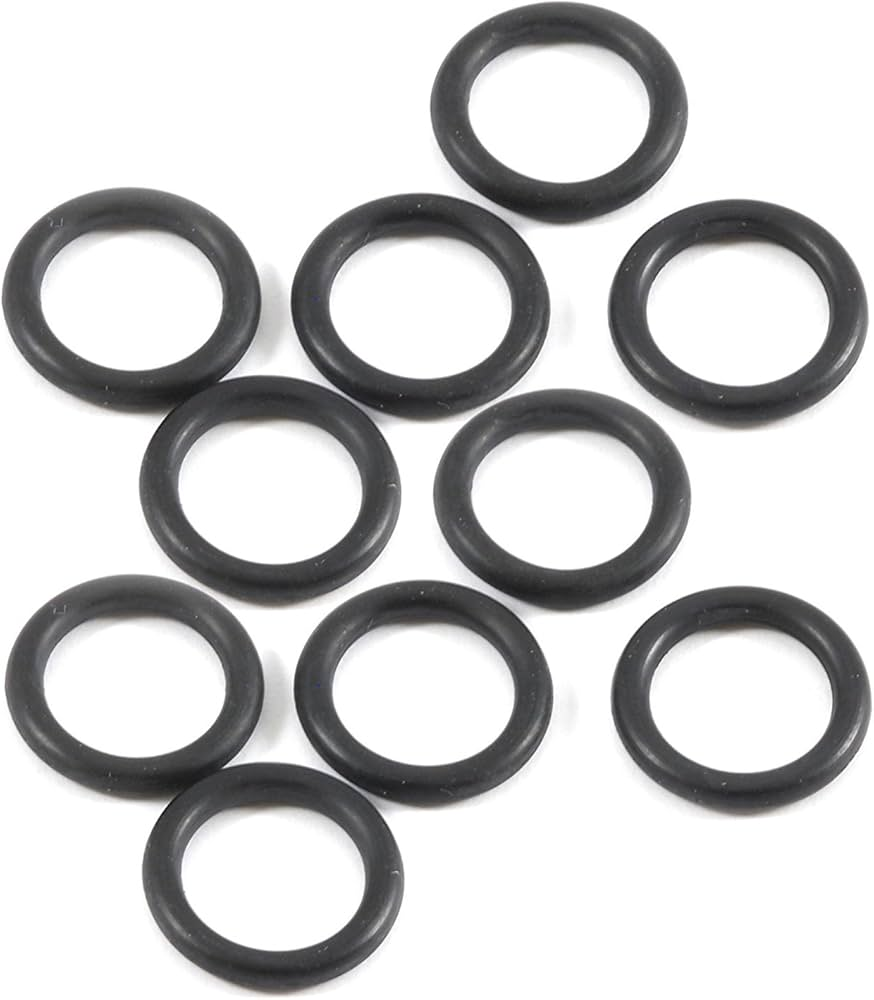
The core risk of hot water operating conditions is not "chemical corrosion," but long-term high-temperature compression set, hardening, precipitates, aging, and installation stress.
For ordinary cold water, domestic hot water, radiant heat water, heat exchangers, drinking water equipment, valves, pumps and water meters, the recommended priority order is generally:
Condition |
Recommended Material |
Key Requirement |
Cold/room-temperature drinking water |
EPDM, priority certified grade |
Confirm per market requirements: NSF 61, WRAS, KTW, ACS, KIWA, etc. |
60–90°C hot water |
Peroxide-cured EPDM 70A |
Low compression set, low precipitates, potable water/food certification |
90–120°C hot water or closed peroxide-cured EPDM 70–80A |
|
High-temperature grade, aging resistant, extrusion resistant design considered |
Oil/grease-contaminated hot water |
Not suitable for EPDM |
Switch to FKM, HNBR or FFKM, per media confirmation |
In Trelleborg's water and sanitary application materials, EPDM used for chlorine, ammonia, hot water and steam is listed alongside its applicable certification bodies such as NSF, KTW, WRAS. But EPDM's shortcoming must also be stated: it is not resistant to mineral oil, fuel oil, petroleum-based lubricants and most hydrocarbon media; ERIKS' EPDM limitation content also explicitly includes petroleum, gasoline, kerosene, petroleum oil, etc.
Practical recommendation: hot water O-rings should not just write "EPDM 70." A more suitable specification description is: EPDM 70 Shore A, peroxide-cured, hot water/drinking water use, low compression set, matched per NSF 61/WRAS/KTW/FDA 21 CFR 177.2600. FDA 21 CFR 177.2600 applies to the use conditions of "repeated-use rubber products" in food production, processing, packaging, transport.
Superheated water is not ordinary hot water.
It usually refers to liquid water still maintained under pressure above 100°C, such as high-temperature sterilization, closed heat exchange, food equipment hot water circulation, boiler makeup water, or process hot water. In this scenario, O-rings face three problems: first, when temperature exceeds ordinary EPDM's long-term suitability zone, compression set accelerates. Second, the water may contain alkali, phosphate, sulfite, amine or deoxidizer. Third, pressure cycling can cause the O-ring to repeatedly expand and shrink from thermal expansion/contraction, leading to sealing surface loosening.
Recommendation logic:
Superheated Water Condition |
Material Recommendation |
100–120°C, clean water/potable water/hot water circulation |
Peroxide-cured EPDM |
120–150°C, intermittent hot water or short-period boiler sterilization |
High-grade peroxide-cured EPDM, hardness raised when necessary |
150°C continuous, strong alkali/amine/chlorine |
Does not tolerate ordinary EPDM as default scheme, evaluate FFKM, PTFE coating or spring-energized PTFE |
Simultaneous oil, fat, solvent |
EPDM not suitable, switch to FKM/HNBR/FFKM |
IPEX's chemical compatibility guide also notes that elastomer selection is jointly determined by chemistry, temperature and mechanical properties; immersion test results cannot be unconditionally applied to seal conditions subjected to continuous mechanical or thermal stress, and combined chemical products and actual service conditions still need independent verification.
Steam is a medium most easily misjudged in water systems. Being suitable for hot water does not mean being suitable for steam.
Steam brings stronger thermal aging, volume change, compression set and rapid pressure release damage. SIP, food sterilization, boiler steam valves and steam condensate return paths must all be handled with care.
Recommended priority:
Steam Condition |
Recommendation |
Low-pressure saturated steam, intermittent sterilization |
Peroxide-cured EPDM |
121–135°C SIP |
Food/pharma-grade peroxide-cured EPDM |
150°C left-right short-term or frequent SIP |
Special high-temperature steam EPDM, verify compression set |
High-temperature continuous steam, strengthened CIP + SIP |
FFKM or PTFE dual-fit |
Steam containing oil, acid, solvent |
Not treated per ordinary EPDM, needs verification for compatibility |
Trelleborg's related conclusion for CIP/SIP testing shows: selected EPDM materials perform excellently in most CIP fluid and superheated steam, but the same base polymer's different formulations can have very different results. This data also points out standard FKM shows sensitivity in exposure time in steam, and priority FKM can go to higher steam temperature, while FFKM performs the best and passes higher-temperature steam validation under the most extreme conditions.
Common misunderstanding: many customers see FKM has high temperature resistance and think it is stronger than EPDM. This judgment is incomplete. FKM in oil, fuel, many chemicals and high-temperature air is strong, but in hot water/steam systems, standard FKM often is not the priority; steam sealing more cares about water hydrolysis stability, compression set and formulation grade, not a single highest temperature tolerance.
Chlorinated water is not a fixed medium.
It could be low-residual-chlorine drinking water, could be pool water, could also be chlorine dioxide disinfectant water, or could be high-concentration sodium hypochlorite dosing solution. Different concentration and pH, the destructive strength for O-rings is completely different.
The effectiveness of chlorine disinfection is related to its form, concentration and contact time; hypochlorous acid HOCl is stronger than hypochlorite ion OCl⁻, and pH will change the ratio between the two. The UK Drinking Water Inspectorate points out that chlorine formation ratio is usually related to pH conditions favoring hypochlorous acid formation. The Australian drinking water guide also states that at 25°C, when pH is lower than 7.5, hypochlorous acid dominates; when pH is higher than 7.5, hypochlorite ion dominates; disinfection is stronger at low pH.
Chlorinated water scenario recommendations:
Scenario |
Material Recommendation |
Note |
Ordinary drinking water residual chlorine |
Certified peroxide-cured EPDM |
Check NSF 61, WRAS, KTW, ACS, etc. |
Pool/SPA filtration system |
Chlorine/chloramine-resistant EPDM |
Ordinary EPDM not equal to chlorine-resistant EPDM |
Chloramine treatment drinking water |
Chloramine-dedicated EPDM |
Need to check ASTM D6284 or similar validation |
High-concentration NaClO dosing pump/valve |
FKM, FFKM, PTFE or dedicated EPDM/pump valve |
Temperature and concentration determine risk |
Acidified chlorine water/low pH high free chlorine |
Use EPDM with caution |
Oxidative strength significantly increases |
Trelleborg's Pool Water EPDM explicitly targets pool, SPA, filtration, drinking water systems, claiming long-lasting chlorine and chloramine resistance, and has FDA, NSF61 certification, and cites ASTM D6284 chlorine/chloramine resistance testing. Parker's chloramine sealing material research also shows that in a 50 ppm total chlorine amine solution, 70°C, some NSF-certified elastomers show serious degradation and swelling after 8 weeks exposure, while dedicated chloramine-resistant formulations perform significantly better.
Key conclusion: for pool, water treatment and drinking water customers, the recommended term is not "EPDM chlorine-resistant," but should be: use chlorine/chloramine-resistant, peroxide-cured, water-certified EPDM.
Sodium hypochlorite is the core medium of many disinfection equipment, CIP, pool dosing, drinking water dosing devices. It is not equal to "low residual chlorine water" — a single operating condition.
IPEX's EPDM/FKM compatibility rating table defines it as 1=highly resistant, 2=limited resistance, 3=not resistant. In its data, EPDM at 12.5% sodium hypochlorite solution, 20°C and 40°C is 2; at 3% sodium hypochlorite at 20°C is 1, 40°C is 2, 60°C is 3. The same data, FKM at 12.5% and 3% sodium hypochlorite, 20°C is 1, 40°C is 1, 60°C is 2.
This illustrates a practical problem: at room temperature, low-concentration NaClO, EPDM may be usable; but as temperature or concentration rises, ordinary EPDM's safety margin drops rapidly.
Recommendation logic:
NaClO Condition |
Recommendation |
<1% effective chlorine, room temperature, short-term flushing |
Peroxide-cured EPDM can be used as an economical option |
Around 3%, room temperature |
EPDM evaluable, priority chlorine-resistant formulation; FKM more stable |
3% and ≥40–60°C |
Not recommended to use ordinary EPDM, switch to FKM/FFKM/PTFE |
10–15% industrial concentrated water/dosing solution |
FKM, FFKM, PTFE encapsulated or PTFE seal priority |
Acidified NaClO or low pH |
High risk, need dedicated selection |
One further note, sodium hypochlorite itself decomposes, and decomposition speed is affected by heat, light and concentration; EPA data points out that sodium hypochlorite exposed to air will slowly decompose, and high concentration and elevated temperature will speed decomposition, sunlight also accelerates. This will make the actual chlorine, hypochlorite, free chlorine, dissolved oxygen and high pH alkaline environment in the dosing system unable to be judged by a single "NaClO" number.
EPDM's classic advantage is resistance to ozone, UV, and aging. Trelleborg explicitly describes EPDM as having good thermal, ozone and aging resistance. But in ozone equipment, risk depends on ozone in air amount, ozone gas, or dissolved ozone water, and concentration, temperature, humidity and dwell time.
IPEX data shows EPDM against saturated ozone water at 20°C and 40°C is 1, at 60°C is 2; this means EPDM can be used at low-temperature ozone environment, but confidence should decline when temperature rises. Ozone equipment supplier data also emphasizes that actual performance depends on dry/humid air, water, ozone concentration, and whether it is a dedicated ozone-modified material and specific application.
Ozone operating condition recommendations:
Ozone Working Condition |
Recommendation |
Room temperature, low-concentration dissolved ozone water |
Ozone-grade or FKM, needs verification |
Ordinary ozone gas sealing |
EPDM, FKM evaluable |
High-concentration ozone gas, wet ozone, ozone generator outlet |
FKM, FFKM, PTFE/PFA priority |
Long-term high-concentration dissolved ozone |
FKM, FFKM, PTFE/PFA, PVDF system materials priority |
NBR, natural rubber, ordinary CR |
Generally not recommended |
Absolute Ozone's material compatibility guide includes PTFE/PFA, stainless steel, PP/PE, Viton; ozone water recommends 316 stainless steel, PTFE, PTFE/PFA, glass/quartz; parts to avoid list Kalrez, Kynar, PTFE/PFA, Viton, etc. Ozcon's ozone material list also includes EPDM and FKM as A-grade materials under typical conditions of water/gas phase ozone, and emphasizes the applicable range is about 20–30°C, near-neutral pH, low mechanical stress hypotheses, needing formulation and temperature verification.
Actual sales/selection conclusion is: ozone equipment cannot simply say "EPDM is definitely fine." More accurate: low-concentration room-temperature ozone water can choose ozone-grade EPDM; high-concentration, high-humidity ozone, ozone generator outlet or long-life requirement, priority FKM, FFKM, PTFE/PFA.
HVAC, cooling, engine cooling, boards, pumps and valve storage temperature control systems often use ethylene glycol or propylene glycol cooling liquid. The main relevant media here is not "water," but water + glycol/dihydric alcohol + corrosion inhibitor + defoamer + dye + possible oil contamination.
EPDM has advantages against hot water, steam, precipitates, engine cooling water, acid and alkali; ERIKS also lists EPDM applicable to hot water/steam, CIP/SIP, engine cooling water, alcohols and similar media. But once cooling systems are mixed with mineral oil, lubricant, compressor oil or hydrocarbons, EPDM will swell, soften or fail, because EPDM is clearly not oil resistant.
Recommendation:
Cooling Liquid Type |
Recommendation |
Water + ethylene glycol/propylene glycol |
Peroxide-cured EPDM |
High-temperature closed cooling liquid |
High-grade EPDM, confirm corrosion inhibitor system |
Oil-contaminated cooling liquid |
HNBR, FKM or dedicated material |
Refrigerant/refrigeration oil system |
Not treated per EPDM water system |
Boiler water, steam condensate, makeup water and drainage systems often contain:
Alkalinity adjuster, phosphate, sulfite, hydrazine substitute, amine, deoxidizer, dissolved oxygen, iron particles and periodic high-temperature impact.
The recommended priority order for this type of condition is usually:
Condition |
Recommendation |
Low-pressure boiler makeup water/hot water |
Peroxide-cured EPDM |
Steam condensate water |
Steam-grade EPDM |
High pH boiler water |
EPDM evaluable, but watch alkalinity and temperature |
Amine, organic treatment agent, high-temperature continuous steam |
FFKM or special FKM/EPDM dedicated verification |
Oil-containing condensate water |
EPDM risk high, consider FKM/HNBR/FFKM |
The focus of boiler water selection is not just "water," but high temperature + alkalinity + additives + pressure cycling. Therefore what must be clarified are: highest temperature, whether continuous steam, pH, whether oil-containing, whether there is drainage flushing.
Common operating conditions in food, beverage, dairy, and pharmaceutical cleaning equipment are:
Alkali washing NaOH, acid washing nitric acid/phosphoric acid, peracetic acid, sodium hypochlorite, heat, steam, ozone water, foam cleaning agent, oil and food contact.
Trelleborg's CIP/SIP data points out CIP fluid and high temperature will push some elastomers to performance extremes; even the same base polymer, different formulations can have very different results. Its conclusion is: choosing EPDM performs excellently in most CIP fluids and superheated steam, but is not recommended for use with high-fat food and some food-grade lubricants; FKM is more suitable for cosmetics, personal care, oils and lubricants; standard FKM steam exposure should be limited; FFKM performs best in the most rigorous testing.
Simplified selection:
Food/Cleaning Scenario |
Priority |
Hot water + alkali washing + SIP |
Peroxide-cured EPDM |
High-fat food, oil, lubricant contact |
FKM or FFKM |
Strong oxidizing disinfectant + high temperature |
FFKM or PTFE system |
Steam sterilization + low precipitates requirement |
Food/pharma-grade EPDM, verify certification and media selection |
Drinking water/food regulatory requirements |
FDA 21 CFR 177.2600, NSF 61, WRAS, KTW, ACS, 3-A, etc. per market confirmation |
Media/Condition |
Peroxide-Cured EPDM |
FKM |
FFKM |
PTFE/FEP/PFA Coating |
Cold/drinking water |
Priority |
Optional, high cost |
Optional, elastic weak |
Optional |
Hot water 60–120°C |
Priority |
Cautious |
Standard FKM not high-end priority |
Optional |
Saturated steam/SIP |
Priority, needs steam grade |
Optional |
Priority |
Optional |
Superheated steam/high-temp continuous |
Cautious, needs certification |
Priority |
Optional |
Optional |
Low residual chlorine water |
Priority, needs chlorine-resistant EPDM |
Optional |
Optional |
Optional |
Chloramine water |
Select chlorine-resistant dedicated EPDM |
Optional |
Optional |
Optional |
3–12.5% NaClO |
Room-temp evaluable, high-temp cautious |
Optional |
Better |
Better |
Ozone water |
Low-temp low-concentration evaluable |
Better |
Better |
Better |
Ozone gas |
Evaluable |
Better |
Better |
Better |
Ethylene glycol/propylene glycol cooling liquid |
Priority |
Optional |
Optional |
Optional |
Mineral oil/fuel/oil |
Not recommended |
Priority |
Optional |
Optional |
High-fat food/lubricant |
Not recommended or cautious |
Priority |
Optional |
Optional |
Strong oxidation + high temp + long life |
Cautious |
Cautious |
Priority |
Priority option |
For water treatment, HVAC, food cleaning, pool and disinfection equipment customers, it is recommended to write O-ring specifications completely:
Basic hot water/drinking water: EPDM O-Ring, 70 Shore A, peroxide-cured, low compression set, matched per NSF 61 / WRAS / KTW / ACS / FDA 21 CFR 177.2600 requirements.
Steam/SIP: EPDM O-Ring, peroxide-cured, steam-grade, 70–80 Shore A, applicable to 121–150°C intermittent steam, needs verification of compression set and actual cleaning agents.
Pool/chloramine water: High Chlorine & Chloramine Resistant EPDM, NSF61/FDA certified, ASTM D6284 or equivalent chlorine/chloramine test data.
NaClO dosing/disinfection equipment: Low-concentration room-temperature evaluable chlorine-resistant EPDM; high-concentration or high-temperature priority FKM/FFKM/PTFE encapsulated O-ring.
Ozone equipment: Low-concentration room-temperature ozone water evaluable ozone-grade EPDM; high-concentration ozone gas, wet ozone or ozone generator outlet priority FKM, FFKM, PTFE/PFA.
Before selection, confirm at least these fields:
Water system O-rings are not "one EPDM handles everything."
Hot water/steam/cooling liquid: Peroxide-cured EPDM is the mainline.
Chlorine water/chloramine: Use chlorine-resistant/chloramine-resistant certified EPDM.
High-concentration NaClO, ozone, high-temperature strong oxidation: Switch to FKM, FFKM or PTFE/PFA.
Oil, fat, hydrocarbons: Do not use EPDM.
Summary in one sentence: the priority for water-system O-ring selection is not "which rubber is more durable," but whether the total leak rate, precipitates, permeation, contamination and installation surface can be controlled under the target concentration and temperature.

Welcome to HOVOO, a Chinese seal factory. Production of PU, Rubber and PTFE seals. The seals include O-ring, piston seal, rod seal, Gray ring and gas seal.


 EN
EN
 AR
AR CS
CS DA
DA NL
NL FI
FI FR
FR DE
DE EL
EL IT
IT JA
JA KO
KO NO
NO PL
PL PT
PT RO
RO RU
RU ES
ES SV
SV TL
TL IW
IW ID
ID LV
LV SR
SR SK
SK VI
VI HU
HU MT
MT TH
TH TR
TR FA
FA MS
MS GA
GA CY
CY IS
IS KA
KA UR
UR LA
LA TA
TA MY
MY
