33-99No. Mufu E Rd. Gulou District, Nanjing, China [email protected] | [email protected]
33-99No. Mufu E Rd. Gulou District, Nanjing, China [email protected] | [email protected]

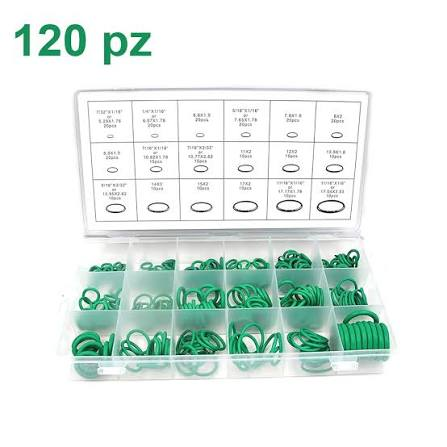
O-rings in refrigeration systems are subject to three effects simultaneously.
First, media swelling or extraction. Small refrigerant molecules enter the rubber network, causing weight, volume, hardness, tensile strength and elongation changes; refrigeration oil can also enter the rubber and extract plasticizers and additives, causing the material to first soften then harden, or shrink after the refrigerant stops working. Chemours' R134a data explicitly points out that swelling, plasticizer loss, and mechanical property changes should not be judged by a single refrigerant, since no single rubber family covers all substitute refrigerants.
Second, poor thermal cycling low-temperature rebound and compression set failure. Cold, evaporator, and suction-side applications require low compression set; compressor, exhaust, and heat pump high-temperature conditions require low compression set as well. The extent to which O-ring long-term compression cannot recover fundamentally measures sealing force; the larger the value, the more easily sealing force is lost.
Third, pressure cycling and rapid decompression risk. HFC/HFO systems mainly focus on solubility, permeation and compression set; CO₂/R744 systems must also pay attention to rapid decompression damage — CO₂ molecules enter the rubber under high pressure, and rapid pressure release can cause the rubber to blister internally, crack, or even burst the O-ring.
R134a is commonly paired with PAG oil in automotive AC, and with POE oil in refrigerators, compressors and part-load equipment. For O-rings, the material needs to be jointly verified against HFC refrigerant, PAG/POE oil, thermal aging, compression set and installation loss. Chemours data shows that the compatibility of R134a with rubber, metal and elastomers needs project-specific verification; POE oil solubility for HFC-134a is usually specified by the compressor or equipment OEM through testing.
Recommended directions:
Scenario |
Preferred Material |
Explanation |
Automotive AC pipe joints, pressure fittings, charging ports |
HNBR 70A/80A |
Balanced oil resistance, thermal aging, mechanical strength and compression set |
Compressor housing, control valve, high-pressure side |
HNBR 80A/90A, or special FKM when needed |
Emphasizes anti-extrusion, thermal aging and long-term compression |
Low-temperature suction side, heat pump low-temperature operation |
Low-temperature HNBR, EPDM, F-type or VMQ, needs verification |
Low-temperature compression rebound and leakage need verification |
Old-style refrigeration equipment, CR and HNBR, NBR need verification |
CR historically used with R134a or R22 refrigerant, but temperature limit is limited |
|
In Parker's O-Ring Handbook, CR compounds are labeled as commonly used for R134a or R22 and similar refrigerants, with typical static temperature range being -40 to 100°C; HNBR temperature range is often -35 to 150°C; NBR standard grades are mostly -35 to 100°C; EPDM is commonly -50 to 150°C. This temperature layering explains: NBR can be inexpensive, but in long-term automotive AC high temperature, oxygen, and compression set requirements it should not be used as the default choice.
R1234yf is an HFO refrigerant, and has become an important substitution direction for automotive AC. Chemours data labels Opteon YF as R-1234yf/HFO-1234yf; it is classified A2L under ASHRAE and ISO 817 safety grades: similar in performance and operating characteristics to R134a, but dedicated PAG or POE oil formulated specifically for R1234yf must be used, and it cannot be treated as a simple retrofit substitute.
In terms of material compatibility, Chemours' fixed-strain elastomer compatibility test data at 100°C, 2 weeks, comparing R1234yf and R134a, showed HNBR had greater weight change in R134a immersion, while weight change was smaller in HFO-1234yf; EPDM weight change was clearly higher than HNBR, NBR, EPDM, and CR-type materials. Viton® was strongest, but different manufacturers' and process-produced materials can give different results, so it should be provided by material suppliers.
Selection recommendations:
Position |
Recommended Material |
Key Point |
R1234yf automotive AC pipe joint O-rings |
HNBR 70A/80A |
Priority verified with R1234yf + specified PAG oil |
New energy vehicle electric compressors |
HNBR, EPDM, special FKM, need focus on insulation oil |
Compatible with PAG/POE actual testing, high water content, acid value and metal catalysis effect |
Heat pump low-temperature side |
Low-temperature HNBR, EPDM, FVMQ, need verification |
Low-temperature rebound hardness needs to be greater attention |
High-temperature high-pressure valve parts |
HNBR 80A/90A or verified FKM |
Emphasize compression set resistance and anti-extrusion |
Note: the R134a system cannot simply be switched to R1234yf, and R1234yf cannot be mixed into R134a. Chemours explicitly states R1234yf system has unique fittings; mixing refrigerants belongs to cross-contamination, and system components are designed for a specific refrigerant.
Heat pump and commercial refrigeration equipment commonly use HFC, HFO or HFC/HFO mixed refrigerants, with products mostly using POE, PVE or dedicated blend oils. Here, R134a or R1234yf material conclusions cannot be directly applied to R410A, R32, R454B, R513A, R1234ze and similar systems, because polarity, vapor pressure, operating temperature, and oil refrigerant solubility and additive packages are all different.
Initial selection logic:
System |
Candidate Materials |
Risk Points |
HFC + POE |
HNBR, EPDM, CR, special FKM |
POE absorbs moisture easily leading to raised acid value, which may affect rubber and metal |
HFO + POE/PAG |
HNBR, EPDM, special FKM |
HFO and oil, metal, sealing material must be independently stability tested |
A2L heat pump refrigerant |
HNBR, EPDM, FKM, need verification of temperature range higher, pressure higher, flammability management and leak requirements more strict |
|
Low-temperature refrigeration equipment |
HNBR, EPDM, FVMQ, low-temperature rebound, brittleness, thermal cycling after leakage |
|
The purpose of ASHRAE Standard 97 is to evaluate sealing materials' compatibility with refrigeration system materials through sealed glass tube testing; the tube includes refrigerant, lubricant and test materials sealed in a glass tube, generally opened for aging then qualitative or quantitative analysis, to judge compatibility or chemical stability.
CO₂/R744 is another category of problem. Its chemical corrosivity is not necessarily strong, but the pressure, permeation, and explosive decompression risk is very high. Parker's CO₂ AC sealing material data points out that R744 system operating pressure compared to R134a is significantly higher, R744 operating pressure can reach 150–160 bar, temperature can reach 180°C; soft sealing material selection needs to focus on this explosive decompression resistance.
Materials Parker lists for the same materials for CO₂ AC seal selection include EPDM, FKM, HNBR and EPDM/BIIR, and emphasizes these materials need to have -55 to +200°C temperature range, applicable to PAG/PAO/POE oil, low permeation and excellent explosive decompression resistance.
R744 selection recommendations:
Position |
Recommended Material/Structure |
Design Focus |
Static joint, pipe joint |
90A HNBR, EPDM, FKM, EPDM/BIIR dedicated grade |
Low permeation, anti-explosive decompression, anti-extrusion |
Compressor, high-pressure valve, 90A dedicated |
HNBR/FKM/EPDM, need extra back-up ring |
Control extrusion clearance, high temperature and pressure cycling resistance |
Quick connect, service interface |
AED/RGD dedicated material |
Control decompression rate, avoid CO₂ rapid diffusion crack |
Low-temperature heat pump section |
Low-temperature EPDM or low-temperature HNBR |
Low-temperature rebound and thermal cycling leakage verification |
CO₂/R744 cannot use ordinary automotive AC O-ring substitutes. Even if the material name is the same HNBR or EPDM, it also needs distinguishing whether it is R744-dedicated low-permeation, anti-explosive-decompression formulation.
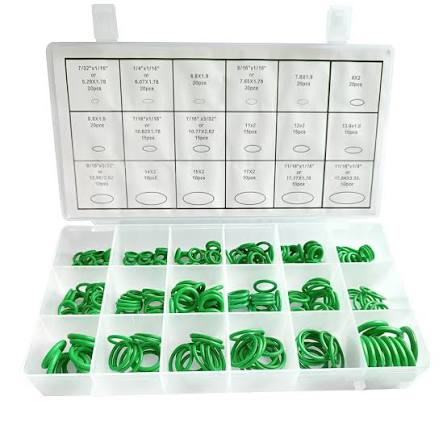
HNBR's advantage is good oil resistance, heat resistance, mechanical strength and compression set combined performance. For R134a, R1234yf, PAG, POE oil systems, HNBR is usually the preferred material for automotive AC O-rings, compressor static seals, and control valve seals. Parker data shows multiple HNBR grades can cover -35/-40 to 150°C, and some low-temperature grades are marked for low-temperature scenarios.
Suitable for: automotive AC, R134a/R1234yf pipeline, compressor static seal, part of heat pump systems.
Note: HNBR's ACN content, hydrogenation degree, crosslinking system and filler system will significantly affect low-temperature rebound and swelling and compression set changes.
EPDM's low-temperature performance, ozone resistance, thermal aging performance are good; in Chemours' R134a/R1234yf comparison, the selection of weight change for EPDM is relatively small. But EPDM is not naturally suitable for all oil types, especially R744-dedicated "EPDM resistant to all PAG/POE/added refrigerant" needing dedicated formulation. R744-dedicated EPDM or EPDM/BIIR can be candidates for CO₂ high-pressure systems, but must be evaluated case by case.
FKM's advantage is high temperature, aging resistance, low gas permeation and wide chemical compatibility; Parker data grades marked applicable to high temperature, hot oil, aromatic solvent and wide chemical environments, in Chemours' R1234yf/R134a fixed-strain elastomer test, Viton®'s weight change was clearly lower than HNBR, NBR, EPDM, CR and other materials.
Therefore, FKM in refrigeration systems should correspond to a specific brand and specific media verification, and should not be understood as "FKM is high-end so it is applicable to all refrigerants."
NBR is inexpensive, has good mineral oil resistance and some product stability, but the environmental stability of heat resistance, ozone resistance, and long-term compression set is generally weaker than HNBR. Parker's chart shows the common temperature range for NBR is mostly -35 to 100°C. It can be used in cost-sensitive, low temperature-pressure requirement scenarios, but is not recommended as the default choice for R1234yf automotive AC, heat pumps or compressor high-temperature areas.
CR/chloroprene rubber has a long history of use in traditional refrigerants; Parker's chart also labels CR as often used with R134a or R22, with its typical upper temperature limit around 100°C. For modern automotive AC and high-temperature heat pumps, CR is often no longer the preferred solution.
Silicone rubber and fluorosilicone rubber have low elasticity at low temperature, suitable for some low-temperature static seals. But their mechanical strength, tear resistance, gas permeation and high-pressure anti-extrusion are usually inferior. When used for refrigerant systems, they should be limited to low-stress static sealing, and full leak and thermal cycling verification must be completed.
Refrigeration system O-ring failure is often not caused by material alone, but rather compounded by material, groove and process.
Swelling margin. Parker Handbook points out static seal medium swelling of 25%–30% by volume is sometimes tolerable, but dynamic seal medium swelling should usually not exceed 10%; excessive swelling increases the risk of extrusion when compression is reduced.
Anti-extrusion. High pressure, compressor, CO₂/R744 systems need to reduce extrusion clearance, and use back-up rings when necessary; high pressure pushes the O-ring toward the low-pressure side clearance extrusion, and back-up rings can lower this risk.
Hardness selection. 70A is commonly used for general static seals and automotive AC pipe joints; 80A is used for higher pressure or more strict assembly; 90A is commonly used for CO₂/R744, high-pressure compressor or where anti-extrusion is required, but low-temperature rebound and assembly sealing capability may decline.
Low-temperature verification. Cannot look only at the '-40°C' on the material sheet. Automotive heat pumps and low-temperature refrigeration testing must verify TR10, low-temperature compression rebound, cold-start leakage and thermal cycling leakage; low-temperature rubber hardening, compression insufficiency, most easily produce leakage at parked-then-cold-start moments.
Surface and assembly. Pipe joint O-rings often experience cutting, twisting, dry assembly, and installation friction issues. Chamfer, surface roughness, assembly lubricant and refrigerant tight compatibility need control; R1234yf and CO₂ systems should also avoid using oil products that could contaminate or affect leak detection.
Refrigerant and refrigeration oil O-ring selection is recommended to complete at least four categories of verification:
Verification Item |
Purpose |
Focus Indicator |
ASTM D471 or equivalent oil immersion |
Judge effect of refrigeration oil and additives on rubber quality, volume, hardness, tensile strength and elongation change |
Swelling, shrinkage, hardening, cracking, precipitates |
Refrigerant + oil combined aging |
Simulate the true liquid/gas-phase refrigerant environment |
Dissolution, softening, hardening, precipitates, material change |
ASHRAE 97 sealed glass tube stability |
Judge stability of refrigerant, oil, metal, rubber |
Acid value, color, precipitate, corrosion, material change |
Thermal cycling/pressure cycling/leakage testing |
Simulate whole-machine life |
Leak rate, compression set, low-temperature rebound, pressure pulse post-appearance |
ASTM D471 covers rubber's quality, volume, hardness, tensile strength and elongation change after immersion in liquid, and is the basic method for screening refrigeration oil compatibility. But refrigerant itself is not the only relevant liquid, and testing should be done together with pressurized refrigerant/oil co-existence testing. Trelleborg also reminds that compatibility tables are based on public data and laboratory testing, and short-term room temperature testing cannot fully represent field conditions; users should confirm through actual application testing.
CO₂/R744 high-pressure systems should also add RGD/AED explosive decompression testing. ISO 23936-2 and NORSOK M710 relate to non-metallic material qualification confirmation, where NORSOK M710 Annex B is precisely the rapid gas decompression test, also called explosive decompression testing.
R134a or R1234yf pipe joint O-rings, priority start from HNBR 70A/80A; high-pressure side and compressor joints can consider HNBR 80A/90A. New energy vehicle heat pumps and electric compressors should independently confirm POE or dedicated PAG oil, and should not just verify against fuel-vehicle R134a/PAG experience.
The difficulty of heat pump systems is a wide high-low temperature cycle range, needing simultaneous low-temperature suction-side low-temperature rebound and exhaust-side high-temperature compression set. It is recommended to prioritize evaluation of low-temperature HNBR, EPDM and experienced FKM, not just recommend selection based on ordinary media compatibility tables.
The focus of compressor seals is high-temperature refrigeration oil, refrigerant dissolution, pressure pulse and long-term compression set. HNBR is a common choice; the high-temperature zone can evaluate special FKM, but must verify in actual refrigeration oil and refrigerant. CO₂ compressors must be designed according to R744 high-pressure sealing logic.
Prioritize requiring the supplier to provide R744/CO₂-dedicated formulation data, including explosive decompression resistance, low permeation, pressure cycling, low-temperature rebound, PAG/POE/PAO oil compatibility. Ordinary HNBR, ordinary EPDM, ordinary FKM material names are not sufficient proof.
When requesting quotations from sealing part suppliers, at least provide this information:
Field |
Example |
Refrigerant |
R134a, R1234yf, R744/CO₂, R410A, R32, R454B, R513A |
Refrigeration oil |
PAG46, PAG100, POE, PVE, PAO, best provide brand and grade |
Additives in oil |
Anti-wear, acid-scavenging, dye, leak indicator |
Temperature |
Lowest temperature, highest continuous temperature, short-time peak temperature |
Pressure |
Working pressure, peak pressure, pressure swing, leak rate |
Seal type |
Static seal, dynamic seal, pipe joint, compressor internal, valve |
Life requirements |
Years, cycle count, thermal cycle count, leak rate requirements |
Standards |
ASTM D471, ASTM D395, ISO 815, ASHRAE 97, ISO 23936/NORSOK M710, etc. |
Error one: Only looking at refrigerant, not refrigeration oil. PAG, POE, PAO, PVE swelling and low-temperature characteristics differ; oil often determines rubber swelling and hardening more than refrigerant.
Error two: Directly applying R134a experience to R1234yf. R1234yf performance is close to R134a, but the system, oil, A2L safety requirements and service interface are all different; materials must also be independently verified against R1234yf + specified oil.
Error three: Believing FKM is always better than HNBR. FKM has advantages in high temperature and low permeation, but in R134a/R1234yf selection tests, Viton®'s weight change is not necessarily the smallest; specific formulation and actual testing must be checked.
Error four: CO₂/R744 selecting only by chemical compatibility. R744's core risk is high pressure, permeation, rapid decompression, anti-extrusion and low-temperature rebound; ordinary refrigerant compatibility tables are not sufficient.
Error five: Treating color as material proof. Green O-rings are commonly seen in automotive AC HNBR, but color is not material proof; material grade, batch, hardness, test report and application verification must be checked.

Welcome to HOVOO, a Chinese seal factory. Production of PU, Rubber and PTFE seals. The seals include O-ring, piston seal, rod seal, Gray ring and gas seal.


 EN
EN
 AR
AR CS
CS DA
DA NL
NL FI
FI FR
FR DE
DE EL
EL IT
IT JA
JA KO
KO NO
NO PL
PL PT
PT RO
RO RU
RU ES
ES SV
SV TL
TL IW
IW ID
ID LV
LV SR
SR SK
SK VI
VI HU
HU MT
MT TH
TH TR
TR FA
FA MS
MS GA
GA CY
CY IS
IS KA
KA UR
UR LA
LA TA
TA MY
MY
