33-99No. Mufu E Rd. Gulou District, Nanjing, China [email protected] | [email protected]
33-99No. Mufu E Rd. Gulou District, Nanjing, China [email protected] | [email protected]

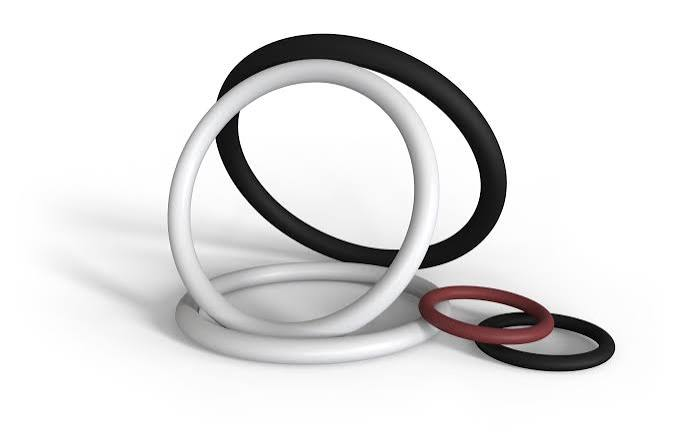
FFKM perfluoroelastomer O-rings are expensive not simply because they are "a more premium rubber," but because at the extreme end of the operating envelope they simultaneously solve three problems that ordinary sealing materials struggle to solve together: strong chemical resistance, high-temperature capability, and low extractables. For customers in semiconductor, strong-corrosion, oil and gas, and high-end valve applications, the value of FFKM is not the O-ring itself, but reduced leakage, reduced contamination, reduced downtime, reduced scrap loss, and safety.
FFKM is Perfluoroelastomer — fully fluorinated elastomer / fully fluorinated rubber. The core concept is "fully fluorinated": the hydrogen atoms in the polymer's molecular chain are replaced by fluorine atoms, forming a highly fluorinated elastomer. This structural change significantly improves chemical and thermal stability, giving the material a chemical inertness that approaches PTFE while still retaining rubber-like elasticity.
Among typical fully fluorinated systems, FFKM can be composed of monomers such as tetrafluoroethylene (TFE) and perfluoromethyl vinyl ether (PMVE). Descriptions of related perfluoroelastomer materials also emphasize their complete fluorinated structure and the corrosion resistance, heat resistance, low outgassing and other characteristics that this structure brings.
This means the difference between FFKM and ordinary FKM fluoroelastomer is not as simple as "a high-end version of the same material." FKM is a high-performance fluoroelastomer, but FFKM pushes fluorination degree, chemical inertness, and high-temperature stability to a top-tier level. Material comparisons note that FFKM has a substantially higher fluorine content than standard FKM, can achieve a working temperature of approximately 325°C, and possesses chemical compatibility close to that of ordinary PTFE.
In chemical, semiconductor wet-process, petrochemical, oil and gas and other scenarios, what a seal actually faces is often not a single medium but a compound environment where high temperature, pressure, solvents, acids and alkalis, oxidizers and process by-products act together. Ordinary NBR, EPDM, and FKM can perform well against a single medium, but once mixed media, high-temperature strongly oxidizing environments occur, swelling, hardening, cracking, and accelerated compression set are prone to happen.
The value of FFKM lies in its greatly broadened chemical compatibility window. FFKM O-rings are described as possessing the highest working temperature range, the lowest outgassing and extractable levels among sealing materials, and broad chemical compatibility, making them suitable for key applications such as semiconductor chip manufacturing and chemical equipment.
For customers, this means: FFKM is not there to replace all rubbers, but to provide a much larger margin of safety in situations where the chemical compatibility boundary of other materials is uncertain or the cost of failure is very high.
The essence of an O-ring is not "a rubber ring sitting in the groove," but rather it relies on elastic recovery to continuously produce sealing force. At high temperature, the rubber's molecular chain accelerates aging, the crosslinked structure breaks down, and compression set worsens. Once sealing force decays, the seal can lose reliability even if it still looks intact.
FFKM's high-temperature capability is markedly superior to most conventional elastomers. Some FFKM products are stated to have the highest compression set resistance and best high-temperature performance among common elastomers, with a maximum working temperature reaching 320°C / 608°F. Other FFKM materials can operate continuously across a wide temperature range covering -40°C to +325°C, with the specific value depending on the formulation.
Therefore, FFKM's "high temperature resistance" is not just about the material not melting in the short term, but about maintaining usable sealing force under the compound working condition of high temperature, strong corrosion, and long-term compression.
The semiconductor industry uses FFKM not just because it resists corrosion and high temperature — it is more because it can reduce contamination risk. Wafer manufacturing is extremely sensitive to metal ions, particles, TOC, organic volatiles, and process gas leaks. Extractables, outgassing, or gas leaks from a single sealing point can affect not just one seal, but wafer cleanliness, yield, and equipment uptime and maintenance cycles.
Semiconductor-related FFKM data indicates that FFKM is used in wafer processing equipment because its chemical resistance and high-temperature stability at high temperatures around 327°C are outstanding, and because well-formulated FFKM can reduce contamination from particles, outgassing, and metal ions / TOC extractables, which helps lower the risk of wafer contamination.
Isolast-type FFKM products explicitly emphasize being oriented toward front-end semiconductor processes such as deposition, etching, ashing/stripping, and ion implantation; the material emphasizes high purity, low particulates, low metals, ultra-low extractables, and is manufactured and packaged in a Class 100 / ISO 5 cleanroom.
So in the semiconductor scenario, the commercial value of FFKM can be summarized as: fewer particles, less chamber contamination, fewer unplanned outages, and lower batch scrap risk.
FFKM's base material is a highly fluorinated monomer and fully fluorinated polymer system. The full fluorination structure brings extreme chemical inertness and thermal stability, but it also means the material system is more complex than mass-produced rubbers. It is not a mass-produced universal rubber, but a small-batch, high-tech material oriented toward top-tier working conditions.
These kinds of materials are typically only used when ordinary elastomer elasticity cannot meet requirements. It is also acknowledged that FFKM compounds are usually more expensive than substitute materials, but their extra reliability significantly lowers the total cost of ownership, especially in scenarios where the cost of downtime is very high.
FFKM is not a single formulation, but a family of materials. Semiconductor plasma resistance, wet-process chemical resistance, strong amine resistance, steam resistance, high vacuum and low outgassing, oil and gas RGD (rapid gas decompression) resistance — every working condition requires a different formulation design.
Semiconductor-oriented FFKM makers explicitly note: FFKM's performance changes significantly depending on the chemical composition, and reducing wafer contamination may require a dedicated formulation product. The semiconductor FFKM product line is configured differently by etching process, plasma type, thermal process, and CMP / ECD / wet-etch and other different process combinations.
Therefore, a large amount of "invisible formulation engineering" is included in the price of high-end FFKM:
Formulation Direction |
Problem Solved |
Typical Customer Value |
Plasma-resistant FFKM |
Surface degradation and particles caused by plasma ashing, cleaning, ashing/stripping |
Improves stability of semiconductor chamber components |
Low-extractable FFKM |
Lowers metal ions, TOC, particles, outgassing |
Extends maintenance cycle |
High-temperature-resistant FFKM |
Maintains sealing force and compression set at high temperature |
Reduces contamination during chemical processes and energy equipment |
Strong-acid/steam-resistant FFKM |
Suitable for gas etching, chemical liquid, SIP/CIP and similar media |
Reduces chemical and energy equipment leaks |
RGD-resistant / oil-and-gas-grade FFKM |
Resists internal blistering and cracking caused by rapid gas decompression |
Suitable for high-pressure gas valves, pumps, downhole tools |
The logic behind manufacturing FFKM for the semiconductor industry is different from that of ordinary industrial O-rings. It is not just about dimensional conformance, hardness conformance, and visual conformance — contamination sources such as particulates, metal ions, extractables, packaging cleanliness, and batch consistency must also be controlled.
This type of product often requires dedicated mixing, mold, post-processing, cleaning, baking, inspection, and clean packaging. A PureFab-type FFKM product mentions that its seals are produced and packaged in a Class 100 / ISO 5 cleanroom, with the purpose being to ensure product purity.
This part of the cost is reasonable for the end customer: what a semiconductor customer buys is not "one O-ring," but a low-contamination sealing element that can enter a critical process chamber.
High-end FFKM O-rings often need to undergo verification through long-term compression set, chemical soaking, aging, outgassing, low extractables, plasma exposure resistance, dimensional stability, and other testing. Oil and gas scenarios also involve rapid gas decompression (RGD) testing.
Taking Kalrez 0090 as an example, this FFKM is described as being used for downhole and subsea equipment in the oil and gas industry, such as ball valves, other valves, and packers; its O-rings have passed strict standards such as NORSOK M-710 third-party testing, with zero internal cracks, voids, or blisters.
This shows that a very large portion of the cost of high-end FFKM comes from: verifiable material performance, batch traceability, and manageable failure risk.
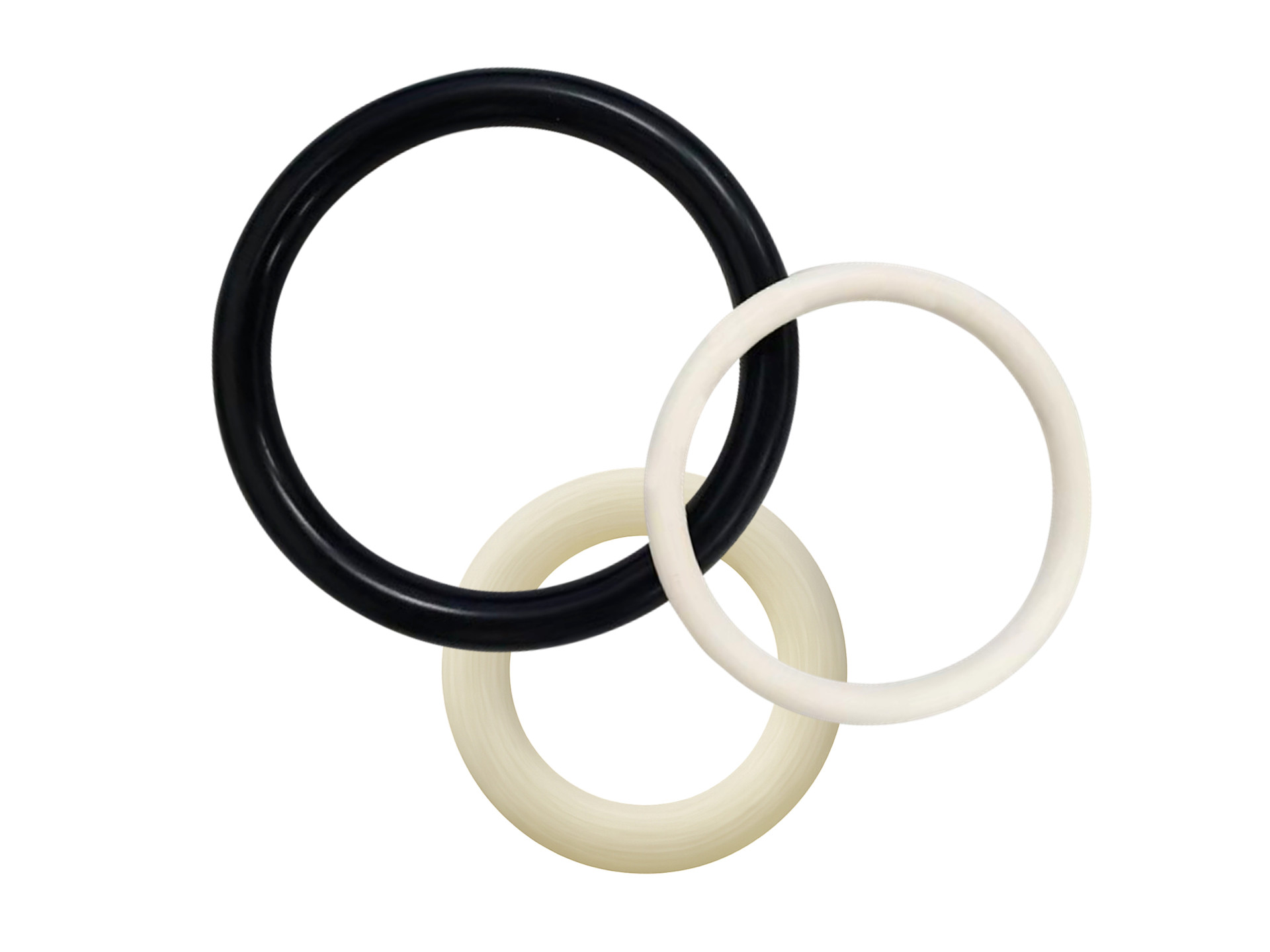
O-rings inside semiconductor equipment may be used at reaction chambers, valves, slit valves, gas inlet/outlet, chamber lids, endpoint windows, vacuum interfaces, CMP, ECD, wet-clean, CMP/ECD, plasma and ALD stations, among other positions. These sealing components must face both high temperature, vacuum, plasma, corrosive gases, and wet chemicals, while also being unable to become a source of contamination.
When semiconductor customers select FFKM, it is usually not because FKM completely cannot seal, but because FFKM is more stable in the following aspects:
Low extractables: reduces metal ions, TOC, and extractables entering the process fluid or chamber.
Low outgassing: reduces volatile contamination during low-vacuum, high-temperature processes.
Low particulates: lowers particle-shedding risk caused by seal surface degradation under a plasma environment.
Plasma resistance: suitable for etching, ashing, remote plasma cleaning and similar reactive environments.
Longer maintenance cycle: reduces the frequency of opening the chamber, replacement, cleaning, calibration, and re-verification.
Descriptions of PureFab-type FFKM explicitly cover front-end processes such as deposition, etching, ashing/stripping, and ALD, and emphasize the leading role of low particulates, ultra-low extractables, and metal contamination control in extending maintenance cycles and improving yield.
A recommended way to phrase this for a semiconductor white paper: the value of an FFKM O-ring is not limited to sealing — it also lies in helping key processes reduce contamination sources, extend equipment maintenance cycles, and improve stability under high temperature, vacuum, plasma, and strongly corrosive chemical environments.
The most typical problem in chemical scenarios is complex media: strong acids, strong alkalis, amines, ketones, esters, aldehydes, solvents, oxidizers, steam, hot water and mixtures. Many sealing failures are not because the material is completely intolerant of one particular medium, but because concentration + mixed media + compression stress + time act together to amplify material aging.
The value of FFKM in the chemical industry includes:
It is explicitly noted that FFKM can be used in the most demanding applications, including semiconductor processes, chemical processing, and oil and gas processing, and can be used in sealing materials for chemical and petrochemical processing equipment exposed to strong corrosion, amines, and high-temperature environments.
A recommended way to phrase this for a chemical white paper: in strong-corrosion, high-temperature, mixed-media environments, FFKM O-rings provide a wider chemical compatibility window and a more stable sealing force, helping customers reduce material leak risk, unplanned downtime, and leak-related incidents.
Oil and gas and high-end valve scenarios focus even more on safety margin. Sealing materials may face H₂S, CO₂, amines, hot oil, steam, downhole chemicals, high-pressure gas, and temperature cycling, and in particular, rapid decompression under high-pressure gas conditions can cause gas that expanded inside the elastomer to cause internal cracking, blistering, or explosive decompression, known as RGD / explosive decompression issues.
Data on Kalrez 0090 shows this FFKM is used for downhole and subsea equipment in oil and gas, including ball valves, other valves, packers, and downhole tools; besides its RGD resistance, it also has chemical resistance to over 1,800 different chemical substances, and can maintain performance in high-pressure, high-temperature oil-and-gas environments.
It is also mentioned that enhanced oil recovery (EOR) puts higher pressure and temperature requirements on sealing materials; after intensified thermal recovery and chemical injection, non-FFKM materials often struggle to meet performance requirements; the related FFKM materials are used in demanding steam and corrosive well environments at high temperature.
A recommended way to phrase this for an oil-and-gas and high-end valve white paper: in high-pressure, high-temperature, corrosive-media, and rapid gas decompression scenarios, FFKM O-rings provide sealing performance that is not just about sealing — they are the key guarantee for the reliability of valves, pumps, and downhole tools.
Material |
Advantages |
Limitations |
Suitable Scenarios |
NBR |
Low cost, good baseline oil resistance |
Not resistant to high temperature, strong corrosion, strong oxidization |
Ordinary oil circuits, low-cost sealing |
EPDM |
Resists heat, water, steam, some polar media well |
Not resistant to mineral oils, aromatics or halogenated hydrocarbons |
Water, steam, some cleaning media |
FKM |
Oil resistant, fuel resistant, resistant to many chemicals, good cost-performance ratio |
Has weaknesses against certain amines, strong alkalis, high-temperature strong corrosion |
General-purpose high-performance industrial sealing |
PTFE |
Extremely strong chemical inertness, corrosion resistant |
Poor elastic rebound, requires careful installation and static/dynamic support |
Corrosion-resistant gaskets, static/dynamic support |
FFKM |
Chemical inertness close to PTFE + rubber elasticity + high-temperature stability + low extractables |
Requires selection matched to specific working conditions, high price |
Semiconductor, strong-corrosion chemical, oil and gas, high-end valve, high-vacuum high-purity scenarios |
A simplified rule of thumb: if it is just ordinary corrosion, ordinary temperature, and ordinary leak risk, FKM may be sufficient; if it is strong corrosion, high temperature, vacuum, low contamination, or a scenario where downtime cost is high, only then does FFKM truly demonstrate its value.
It is recommended to list FFKM as a preferred or key verification material when the following conditions occur:
Strong chemical corrosion: strong acids, strong alkalis, amines, strong oxidizers, mixed solvents, unknown compound media.
Temperature margin: long-term temperature is close to FKM's safety boundary, or there is a high-temperature peak or thermal cycling.
Contamination is unacceptable: semiconductor, vacuum, high-purity chemicals, precision manufacturing.
Downtime cost is high: replacing the seal requires shutdown, opening the equipment, cleaning, and re-verification.
High leak risk: dangerous chemicals, oil and gas high-pressure systems, key valves.
Complex material failure modes: swelling, hardening, cracking, compression set, and extractable contamination occur together.
Longer maintenance cycles are needed: not pursuing the lowest purchase price, but pursuing the lowest total cost.
In white papers, describing FFKM as a "universal material" should be avoided. The more professional way to say it is:
FFKM is a high-end sealing material platform, but the specific formulation must be selected according to the working condition.
Key selection variables include:
This is especially true in semiconductor scenarios, where plasma gradually consumes the material surface, causing surface degradation and particle risk; therefore etching, deposition, ashing, wet processing and other locations must select dedicated grades. Long-term exposure to plasma will consume any material, so an ideal seal needs to simultaneously resist surface degradation and maintain sealing function.
The core value of FFKM O-rings is low-contamination sealing. It helps control particles, outgassing, metal ions, and extractables, and is suitable for key positions such as etching, deposition, ALD, ashing, wet-clean, CMP, ECD, vacuum, and high-temperature processes. What the customer is buying is yield stability, chamber cleanliness, and maintenance cycle.
The core value of FFKM is extreme chemical compatibility. In mixed media of strong acids, strong alkalis, amines, solvents, steam, and high-temperature environments, FFKM can reduce swelling, hardening, cracking, and leakage, lowering downtime and safety risk. What the customer is buying is continuous production capability and process safety.
The core value of FFKM is reliable sealing under high-pressure, high-temperature, and corrosive environments. Under high-temperature steam, acidic gas, CO₂, H₂S, amine liquid, downhole chemicals, and rapid gas decompression risk, dedicated FFKM can significantly improve the reliability of key valves, pumps, and downhole tools. What the customer is buying is risk control and equipment lifespan.

Welcome to HOVOO, a Chinese seal factory. Production of PU, Rubber and PTFE seals. The seals include O-ring, piston seal, rod seal, Gray ring and gas seal.


 EN
EN
 AR
AR CS
CS DA
DA NL
NL FI
FI FR
FR DE
DE EL
EL IT
IT JA
JA KO
KO NO
NO PL
PL PT
PT RO
RO RU
RU ES
ES SV
SV TL
TL IW
IW ID
ID LV
LV SR
SR SK
SK VI
VI HU
HU MT
MT TH
TH TR
TR FA
FA MS
MS GA
GA CY
CY IS
IS KA
KA UR
UR LA
LA TA
TA MY
MY
