33-99No. Mufu E Rd. Gulou District, Nanjing, China [email protected] | [email protected]
33-99No. Mufu E Rd. Gulou District, Nanjing, China [email protected] | [email protected]

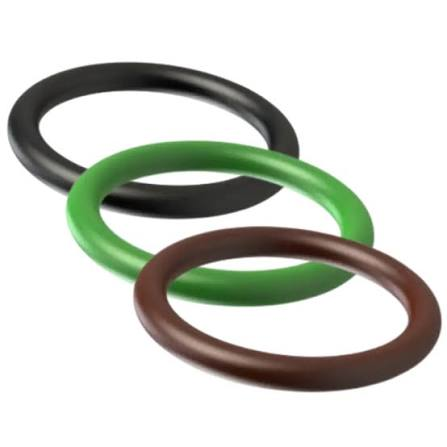
Many customers, sales staff, and even engineers understand "FKM fluoroelastomer O-ring" as a "high-end material," "high-temperature-resistant material," or "chemical-resistant material," thereby forming a risky misconception: FKM is the better the higher its grade, and pre-budgeting can simply upgrade to FKM. This judgment is incomplete and can even lead to precise failure. FKM's strengths are indeed clear: high temperature, fuel resistance, oil resistance, ozone/aging resistance, and resistance to many hydrocarbon and part of the chemical media — but it is not a universal material, especially performing worse than EPDM, FEPM/AFLAS, FFKM, FVMQ, or a dedicated low-temperature FKM in water/steam, low temperature, some amine media, high pH alkaline environments, and part of the ester/ketone class. Materials should be selected by operating condition, not by price. Trelleborg's material guide also emphasizes elastomer performance is comprehensively evaluated combining swelling, hardening, and cracking together with actual application verification.
FKM's typical strength is sealing under high-temperature oil, fuel, and many hydrocarbon media. The typical FKM working-temperature range given by Trelleborg is -20°C to +200°C, and can briefly reach about +230°C, and suitable compounds can improve down to about -35°C; it also points out FKM is commonly used in high-temperature mineral oil and lubricant environments. Chemours' Viton™ material also summarizes FKM's advantages as oil resistance, fuel resistance, lubricant resistance, and having low permeability to numerous other substances.
Therefore, in the operating conditions below, FKM is often a reasonable choice:
Condition |
FKM Suitability |
Explanation |
Gasoline, diesel, aviation kerosene, aromatic fuel |
Strong |
FKM performs well against many fuel/hydrocarbon media, especially fuel systems and injectors, pipeline seals; Trelleborg's compatibility table shows gasoline, aviation fuel, mineral oil and other items give a good or very good applicability rating for FKM. |
High-temperature mineral oil, lubricant, grease |
Strong |
More suited to long-term high-temperature oil environments than NBR, but still needs to confirm additive content, cleaning agent, and anti-corrosion agent. |
Hot air, ozone, aging environments |
Strong |
FKM's heat-air, ozone, and aging resistance is generally superior to many general rubbers. |
Some acids, ketones, solvent environments |
Moderate to strong |
"Chemical resistant" is not "resistant to all chemicals" — specific chemical grades must be checked. |
Key point: FKM's strength is "high temperature + fuel/fuel oil/hydrocarbon + partial chemical media," not "compatible with everything."
A commonly-misused phrase in sales communication is: "this temperature is high, use FKM." This statement is only half right: dry heat, high-temperature oil, and high-temperature steam are not the same operating condition. FKM can withstand high temperatures, but general FKM is not necessarily reliable in hot water and steam.
Trelleborg's compatibility table rates general FKM as "not applicable" for Water steam <150°C and Water steam >150°C; the same table rates EPDM as "good" applicability for steam below 150°C; higher than 150°C, EPDM's applicability is also shown as declining. This is why many water valves, drinking-water systems, steam-cleaning equipment, CIP/SIP systems, and boiler water systems do not preferentially choose FKM, and instead first consider the following materials.
Media |
Common Preferred Material |
Reason Not to Blindly Default to FKM |
Hot water |
EPDM, dedicated EPDM, some FFKM/FEPM |
General FKM can present hardening, cracking, compression set or reduced service life in high-temperature water. |
Saturated steam |
EPDM, FEPM/AFLAS, FFKM, dedicated steam material |
"Heat resistant" doesn't equal "steam resistant/hot-water resistant." |
Repeated-steam sterilization |
Dedicated EPDM, FFKM, specialty material |
Temperature, pressure, condensate, and cleaning agent all jointly affect lifespan. |
One more point worth adding: not all FKM performs the same in water/steam. Chemours' materials show different curing systems affect water, steam, and acid resistance, and their peroxide-cured system is more resistant. So engineering judgment should be written as: general FKM should not be defaulted to for steam use; if FKM must be used, a water-resistant/steam-resistant dedicated grade must be specified and verified.
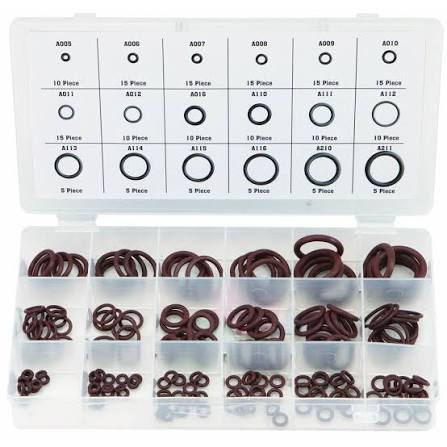
FKM is often promoted as "good chemical resistance," a statement that isn't itself wrong, but easily gets misunderstood as "resistant to all chemicals." Especially in amine media, strong alkalis, high-pH cleaning solutions, some ester catalysts, ammonia/amine mixed environments, general FKM can fail.
Chemours' Viton™ material clearly states that regular fluoroelastomer compounds with a partial fluorine-olefin structure are susceptible to attack by high-pH materials, including strong alkalis and amines; general fluoroelastomers are also not resistant to some small-molecule ester-based compounds, such as MEK, propyl acetate and amine class. Its material further notes that ETP-class specialty FKM can noticeably improve resistance to strong alkalis, amines, esters/ketones/alcohols.
Trelleborg's compatibility table also shows for primary amines, e.g. methylamine, ethylamine, propylamine, allylamine, EPDM and FFKM are rated superior to general FKM, with general FKM listed as not applicable. This shows in amine-class media, one cannot upgrade automatically just because FKM is expensive; the correct method is to confirm the amine type, concentration, temperature, water content, pH, and whether it's a mixed solvent, and then select EPDM, FEPM, FFKM, ETP-type FKM or another specialty material.
FKM's low-temperature elasticity is not outstanding. Many general FKM O-rings become hard at low temperature, rebound slower, and can create a low-temperature leak after cold startup or low-temperature standstill. Trelleborg's given lower low-temperature limit for general FKM is typically -20°C, appropriate compounds can reach -35°C; while general EPDM's typical low-temperature performance can reach about -45°C, and is also used in hot water and ethylene-glycol type brake fluid environments.
Chemours' Viton™ material also notes that raising fluorine content usually improves fluid resistance, but sacrifices low-temperature flexibility; its standard A/B/F-type FKM TR-10 low-temperature flexibility values are notably different, while GLT-S, GFLT-S and other low-temperature-grade materials are used to improve this shortfall. This is very important for engineering selection: high-fluorine FKM is not necessarily better suited to cold-startup sealing than low-temperature FKM.
Lowest Temperature/Condition |
Not Recommended Practice |
More Reasonable Practice |
-10°C and above, oil/fuel environment |
|
General FKM can still be considered, but still needs to check media and dynamic/static seal. |
-20°C to -35°C |
Not defaulting to general F-type FKM |
Select low-temperature FKM, GFLT-class material, FVMQ, HNBR low-temperature grade etc. |
-40°C and below |
|
General FKM risk is high, preferentially consider dedicated low-temperature material, and do low-temperature compression-set/rebound leak verification. |
Low temperature + fuel |
|
Don't only look at "fuel resistant needed" — must also consider fuel swelling and low-temperature rebound; often need low-temperature FKM or FVMQ oil. |
FKM and EPDM are often compared side by side, but they are not simply a high/low grade relationship — they are suited to very different media.
Item |
FKM (fluoroelastomer) |
EPDM (ethylene propylene diene monomer rubber) |
Selection Conclusion |
High-temperature oil |
Strong |
Weak |
Oil, fuel, high-temperature mineral oil should preferentially consider FKM. |
Gasoline/diesel/aviation fuel |
Strong |
Generally not applicable |
Fuel systems generally don't select EPDM. |
Hot water |
General FKM has risk |
Strong |
Hot-water systems usually preferentially use EPDM. |
Steam |
General FKM not recommended for use as-is |
Generally more suitable |
Steam is not "high temperature therefore choose FKM." |
Low-temperature elasticity |
General FKM average |
Generally better |
Low-temperature seals should not blindly default to FKM. |
Amine class/high pH |
General FKM at risk |
Some scenarios more suitable |
Amine media must be individually checked against a compatibility table and verified. |
Mineral oil contamination |
Strong |
Weak |
EPDM can severely swell or fail from oil intrusion. |

Welcome to HOVOO, a Chinese seal factory. Production of PU, Rubber and PTFE seals. The seals include O-ring, piston seal, rod seal, Gray ring and gas seal.


 EN
EN
 AR
AR CS
CS DA
DA NL
NL FI
FI FR
FR DE
DE EL
EL IT
IT JA
JA KO
KO NO
NO PL
PL PT
PT RO
RO RU
RU ES
ES SV
SV TL
TL IW
IW ID
ID LV
LV SR
SR SK
SK VI
VI HU
HU MT
MT TH
TH TR
TR FA
FA MS
MS GA
GA CY
CY IS
IS KA
KA UR
UR LA
LA TA
TA MY
MY
