33-99No. Mufu E Rd. Gulou District, Nanjing, China [email protected] | [email protected]
33-99No. Mufu E Rd. Gulou District, Nanjing, China [email protected] | [email protected]

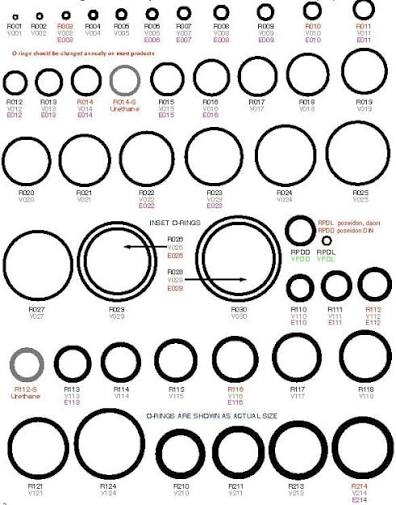
As of 2026-05.
Functional Module |
International/US Standard |
China Standard |
Meaning for Chinese Manufacturers |
O-ring dimensions, cross-section, tolerance, dash number |
ISO 3601-1:2012 + Amd 1:2019; ISO page shows this 2022-confirmed version is currently in force, scope includes ID, cross-section, tolerance and dash number |
GB/T 3452.1-2005 |
Establishes the domestic metric/GB dimension library; when exporting, don't only write "per GB" — confirm with the customer whether the ID × CS series and tolerance need to be ISO's latest edition. |
Groove/installation cavity dimensions |
ISO 3601-2:2025, ISO page shows this as the 3rd edition for 2025, covering Class A, Class B O-ring installation cavity dimensions, with/without back-up ring, and various design paths |
GB/T 3452.3-2005 |
This is an application design standard, not a product output standard; sales and technical support must keep this straight. |
Appearance quality, surface quality, defect classification |
ISO 3601-3:2005 + Amd 1:2018; ISO page shows the 2005 version was reconfirmed in 2021, defines O-ring quality inspection criteria, surface defect classification and maximum allowable limits, applies to aerospace O-rings |
GB/T 3452.2-2007 |
One of the most important criteria for quality disputes and customer complaints; order review must clarify appearance grade. |
Anti-extrusion/compression, back-up ring |
ISO 3601-4:2008, ISO page shows this 2023-confirmed version is currently in force, specifies five types of back-up ring dimensions and tolerances |
GB/T 3452.4-2020 |
Named "anti-extrusion ring (blocking ring)" in customer documents; must be included when a back-up ring solution is necessary. |
Elastomer material specification |
ISO 3601-5:2015; ISO page shows this standard specifies general elastomer material performance and test methods for industrial O-rings, used as either a specification framework or a special material clause reference by users and suppliers |
GB/T 3452.5-2202 |
Serves as NBR, FKM, EPDM, HNBR and other common elastomer application specifications for industrial O-rings. |
Inch dimension series |
SAE AS568F; SAE Mobilus shows AS568F was reaffirmed on 2026-01-29, and specifies O-ring ID, cross-section, tolerance and size code |
No direct GB equivalent |
Common for US equipment, imported components, SAE tube fitting seals; replacement parts and repair must retain the AS568 series. |
O-ring test methods |
ASTM D1414-22; ASTM page shows this version is active, used for measuring O-ring physical properties and post-aging performance change, and for O-ring test method characteristic evaluation |
GB/T 5720-2008, national standard platform shows currently in force, mostly used by North American or export-facing customers |
GB/T 5720 mostly used domestically. |
Rubber material classification |
ASTM D2000-18(2024)e1; ASTM page shows this version is current, covers vulcanized rubber and thermoplastic rubber material classification, defined by heat-aging class and oil-swell grade |
No fully equivalent Chinese standard; specific GB substitutes |
Common in automotive, North American industrial customer contexts; does not define O-ring dimensions or grooves. |
This checklist can support a China O-ring manufacturer's basic "standardized business" ability, but does not by itself cover every high-end application. Standard hydraulic pneumatic, general industrial and one-off maintenance issues are addressed well; GB/T 3452 / ISO 3601 / AS568 / ASTM D1414 / GB/T 5720 already cover most everyday orders. For aerospace, car main-engine plants, food and pharma, semiconductors, oil/gas, low-temperature applications, additional customer drawings, material specifications, traceability, and special-media requirements must be layered on top.
The most important management principle: dimension standards, material standards, test standards, appearance standards, and groove standards cannot be substituted for one another. For example, "AS568-214 only describes the US dash number, not the material," "ASTM D2000 M2HK... describes the material classification and hardness range, not the tolerance or surface defect grade," "GB/T 3452.3 groove dimension" describes the installation cavity, not that the O-ring body itself is compliant.
Domestic manufacturers usually need at least two dimension systems.
The first system is the GB/T 3452.1 / ISO 3601-1 metric system, suited for domestic hydraulic/pneumatic and general-industry customers. GB/T 3452.1-2005 remains currently in force domestically, though ISO 3601-1:2012 and its 2019 revision have already appeared earlier internationally, so purchase orders should not simply assume "GB/T 3452.1 = latest ISO edition." Order reviews should explicitly confirm whether "GB/T 3452.1-2005" or "ISO 3601-1:2012+Amd 1:2019" applies, and should not just say "per ISO 3601."
The second system is the SAE AS568 inch-size dash-number system. AS568F specifies O-ring ID, cross-section, tolerance and size identification code, applies to sealing applications and straight thread tube fitting boss gaskets. For manufacturers this means ERP, mold libraries, inspection specifications and quotation systems should retain -001, -010, -214, -325 series dash codes rather than converting them into rounded millimeter dimensions. Many after-sales replacements and imported equipment replacement parts recognize only AS568 dash codes, and the small decimals after conversion easily lead to disputes.
Production must also note: components produced under different standards may have significantly different tolerance bands, dimensional compliance, and post-vulcanization shrinkage even at the same nominal dimension; NBR, FKM, EPDM, VMQ, HNBR vulcanization shrinkage and post-processing shrinkage also differ. Dimension standards give the finished-product requirement, while internal tooling still needs to establish the control relationship between mold dimensions, vulcanization process, trimming method, post-cure, and shrinkage-and-recovery frequency.
ISO 3601-2 and GB/T 3452.3's most important role is not "sealing," but defining the installation condition boundary. O-ring leakage, extrusion, cutting, compression set too fast, assembly bite marks, and many other failures do not lie in the O-ring itself, but in groove depth, groove width, compression rate, tensile rate, clearance, chamfer, surface roughness, pressure and dynamic conditions.
ISO 3601-2:2025 has clearly separated Class A, Class B O-ring installation cavity design into the general hydraulic/pneumatic application scenario and "the O-ring as the starting point to determine hardware dimensions" and "hardware dimensions already exist" — two design paths. This is very realistic for Chinese manufacturers: many manufacturers are not doing new design, but reversely deducing acceptable specifications from existing shaft, bore or repair sample dimensions, at which point it's necessary to reverse-check against the standard rather than only describing the standard per the nominal dimension.
It's recommended to add a boundary in quotations and technical negotiations: if the customer only purchases the O-ring itself, the supplier can only guarantee the O-ring body meets the dimension, material, appearance and test standards, and cannot promise the system's sealing lifespan, unless a groove compliance review is provided as a value-added service, with the review basis referencing ISO 3601-2:2025 or GB/T 3452.3-2005.
ISO 3601-3 / GB/T 3452.2 are the highest-frequency standards used in factory inspection and customer-complaint handling. They handle surface defect problems, e.g. flash, missing rubber, mold-line abnormality, cutting damage, dents, cracks, gas pores, etc. The ISO page clearly states the standard defines and classifies O-ring surface defects and specifies maximum allowable values.
From a manufacturer's perspective, appearance standards cannot be left out of the inspection department — they affect mold parting-line design, molding process management, compound flowability, curing pressure, trimming and automatic sorting parameter investment. If a customer requires Grade S or higher, quoting still per general Grade N will very likely trigger cosmetic disputes later.
It's recommended to strengthen three items in order review: appearance grade, sampling method, dispute-handling. If the customer doesn't specify a grade, don't default to the lowest applicable quality; instead the quote should state "appearance per GB/T 3452.2-2007 Grade N" or "appearance per ISO 3601-3 Grade S." For aerospace, key automotive components, pharma, fuel, and gas applications, use a stricter grade.
ISO 3601-5 and GB/T 3452.5's role is to standardize commonly-used elastomer material standards for O-rings. The ISO 3601-5 page states it specifies general performance requirements for elastomer materials used for industrial O-rings, and other formulation compounds may also be used, provided the specific physical properties and test methods are agreed by the user and supplier — this sentence is very important for manufacturers: ISO 3601-5 is not "the final answer to all material questions," it is more like a baseline material reference.
ASTM D2000 is another language, especially suited for automotive and North American customers. The ASTM page clearly states D2000's basic logic is organizing by material type/category, hardness, tensile strength, and suffix requirements to represent heat-aging type and oil-swell material codes, and notes D2000 was formulated to correspond with specific product detail specifications when there is a conflict. Therefore, when the customer gives an ASTM D2000 line callout, the manufacturer must also confirm O-ring dimension standard, appearance grade, test method, hardness grade, compression set condition, media immersion condition and delivery documents.
In practice it's recommended to organize material management into three layers: the first layer is commercial materials — NBR 70, NBR 90, FKM 75, FKM 90, EPDM 70, VMQ 70 etc., suited for general stock and quick delivery. The second layer is standard material codes — build a material card per GB/T 3452.5, ISO 3601-5 or ASTM D2000, clarifying hardness, tensile strength, elongation at break, heat-air aging, compression set, media resistance, and low-temperature indicators. The third layer is customer-dedicated compound — automotive, aerospace, food, oil/gas customers may require fixed formulation, fixed raw materials, fixed supply chain, PPAP, FAIR, batch traceability or banned-substance declarations — this layer cannot rely on standard numbers alone.
GB/T 5720-2008 is the core basis for domestic inspection reports and mutual-inspection, and the national standards platform publicly shows its name as "O-shaped rubber sealing ring, Part 1: Dimension and tolerance," and notes this standard revision adopts ISO 3601-1:2002 for scope and tolerance. For domestic-sales customers, especially domestic hydraulic/pneumatic and general industrial-equipment customers, GB/T 5720 is usually more readily accepted.
ASTM D1414-22 is more suited to North American, foreign-invested, aerospace and some automotive customers. The ASTM page shows D1414-22 is currently in force, its scope includes measuring O-ring physical properties and post-aging performance changes, and it is used for quality control and process characteristic evaluation. Therefore export-type factories should have at least the ability to convert between the two: O-ring dimension measurement, hardness, elongation, thermal-air aging, media resistance, compression set, density, compressive-stress relaxation, etc. — the key is not "which one can pass," but being able to write the test conditions, limits, judgment, sample batch, aging batch, inspection date, and test equipment number clearly.
Inspection reports should avoid only writing "pass." A better format is: standard number and version, test item, test condition, actual measured value, limit, judgment, sample batch number, curing batch number, inspection date, test equipment number — this way audits, complaints and re-inspections at the customer are more efficient.
It's recommended internal documentation be divided into six categories.
Review the ISO, SAE, ASTM, GB/T version status once each year. Currently recommended inclusion: ISO 3601-1:2012+Amd1:2019, ISO 3601-2:2025, ISO 3601-3:2005+Amd1:2018, ISO 3601-4:2008, ISO 3601-5:2015, SAE AS568F, ASTM D1414-22, ASTM D2000-18(2024)e1, GB/T 3452.1-2005, GB/T 3452.2-2007, GB/T 3452.3-2005, GB/T 3452.4-2020, GB/T 3452.5-2022, GB/T 5720-2008.
Each SKU should include at minimum: dimension standard, size code, ID, cross-section, allowable tolerance, material code, hardness, color, appearance grade, mold number, inspection specification, and packaging method. AS568 products should retain the dash code, not just convert into a metric size.
Establish a material card for each compound recipe, including hardness, density, tensile strength, elongation, compression set, heat-air aging, media resistance, low temperature, and post-cure conditions, applicable temperature range. Establish an ASTM D2000 line callout cross-reference table for export customers.
Dimensions per ISO/GB/AS568; appearance per ISO 3601-3 or GB/T 3452.2; physical properties per GB/T 5720 or ASTM D1414; special items per customer requirements. Inspection reports must retain the standard version and avoid the ambiguous expression "per national standard."
When sales encounters a non-standard replacement, high-pressure/dynamic seal, high/low temperature, or special-media order, collect: media, temperature, pressure, static/dynamic, shaft diameter/bore, groove, surface roughness, assembly method, expected life, whether a back-up ring is needed. Then perform groove verification per ISO 3601-2 or GB/T 3452.3.
State clearly in the quote: "This quote guarantees the O-ring body meets the specified standard; it does not include a system sealing lifespan guarantee unless groove and operating-condition data are provided." This can significantly lower the ambiguous liability caused by low-priced customer design issues.
A domestic general hydraulic/pneumatic order can be written as: O-ring, spec per GB/T 3452.1-2005, material per GB/T 3452.5-2022, appearance per GB/T 3452.2-2007 Grade N, test per GB/T 5720-2008, inspection report provided with the shipment.
An export or imported-equipment repair order can be written as: O-ring SAE AS568F dash No. -XXX, material FKM 75 Shore A, material classification per ASTM D2000-18(2024)e1 as agreed, physical testing per ASTM D1414-22, visual acceptance per ISO 3601-3 Grade N/S, certificate of conformity and dimensional report required.
When groove design or high-pressure applications are involved, add additionally: Groove/housing to be checked per ISO 3601-2:2025 or GB/T 3452.3-2005; back-up ring, if required, to ISO 3601-4:2008 or GB/T 3452.4-2020.
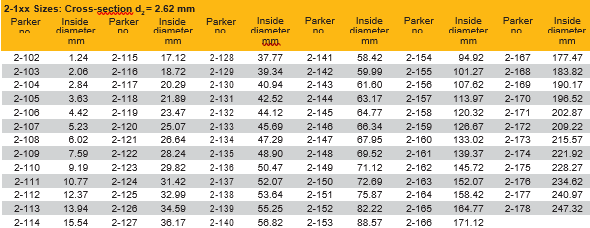
For a China O-ring manufacturer, the recommended priority for implementation is as follows.
Priority 1: GB/T 3452.1, GB/T 3452.2, GB/T 3452.5, GB/T 5720, SAE AS568F — these five directly affect daily order-taking, production, final inspection and export mutual-inspection parts.
Priority 2: ISO 3601-1, ISO 3601-2:2025, ISO 3601-3, ASTM D1414, ASTM D2000 — this group is used for exports, foreign-invested customers, technical drawing and material-specification conversion.
Priority 3: ISO 3601-4 / GB/T 3452.4 — needed as soon as high-pressure hydraulics, back-up ring assemblies, or dynamic seal applications are entered.
Priority 4: Customer industry specifications — automotive projects should layer on PPAP, IATF 16949 system and customer material specifications; aerospace projects should layer on AS/AMS/MIL or customer drawings; food, drinking water, pharma, oxygen and semiconductor applications should layer on corresponding certification, cleanliness, and prohibited-substance requirements.

Welcome to HOVOO, a Chinese seal factory. Production of PU, Rubber and PTFE seals. The seals include O-ring, piston seal, rod seal, Gray ring and gas seal.


 EN
EN
 AR
AR CS
CS DA
DA NL
NL FI
FI FR
FR DE
DE EL
EL IT
IT JA
JA KO
KO NO
NO PL
PL PT
PT RO
RO RU
RU ES
ES SV
SV TL
TL IW
IW ID
ID LV
LV SR
SR SK
SK VI
VI HU
HU MT
MT TH
TH TR
TR FA
FA MS
MS GA
GA CY
CY IS
IS KA
KA UR
UR LA
LA TA
TA MY
MY
