33-99No. Mufu E Rd. Gulou District, Nanjing, China [email protected] | [email protected]
33-99No. Mufu E Rd. Gulou District, Nanjing, China [email protected] | [email protected]

Operating Condition Problem |
Preferred Special Material |
Why Not Common Materials |
Common Substitute Materials |
High-temperature engine oil, transmission fluid, high-speed additive lubricant |
ACM/AEM |
NBR ages quickly at high temperature; general HNBR/FKM not necessarily suited for these additives or low-temperature requirements |
HNBR, FKM, special NBR |
High-temperature oil product + better low-temperature flexibility |
AEM |
ACM low-temperature performance usually inferior to AEM |
ACM, HNBR, FKM |
Amine, alkali, hot water, steam, certain acid-alkali compound media |
FEPM / AFLAS |
Ordinary FKM may fail in amine, strong alkali, hot water, steam medium |
EPDM, FKM, dedicated FKM, PTFE coating |
Outdoor, ozone, weathering + moderate oil resistance |
CR |
EPDM not oil resistant; NBR/HNBR/FKM weathering not as good |
EPDM, NBR, HNBR, FKM |
High wear, high tear, high mechanical strength, dynamic seal |
AU/EU polyurethane |
Ordinary rubber anti-extrusion, anti-abrasion, tear strength not sufficient |
NBR, XNBR, PTFE back-up ring, U-shape ring |
Fuel, oil and gas, low permeation, ozone, low-temperature composite balance |
ECO |
NBR ozone resistance and low permeation insufficient; FKM cost high or low-temperature insufficient |
NBR, HNBR, FKM, FVMQ |
This chart can be used as core content on the first screen of the page. Users are usually not searching to "learn material chemistry," but to judge: is the raw material selected correctly, and is there a more suitable substitute material?
ACM, acrylate rubber, is suitable for scenarios described as "high-temperature oil, engine oil, transmission fluid, media containing sulfur or additive lubricants."
Its main value is not "being more high-grade than FKM," but performing better in certain automotive oil environments against heat aging, oxidation aging, ozone. Parker's material description explains ACM as having good resistance to mineral oil, oxygen and ozone, but water compatibility and low-temperature performance are inferior to NBR; Trelleborg also points out ACM is mainly used for automotive applications requiring high-temperature oil with additives.
Typical situations suited to using ACM:
Trigger Condition |
Judgment Logic |
NBR hardens, cracks, compression set clearly manifests in hot oil |
ACM's positioning is more suitable than NBR for certain high-temperature oil products |
Working condition is engine oil, transmission oil, transmission seal, engine oil-related seal |
ACM commonly used for automotive oil seal, transmission seal, engine oil related seal |
Media is not water-based or strong chemical solvent |
ACM's strength is heat resistance, not water-based or strong chemical media |
Do not want to go directly to FKM cost |
ACM can serve as an economical option before FKM in some hot oil operating conditions |
ACM is not a "universal oil-resistant material." It is more like a high-temperature oil dedicated material. If the problem comes from fuel, aromatics, strong solvents, hot water, steam or low-temperature embrittlement, ACM may not be the correct answer.
Current Material |
Failure Manifestation |
Alternative to Consider |
NBR |
Hardens in hot oil, cracks, short life |
ACM, HNBR, FKM |
ACM |
Poor low-temperature sealing |
AEM, HNBR, special low-temperature FKM |
ACM |
Chemistry complex, temperature higher |
FKM, FEPM/AFLAS, FFKM, per specific quality |
ACM |
Water, cooling liquid, steam environment |
EPDM, FEPM/AFLAS, specific quality dependent |
AEM, ethylene acrylate rubber, common commodity names include Vamac.
It has significant overlap with ACM's application area, but AEM is more placed under discussion in automotive engine, transmission, oil-gas mixed, thermal ventilation and combustion oil-cooling environments. Parker describes AEM as a mixed polymer material of ethylene, methyl acrylate and cure-site monomers, and points out it can be seen as a broader-performance polyacrylate ester material; DuPont's Vamac data also clearly places AEM in needing heat resistance, engine oil, transmission oil and blow-by gas automotive applications.
Working Condition |
Reason to Select AEM |
High-temperature oil products + low-temperature startup |
AEM is usually more suitable than ACM for low-temperature dynamic seal |
Automotive engine chamber, transmission, oil-gas mixed environment |
AEM mature in automotive hot oil, air, oil-gas environments |
ACM low-temperature hardening or seal startup leakage |
AEM can serve as an improvement direction for ACM's low temperature |
Need to balance heat resistance, oil resistance, ozone resistance |
AEM's overall balance is better than ordinary NBR |
AEM is not FKM, nor is it FEPM. It should not be promoted as a "broadly universal chemical material." If the medium is strong acid, strong alkali, amines, ketones, esters, hot water steam or complex chemical media, AEM needs careful validation.
Requirement |
Selectable Material |
More heat resistant than NBR |
ACM, AEM, HNBR |
Lower temperature than ACM |
AEM, HNBR, low-temperature FKM |
More chemically resistant than AEM |
FKM, FEPM/AFLAS, FFKM |
Lower cost than AEM |
NBR, special NBR, but life may decrease |
FEPM is tetrafluoroethylene-propylene copolymer elastomer, and AFLAS is one of its common commodity names.
This is one of the most valuable pieces of content on the page, because many users mistakenly believe "FKM/Viton is the most chemically resistant O-ring." This is not entirely correct. Ordinary FKM can fail in certain amines, strong alkali, hot water, steam, some cooling liquid additives or heat and refrigeration oil-based chemicals or special additives, and FEPM/AFLAS is precisely the substitute for filling these boundary scenarios.
Parker describes FEPM/AFLAS as a copolymer of TFE and propylene, and emphasizes its excellent resistance against broad corrosive media; AGC's data on AFLAS also characterizes it as heat resistant, acid resistant, alkali/amine and hot steam resistant, and points out it outperforms ordinary FKM in strong alkalinity.
Trigger Condition |
Judgment Logic |
FKM fails in amines, alkaline media |
FEPM/AFLAS is the typical alternative direction |
Hot water, steam, cooling liquid additives cause FKM hardening or cracking |
AFLAS commonly used for steam, cooling liquid additives, special hot water scenarios |
Media contains H₂S, oilfield chemicals, alkaline mud |
FEPM/AFLAS common in oil and gas, chemical, mechanical seal and similar scenarios |
Need more oil/chemical resistant than EPDM, better alkali/acid resistant than ordinary FKM |
FEPM/AFLAS is the mid-layer selection |
FFKM cost excessive |
FEPM/AFLAS could serve as a sub-high-end substitute solution |
AGC's application data also lists semiconductor sealing, steam, oilfield, mechanical seal, marine engine coolant and transmission sealing directions for AFLAS applications, which belong to scenarios "outside ordinary material boundaries."
Problem |
FKM |
FEPM/AFLAS |
High-temperature oil |
Very strong |
Very strong |
Aromatics, fuel oil |
Usually stronger, depends on specific grade |
Not necessarily better than FKM, needs testing |
Amines |
Ordinary FKM may be vulnerable |
Usually more suitable |
Strong alkali |
Ordinary FKM may be vulnerable |
Usually more suitable |
Hot water/steam |
Ordinary FKM may harden |
Usually more suitable |
Low temperature |
FKM has low-temperature grades |
Usually not a low-temperature priority material |
Cost |
High |
Also high, some scenarios lower than FFKM |
Scenario |
Substitutable Material |
Simple hot water, steam, no oil |
EPDM |
Amines, alkali, hot water + high temperature |
FEPM/AFLAS |
Extreme chemical media |
FFKM |
Static seal, dimensions allow, cost sensitive |
PTFE-encapsulated O-ring |
Ordinary high-temperature oil |
FKM, HNBR, ACM/AEM |
Wording to avoid: don't write FEPM/AFLAS as "comprehensively better than FKM." A more accurate expression is:
FEPM/AFLAS is an important substitute material when ordinary FKM is not suitable for amines, alkali, hot water, steam or special additives.
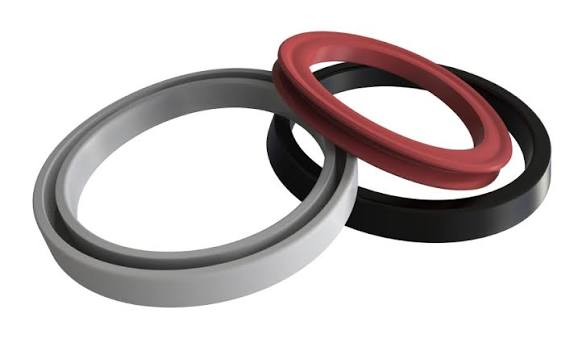
CR, chloroprene rubber, also commonly called Neoprene.
CR's value is in balance: it is not the most oil resistant, nor the most heat resistant, nor even the most chemically resistant; but it has relatively balanced performance among cold resistance, ozone resistance, aging resistance, and a certain degree of oil resistance. Parker notes CR has good ozone, aging and chemical acceptance, and maintains good mechanical properties across a relatively wide temperature range; Trelleborg also categorizes CR's advantages as ozone resistance, weathering resistance, chemical resistance, aging resistance and good mechanical properties.
Working Condition |
Value of CR |
Outdoor equipment, exposed to air, ozone, weather |
Stronger weathering than NBR |
Some oil contact, but not strong oil-immersion scenario |
More suitable oil exposure than EPDM |
Refrigerant, adhesive, general industrial environment |
CR has a certain traditional application foundation |
Need self-flame-retardant tendency or common rubber more advantageous |
CR has flame retardant advantage over many common rubbers |
Cost does not want to reach FKM/HNBR |
CR can serve as an intermediate choice |
CR is not suitable to be treated as a high-end oil-resistant material, nor should it substitute for FKM in high-temperature, fuel, strong solvent or strongly corrosive chemical media.
Current Problem |
Substitution Direction |
CR not oil resistant enough |
NBR, HNBR, FKM |
CR not high-temperature resistant enough |
HNBR, FKM, AEM |
CR can withstand weathering but only contacts hot water steam |
EPDM |
CR chemical media complex |
FKM, FEPM/AFLAS, FFKM |
CR wear severe |
AU/EU, HNBR, XNBR |
AU/EU belong to polyurethane rubber, AU usually refers to polyester-type polyurethane, EU usually refers to polyether-type polyurethane.
The key words of polyurethane O-rings are not "chemical resistant" or "high temperature resistant," but:
Wear resistance, anti-tearing, high tensile strength, anti-extrusion, dynamic sealing lifespan.
Trelleborg summarizes polyurethane's features as excellent elasticity, best abrasion resistance, outstanding tensile strength, low compression set and good oxygen/ozone resistance; ERIKS also points out PUR and special XNBR can provide the best abrasion performance.
Trigger Condition |
Judgment Logic |
O-ring worn, cut, bitten |
This is the typical application scenario for polyurethane |
Dynamic seal, reciprocating motion, hydraulic pneumatic |
PU's abrasion and tear resistance value is obvious |
Extrusion failure occurs under high pressure |
PU more resistant to mechanical damage than ordinary NBR |
Ordinary rubber particle abrasion, sand, metal wear |
PU can serve as an abrasion upgrade material |
Not chemical corrosion, but mechanical wear |
Priority AU/EU, back-up ring, groove design |
Type |
Focus |
AU, Polyester-type Polyurethane |
Usually better mechanical strength and oil resistance, but needs more attention to hydrolysis risk |
EU, Polyether-type Polyurethane |
Usually more suitable for humid, water-contact or hydrolysis-risk scenarios |
COG's polyether-type polyurethane materials also explicitly point out EU O-rings have better hydrolysis resistance than AU materials, and are more durable in water-based media.
Polyurethane O-rings are most easily misused in the following scenarios:
Not Recommended Scenario |
Reason |
High-temperature steam |
PU is not the priority material for steam seals |
Strong acid, strong alkali, amines |
Easily chemically degrades |
High-temperature long-continuous operation |
Temperature limit usually not as good as FKM, FEPM, FFKM |
Only replacing materials to solve extrusion |
Groove clearance, hardness, back-up ring, pressure peak equally important |
The polyurethane page should reiterate one point: if the failure cause is abrasion, tearing, extrusion, AU/EU is meaningful; if the failure cause is chemical corrosion, priority should go to media compatibility.
ECO, epichlorohydrin rubber, commonly used in automotive fuel, oil-gas intake, soft tube, air conditioning and vibration reduction areas.
It can be understood as: a balanced solution providing fuel/oil-resistant, low permeation, ozone-resistant, low-temperature performance between NBR, CR, FKM. Zeon's Hydrin ECO data describes it as a balanced material with heat, oil, fuel, low permeation, ozone resistance and low-temperature flexibility, and lists automotive fuel hose, intake system, tube, air conditioning and vibration reduction applications; Osaka Soda also points out epichlorohydrin rubber has oil resistance, low temperature, ozone and fuel/gas barrier related characteristics.
Working Condition |
Value of ECO |
Fuel, diesel, oil-gas, fuel vapor |
ECO has fuel oil and low permeation advantage |
NBR ozone resistance, low permeation insufficient |
ECO can serve as an upgrade direction |
FKM cost too high or insufficient low-temperature performance |
ECO can serve as an intermediate solution |
Need to balance oil products, ozone, low temperature |
ECO more comprehensive than pure NBR |
Automotive fuel system, intake system, sealing components |
ECO has mature application foundation |
Material |
Advantage |
Limitation |
NBR |
Low cost, good oil resistance foundation |
Not extensively resistant to fuel, ozone, low permeation limited |
ECO |
Better balanced fuel resistance, low permeation, ozone resistance |
Not a broadly extensive chemical material |
FKM |
Stronger high-temperature and chemical resistance |
Higher cost, and low-temperature elasticity discount |
FVMQ |
Advantage in low-temperature, fuel vapor scenarios |
Weaker mechanical strength and cost needs assessment |
ECO should not be written as "a low-cost substitute for FKM." The more accurate statement is:
ECO is suitable for scenarios requiring fuel, oil-gas, low permeation and ozone resistance balance, but does not necessarily need FKM's comprehensive chemical resistance capability.
This kind of page has the greatest content structure value when built around "special media" and "failure mode," not the material alphabet.
Priority consider:
HNBR: More heat resistant, more oil resistant, more mechanical aging resistant than NBR.
ACM: High-temperature oil products, automotive oil seal, transmission oil environment.
AEM: High-temperature oil products, and needing better low-temperature and comprehensive automotive performance.
FKM: More high-temperature, wider chemically compatible.
ERIKS' sealing material manual also emphasizes that additives in oil products significantly affect rubber compatibility, especially in synthetic oil, hydraulic oil, engine oil and fuel scenarios, one cannot select materials only by "oil resistant" two words.
Priority consider:
Media |
Recommended Direction |
Ordinary hot water, steam |
EPDM |
Hot water + oil/additive/corrosion inhibitor |
FEPM/AFLAS |
FKM hardens in cooling liquid or steam |
FEPM/AFLAS |
Extreme temperature and chemical corrosion |
FFKM |
Static seal, chemically compatibility priority |
PTFE-encapsulated O-ring |
Note: FKM does not equal "hot water steam priority material." FKM, steam, amines, strong alkali scenarios often need to skip ordinary FKM.
Priority consider:
Media |
Recommended Direction |
Amine class |
FEPM/AFLAS, FFKM, partial acid-resistant FKM |
Strong alkali |
FEPM/AFLAS, FKM |
Dilute acid |
Depends on species, concentration, temperature, may be FKM, FEPM, EPDM or FFKM |
Strong oxidizing acid |
Usually needs FFKM, PTFE class solution |
Acid-alkali alternating cleaning |
Actual liquid testing must be done |
One must avoid a claim that "a certain material is acid-alkali resistant." Acid, alkali, concentration, temperature, duration and cleaning agent systems are entirely different, results may be contrary.
Priority consider:
Demand |
Recommended Direction |
Ordinary fuel, low cost |
NBR, special NBR |
Low permeation, ozone resistant, fuel-gas balance |
ECO |
High-temperature fuel, aromatics, fuel vapor |
FVMQ, ECO, special FKM |
Low-temperature fuel sealing |
FVMQ, ECO, special FKM |
Biodiesel, alcohol-containing fuel |
Must be verified per specific fuel formulation |
ERIKS also points out fuel is a complex mixture, and sealing material selection needs to consider differences of aromatics, alcohol type, additives, etc, usually needing testing verification.
Priority consider:
Failure Manifestation |
Recommended Direction |
O-ring surface worn flat |
AU/EU, HNBR, XNBR |
Bitten off after being pushed into clearance |
Higher hardness PU, HNBR, back-up ring, reduce clearance |
Reciprocating motion wear |
PU, U-shape ring, combination seal |
Mud, dust, particle wear |
PU, dust ring, structure protection |
High-pressure pulse |
Material + groove + back-up ring co-design |
It needs to be emphasized here: many "material failures" are actually structural failures. If groove dimension, compression amount, clearance, surface roughness, lubrication and pressure peak value are not reasonable, replacing with even more expensive material may not solve the problem.
NBR Failure Reason |
Substitute Material |
Aging in hot oil |
HNBR, ACM, AEM, FKM |
Fuel permeation or ozone cracking |
ECO, FKM, FVMQ |
Severe dynamic wear |
AU/EU, HNBR, XNBR |
Insufficient weathering |
CR, HNBR, ECO |
Complex chemical media |
FKM, FEPM/AFLAS, FFKM |
FKM Failure Reason |
Substitute Material |
Amine media |
FEPM/AFLAS, FFKM, amine-resistant FKM |
Strong alkali |
FEPM/AFLAS, FFKM |
Hot water steam hardening |
FEPM/AFLAS, EPDM, FFKM |
Low-temperature leakage |
Low-temperature FKM, FVMQ, AEM, ECO |
Excessive cost |
ACM, AEM, HNBR, ECO, depends on media |
EPDM Failure Reason |
Substitute Material |
Contact with mineral oil swelling |
NBR, HNBR, ACM, AEM, FKM |
Hot water contains oil or additives |
FEPM/AFLAS |
Need weathering with also a little oil |
CR |
Strong chemical media |
FKM, FEPM/AFLAS, FFKM |
HNBR Failure Reason |
Substitute Material |
Hot oil temperature higher |
ACM, AEM, FKM |
Severe abrasion or extrusion |
AU/EU, back-up ring |
Amine or strong alkali |
FEPM/AFLAS, FFKM |
Low fuel permeation requirement high |
ECO, FKM, FVMQ |
This type of page should ultimately place a "price quote/selection field table," used to convert traffic into effective consultation.
Field |
Why It Matters |
Media name |
"Oil/water/acid" too broad, must clarify specific medium |
Media concentration |
Acid-alkali, cleaning agent, solvent especially critical |
Continuous and peak temperature |
Peak temperature may determine material life |
Static or dynamic seal |
AU/EU, HNBR and similar choice related |
Pressure and pressure fluctuation |
High pressure may need back-up ring or structural change |
Groove dimension and compression ratio |
Many leaks are not material problems |
Whether exposed to ozone, UV, outdoor environment |
CR, EPDM, ECO, HNBR selection related |
Whether there is fuel, alcohol, biodiesel |
ECO, FKM, FVMQ, NBR selection related |
Whether there is cleaning agent, additive, corrosion inhibitor |
Impact on FKM, EPDM, FEPM etc significant |
Certification requirements |
Food, drinking water, automotive, semiconductor and other limit brand names |
Trelleborg's compatibility explanation also emphasizes that rubber and media's actual performance is affected by temperature, pressure, media composition, mechanical properties and other factors; laboratory compatibility tables cannot fully substitute for actual working condition testing.
Both are usable for automotive oil products and high-temperature environments. Generally, ACM is more suited to high-temperature hot oil applications, AEM emphasizes low temperature and blow-by comprehensive performance in the automotive environment. The specific choice should look at oil product type, temperature, low-temperature startup requirement and seal form.
It can be substituted in certain special media, such as amines, alkali, hot water, steam, media containing additives cooling liquid, but it is not a comprehensive upgrade for all FKM operating conditions. Fuel oil, low temperature, cost and processability still need to be evaluated separately.
Polyurethane is usually a very outstanding elastomer material for wear resistance and high mechanical strength, suitable for dynamic wear, high tearing and anti-extrusion scenarios. But it is not suitable to be used as a high-temperature steam, strong acid-alkali or broad chemical media material.
Yes. CR's advantage is the balance of weathering, ozone resistance, mechanical properties and a certain oil resistance. It is suitable for some outdoor, moderate oil, refrigeration or general industrial environments, but should not substitute for FKM, HNBR or FEPM used in high-end chemical or high-temperature oil conditions.
ECO can be seen as an intermediate balanced material between NBR and FKM, especially suitable for scenarios requiring simultaneous fuel, oil-gas, low permeation, ozone resistance and low-temperature performance. But if temperature and chemical corrosion resistance requirements are very high, may need to switch to FKM, FVMQ or FFKM.

Welcome to HOVOO, a Chinese seal factory. Production of PU, Rubber and PTFE seals. The seals include O-ring, piston seal, rod seal, Gray ring and gas seal.


 EN
EN
 AR
AR CS
CS DA
DA NL
NL FI
FI FR
FR DE
DE EL
EL IT
IT JA
JA KO
KO NO
NO PL
PL PT
PT RO
RO RU
RU ES
ES SV
SV TL
TL IW
IW ID
ID LV
LV SR
SR SK
SK VI
VI HU
HU MT
MT TH
TH TR
TR FA
FA MS
MS GA
GA CY
CY IS
IS KA
KA UR
UR LA
LA TA
TA MY
MY
