33-99No. Mufu E Rd. Gulou District, Nanjing, China [email protected] | [email protected]
33-99No. Mufu E Rd. Gulou District, Nanjing, China [email protected] | [email protected]

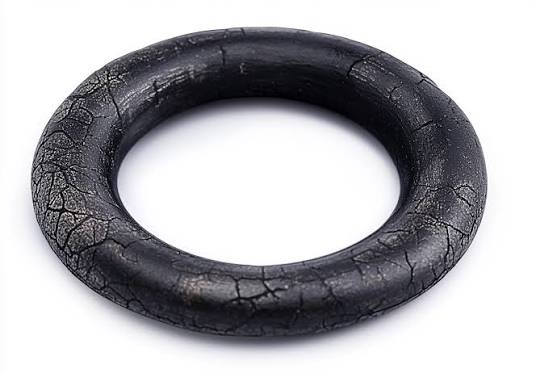
The O-ring essentially relies on elastic compression deformation to produce contact pressure sealing. It is suitable for static seals, low-speed reciprocating or some auxiliary seals, but is not a dedicated "dust-blocking, scraping, discharge-contamination" structure. Especially in engineering machinery, mining equipment and agricultural machinery, external contaminants are not an occasional factor but a long-standing condition of the operating environment.
Hydraulic cylinders, pin shafts, motors, pumps, valves, transmission cases, wheel edges and other agricultural implement mechanism positions often simultaneously face:
Dust, mud, sand, coarse and fine slag, mud water, metal debris, wash water, high-pressure flushing, vibration impact, bias loading, low speed and slow crawl and insufficient lubrication.
With these factors superimposed, what O-rings face is not simple "sealing media," but a highly contaminated, highly abrasive, high-impact mechanical wear system. Freudenberg's hydraulic cylinder dust scraper explanation also emphasizes that the dust scraper's function is to prevent external contaminants from entering the cylinder as the piston rod retracts, and to isolate dust, water and other environmental influences outside the pressure-bearing sealing edge and contact area.
When particles from dust, sand, ore powder and mud enter between the O-ring and the shaft, bore, cylinder body or groove, a typical three-body abrasive wear occurs:
The first body is the metal mating surface, the second body is the rubber O-ring, and the third body is the hard particles caught in the middle.
These particles perform micro-cutting, plowing, and scraping actions on the rubber surface during relative motion. The result is the O-ring surface becomes worn flat, hairy, cut, and the cross-section gradually becomes an oval, and resilience declines, ultimately the sealing contact pressure is insufficient and leaks. Parker's failure analysis of dynamic O-rings links wear directly to friction, and states the surface can manifest as O-ring single-side wear flat.
In mining and engineering machinery, quartz sand, ore powder, coal powder, mud particles are usually harder, and mostly not fine round-corner particles. They don't scrape the sealing material "gently" like liquid contamination, but actively cut the sealing material. Noria's hydraulic contamination materials also point out that fine particles act like sandpaper on components, and can cause continuous wear amplification; dust scrapers, rod surfaces and seal contact areas will all be affected.
Mud, muddy water, sand mud are not simple liquid contaminants. They usually have three destructive characteristics:
First, carrying hard particles, particles entering the sealing contact face form grinding.
Second, destroying the lubricating film, moisture dilutes or takes away oil film, grease membrane, causing the contact zone to transition toward boundary friction or even dry friction.
Third, dry-caking, mud water staying in the groove, rod surface, outside the dust ring will dry-cake, forming a hard shell, directly wounding the rubber and metal surface at the next motion.
This is also why many hydraulic cylinders on mining, sand yards, excavators, agricultural machinery, harvesters and rotary tillers are not one-time leaks, but first show slight micro-seepage, external contamination, rod surface scratches, dust ring flipped edge, and then rapidly the main seal and O-ring fail.
O-rings in dynamic seals need to rely on an extremely thin oil or grease film to reduce friction, contaminated particles will adhere to fat, scrape off the oil film, and mud water flushing will also wash away the lubricating film, high-pressure cleaning can also make direct contact aggravate.
After the water and particles press into the sealing contact area, lubrication cannot keep up, and the O-ring and metal surface direct contact, friction heat rises, rubber surface begins to precipitate, harden, tortoise-crack.
Parker listed "lack of lubrication or poor lubrication" as one of the important causes of O-ring twisting and spiral failure, and recommends ensuring lubrication, improving surface quality, using more suitable hardness and cautious rubber compound.
Needs attention: exposing directly to external oil grease in dust environments is not necessarily a good thing. If external oil grease is directly exposed, it will readily adhere to dust and sand grains, forming "abrasive paste." The correct practice is not simply applying more grease, but keeping lubrication within the protected sealing contact zone, and simultaneously blocking particles from entering via dust ring, dust cap, labyrinth structure, and back-up ring.
Rubber material is relatively soft compared to metal, and fine hard particles can be pressed into the O-ring surface, forming embedded abrasion. At this time the O-ring is no longer just an abrasion object, but reversely scratches the shaft, bore, rod surface and grooves.
Typical consequences include:
This type of failure is easily mistaken as "material not oil-resistant" or "O-ring quality is poor," but the actual root cause is that contaminant particles were not blocked and the sealing contact zone has already become an abrasion zone.
O-ring sealing relies on the surface quality of the metal mating face. Particles and abrasive particles will not only cut the rubber, but also scratch the piston rod, valve stem, shaft, bore wall and groove position; once the metal surface exhibits scratches, pitting, plating flaking or wounding, even if the O-ring is intact, it may be unable to fill in these continuous leak channels.
Noria's data points out that fine scratches and grooves on the rod surface will significantly reduce dust scraper life, and give contaminants a path to continue entering the system; too smooth may also fail to maintain the lubrication film.
This is very critical for engineering machinery customers: only replacing the O-ring, not repairing the rod surface or groove, usually can only stop the leak briefly.
Many field problems are essentially sealing system configuration errors. The O-ring is not responsible for blocking pressure media, it should not act as the first anti-dust component. The first defensive line should be borne by dust rings, dust caps, V-rings, labyrinth dust-prevention structures or protective covers.
If there is no dust ring, or the dust ring lip wear, edge flip, aging, selection too soft, dust and mud particles will directly reach the main seal and O-ring position. Freudenberg explicitly positions dust rings as preventing dust from entering the sealed area, and emphasizes that in pneumatic and hydraulic cylinders, dust needs to be far from the parts inside the cylinder body.
In high-contamination hydraulic cylinders, single-layer dust rings are usually not enough. High-contamination applications usually need stronger dust-blocking capability structures, such as polyurethane dust rings, metal skeleton dust rings, double-layer dust rings, heavy-duty mud dust rings. Noria also indicates dual or single dust ring combination structures are suitable for high-contamination applications, and can improve sealing system durability.
In reciprocating motion, if the O-ring experiences uneven friction locally, it easily partly slides, partly rolls, eventually producing twisting. After twisting, the O-ring surface will exhibit spiral-shaped scratches, oblique cuts, or local breaks. Parker lists eccentricity, rough surface, poor lubrication, material too soft, stroke speed insufficient and rolling during assembly as causes of O-ring twisting/spiral defects.
Dust and mud will worsen this failure, because particles make local friction coefficients become unstable:
Some areas have oil film, friction is lower; some areas have coarse sand, friction is higher; some areas mud is dry-caked, forming stick-slip resistance.
O-ring local sliding is dragged, ultimately producing rolling and twisting. So when the O-ring on site shows about 45° oblique spiral marks, local rolling, cut mouth, one should not just judge it as an installation problem, but should also check the contamination ingress and lubrication status.
Engineering machinery and mining equipment have frequent pressure impact, vibration, bias loading and structural elastic deformation. Contaminant particles cause abrasive wear to enlarge the sealing clearance further, causing the O-ring extrusion clearance to further increase. Under high pressure the O-ring is pressed into the clearance, then the edge is sheared, forming "bite" or "pull out silk" or missing rubber.
Parker explains that O-ring extrusion is commonly seen in dynamic seal, pulse pressure static seal, excessive clearance and part respiratory deformation and other conditions; main countermeasures include reducing clearance, using back-up rings, improving material hardness, checking media compatibility and control eccentricity.
Under mud and abrasive particle environment, extrusion failure often occurs simultaneously with abrasive wear: first particle wear causes clearance to increase, then high-pressure O-ring extruded into the clearance, finally cut at the sharp edge, sand grains and repeated motion tear the rubber.
A too-rough mating surface will grind the O-ring like a knife blade; too-smooth, meanwhile, may retain no lubricating film, causing dry friction. Parker's wear analysis also points out that static seals under high pulse pressure can move within the groove causing wear, and if surface quality is poor, wear is more severe, reducing surface roughness can improve dry wear.
For hydraulic cylinder rod, valve stem, shaft ends and similar dynamic seals especially so: in mud, dust environments, surface finish getting quickly worsened will lead to a vicious cycle of leaking passages formed rapidly; while leaked oil will also adhere to more dust, forming secondary contamination.
Contaminant Type |
Main Damage Method |
Typical Result |
Dry dust, fine sand |
Three-body particle abrasion, absorbing oil film |
O-ring surface worn flat, hairy, micro-seepage |
Mud, mud water |
Impact lubrication, carrying sand particles, dry-caking after hardening |
Dust ring flip, main seal wear, rod surface scratches |
Ore powder, coal powder, gravel |
High-hardness fine particles continuously entering |
Rapid abrasive wear, groove filling powder, seal life significantly shortened |
Metal debris |
Cutting, scraping, embedding into rubber |
O-ring cut, shaft surface scratches |
Plant fiber, chaff and stem fragments |
Winding, blocking, bringing in mud sand |
Agricultural implement operator seal contamination, local bias load |
High-pressure wash water |
Water intrusion, lubricant washout, particle intrusion |
Short-term internal seal leak after washing |
This is the most typical dust and mud failure scenario. Piston rod exposed in mud and sand during retraction will bring contaminants into the cylinder body. If the dust ring cannot effectively remove contaminants, particles enter the sealing area, causing main seal, O-ring auxiliary seal failure, resulting in bidirectional wear and oil contamination.
Trelleborg in the mining equipment sealing solution material also lists mud, water, ash and dust contamination control and maintaining lubrication as important goals for the entire sealing system.
These positions are often exposed in sandy soil, mud and impact loading. If the O-ring is used as the direct sealing dust or grease seal, exposure to external particles adhered to grease forms grinding paste, movement continuously wears the O-ring and metal mating surface.
This type of position, single ordinary NBR O-rings usually have limited life, and should consider V-ring, skeleton oil seal, combined seal, labyrinth structure or regular grease replenishment dust-blocking structure.
Farm machinery contaminants are not just sand, they also have chaff, straw, fertilizer, and water and mud. Plant fibers are easily wound at shaft ends or rod surfaces, bringing in mud sand and further compounding contamination. Fertilizer and pesticide residue may also amplify chemical aging, but what happens first is usually still abrasive wear caused by contamination particles.
Mining dust hardness is high, particles brittle and hard, load impact intensity strong, sealed parts are prone to rapid wear, cutting, extrusion and abrasion. Ordinary O-rings in this kind of scene are more suitable as static seals or auxiliary compensation components, not suitable as a direct dynamic seal against ore powder and mud.
The O-ring removed can be inspected for the following features:
Failure Appearance |
Possible Cause |
Single-sided worn flat, surface hairy |
Long-term friction, insufficient lubrication, particle abrasion |
Surface coarse, hairy, fine scratches |
Dust, fine sand, ore powder entering the contact face |
Bright spots or fine hard particles found in the rubber |
Contaminant particle embedding |
Oblique spiral cracks, twisting, local cut mouth |
O-ring rolling, twisting, lubrication poor, uneven friction |
Edge missing rubber, biting, tearing |
Clearance extrusion, pressure impact, back-up ring not matched |
Replaced then rapidly leaks again |
Metal mating face already scratched, contamination residual, dust ring structure failure |
Parker also lists dry lubrication assembly, contamination, sharp edges, groove and hole port dimensions abnormal and other factors leading to assembly errors, and recommends cleanliness during assembly and using assembly lubricant to check.
This can be explained to engineering machinery, mining, agricultural machinery customers this way:
Many O-ring failures are not rubber material degrading, but contaminant particles entering the sealing contact zone forming abrasive wear. Dust, mud and sand grains destroy the lubricating film, scratch the metal surface, embed into rubber, causing the O-ring to transition from an elastic sealing part into a continuously abraded wear part. Only replacing the O-ring usually cannot resolve the root cause; simultaneously must check the dust ring, protective structure, rod surface condition, groove clearance, lubrication and contamination control.
Put more directly:
In dust, mud, and abrasive particle environments, sealing life mainly depends on "can particles be blocked out," not just "is the O-ring material good."
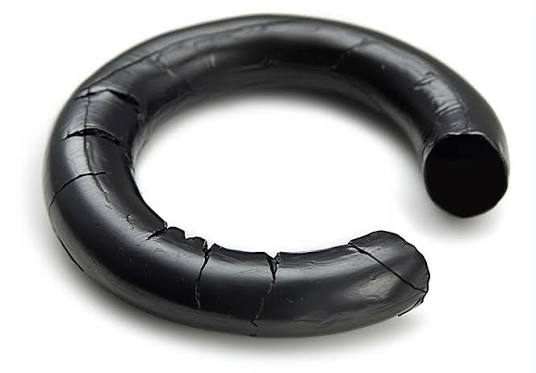
For contaminated equipment, it is recommended to handle by the following priority order:
First, dust prevention: Add or upgrade dust rings, protective rings, dust caps, labyrinth structures, bellow protective covers.
Second, abrasion resistance: Use more wear-resistant materials, such as HNBR, PU/TPU or suitable composite sealing structures.
Third, extrusion resistance: Add back-up rings at high pressure and large clearance, or switch to T-ring, combination seals.
Fourth, surface control: Repair rod surface, shaft surface, groove, plating layer and chamfer.
Fifth, lubrication control: Use compatible lubricants, keep protected oil film, avoid external oil grease absorbing dust.
Finally, maintenance control: Clean assembly, regularly inspect dust rings, avoid high-pressure direct impact on sealing lip.
In dust, mud, and abrasive particle environments, the root cause of O-ring failure prone-to-failure is:
Contaminant particles enter the sealing system, destroy lubrication, alter friction, wear rubber, scratch metal, expand clearance, and induce twisting, extrusion and leakage.
So, solving this type of problem cannot only ask "what rubber to use," but simultaneously must:
For engineering machinery, mining equipment and agricultural machinery customers, a truly effective solution is usually the systematic combination of O-ring material + dust ring structure + dust prevention design + lubrication control + surface quality + back-up ring anti-extrusion, not simply replacing one harder or more expensive O-ring.

Welcome to HOVOO, a Chinese seal factory. Production of PU, Rubber and PTFE seals. The seals include O-ring, piston seal, rod seal, Gray ring and gas seal.


 EN
EN
 AR
AR CS
CS DA
DA NL
NL FI
FI FR
FR DE
DE EL
EL IT
IT JA
JA KO
KO NO
NO PL
PL PT
PT RO
RO RU
RU ES
ES SV
SV TL
TL IW
IW ID
ID LV
LV SR
SR SK
SK VI
VI HU
HU MT
MT TH
TH TR
TR FA
FA MS
MS GA
GA CY
CY IS
IS KA
KA UR
UR LA
LA TA
TA MY
MY
