33-99No. Mufu E Rd. Gulou District, Nanjing, China [email protected] | [email protected]
33-99No. Mufu E Rd. Gulou District, Nanjing, China [email protected] | [email protected]

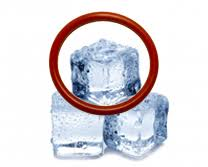
Low temperature causes rubber to gradually transition from a highly elastic state to a delayed elastic, glassy or locally brittle state; simultaneously the O-ring thermal shrinkage, rebound slowing, and insufficient compression recovery cause the sealing interface's contact stress to be unable to be continuously maintained. Gas seals are especially sensitive, because micro-level contact gaps or rough peaks can form continuous micro-leak channels, and even if the O-ring shows no obvious cracks, it can still leak gas.
O-rings sealing at room temperature mainly rely on three things:
First, installation compression amount makes the O-ring produce initial contact stress.
Second, rubber's own elastic rebound maintains continuous fit with the groove and mating surface.
Third, under pressure action, the O-ring is further pushed toward the sealing surface, forming pressure assist.
So, the O-ring's sealing capability is essentially:
Contact stress ≥ media pressure + local leak risk caused by surface roughness.
The low-temperature problem lies precisely in: rubber may still be "hard," but has no longer "rebound-able." This makes it appear to look more pressure-resistant, but actually cannot compensate for micro-gap changes at the groove, thermal shrinkage, pressure fluctuation, surface roughness and small clearance changes. Recent O-ring low-temperature modeling and experimental research also points out, the main leak under low temperature is related to thermal shrinkage, rebound capability limitation, stress relaxation and manufacturing tolerance.
Rubber's elasticity comes from the movement capability of the molecular chain segment. When temperature drops, chain segment movement slows, and the time for material's soft-and-tough characteristic changes lengthens, macroscopically manifesting as:
Modulus rises, hardness rises, elongation rate drops, rebound speed drops, compression recovery worsens.
When temperature continues to drop close to glass transition temperature, rubber gradually transitions from a soft elastomer toward glassy state. At this time material no longer manifests as a soft elastomer, but more closely resembles a rigid solid, low-temperature HNBR research indicates, sealing parts originally rely on rebound to compensate for low-temperature compression permanent deformation and interspace variance, but close to Tg, material elasticity significantly declines, small separation is also enough to trigger leak.
Need to note: hardening is not equal to sealing better.
Under fixed displacement compression, modulus rising may in short-term improve local rebound; but if material cannot restore deformation, cannot fill in coarse micro-gaps, or falls off the sealing surface due to thermal shrinkage, actual sealing capability instead declines.
Low-temperature rebound loss mainly comes from three mechanisms.
At room temperature after O-ring compression, chain segments can quickly adjust and maintain elastic support. Under low temperature, chain segment movement is limited, material recovery process becomes very slow. Compression permanent deformation testing under low temperature is exactly used for judging how much less rubber can rebound after being frozen colder; laboratory data clearly indicates that under low temperature, rubber continuously loses elasticity, bridging gap's ability recovers speed significantly declines.
Compression permanent deformation is not just occurring after high-temperature aging. At low temperature, O-rings can also produce "frozen-state compression permanent deformation": being compressed flat, temporarily cannot recover cross-section thickness. Low-temperature HNBR research shows, compression permanent deformation is an important indicator for O-ring and similar sealing applications, and near glass transition temperature, compression permanent deformation can significantly rise, even reach a high level under research conditions.
This type of low-temperature compression permanent deformation is sometimes reversible: after temperature rises, part can recover; but during equipment cold-state operation period, it has already been enough to cause leaks.
O-rings under long-term compression in a groove, sealing force declines over time, this is stress relaxation. Under low temperature, material both shrinks and finds it difficult to recover; if simultaneously there is pressure fluctuation, gap sudden change or thermal cycling, contact stress safety margin will further decline. Deep-sea hydraulic O-ring research also points out, under low temperature, rubber volume shrinkage and stress relaxation will make sealing rely on continuously worsening, sudden gap enlargement's safety margin obviously decreases.
Gas sealing is more sensitive than liquid sealing, because gas viscosity and surface tension constraint is weaker, only needing a very small continuous micro-channel is enough to leak. Under low temperature, leak channels usually don't start with the O-ring "whole break," but start from micro contact failure on the sealing surface.
Typical process is as follows:
One low-temperature gas leakage of HNBR O-ring research observed that when temperature is below the material Tg vicinity, air leak rate suddenly rises; the researchers believe main cause is insufficient low-temperature rubber thermal shrinkage and recovery capability, causing seal to detach from the mating surface.
This explains a common on-site phenomenon: the O-ring is not cracked, not broken, and looks normal in appearance; but the equipment cold-state leaks gas, and the leak lightens or disappears after temperature rises.
In low-temperature sealing analysis, Tg, TR10, brittleness temperature and low-temperature compression permanent deformation are often confused, but they represent different problems.
Indicator |
Explanation |
Significance for O-Ring Sealing |
Tg, Glass Transition Temperature |
Temperature judging the rubber transition from highly elastic state to glassy state, is a chain-segment activity capability macroscopically dramatic change zone, but is not a direct sealing limit |
Not a direct sealing indicator |
TR10 |
Sample stretched, frozen, then observe warm-up recovery at close-to-low-temperature rebound and sealing capability, is an important indicator for O-ring low-temperature material selection |
Close low temperature return elastic point |
Brittleness Temperature |
Judgment under specified impact condition whether material produces brittle fracture, judges is it or is not it able to crack, is not the same as single low-temperature sealing capability |
Judges whether it can crack |
Low-Temperature Compression Permanent Deformation |
Judges after cold compression whether O-ring can recover thickness or cross-section |
Nearest contact stress |
Low-Temperature Leak Test |
Under actual groove, pressure, media and cooling time conditions test leak |
Closest to actual working condition |
ASTM D2137's rubber brittleness test concern is whether material shows scratches or coating opening under low-temperature impact, this indicator also indicates this type standard applies to regulation and R&D, but does not necessarily represent material's lowest applicable temperature. ASTM D746 similarly notes, its brittleness temperature testing method is for regulated conditions of material's brittle failure evaluation, and also does not necessarily equal material's optimal applicable temperature in actual application.
Therefore, material not cracking does not mean it definitely does not leak; O-ring's low-temperature sealing failure often manifests as insufficient contact stress, not intuitively visible cracks.
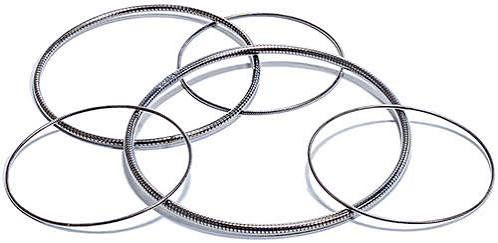
TR10 is a very key indicator for low-temperature sealing material selection. ISO 2921 is standard procedure for vulcanized rubber's low-temperature characteristic temperature retraction, used for determining tension rubber's temperature-recovery characteristic.
TR10 testing usually stretches rubber 25% or 50%, freezes at low temperature, then records the temperature when it returns 10% shrink; the lower this temperature, the more the material retains a certain elastic recovery capability under lower temperature.
In engineering can usually understand this way:
The lower TR10, closer to or above the working condition's lowest temperature, the lower the low-temperature leak risk.
Experimental data displays, dynamic or receiving O-rings should usually focus on the sealing capability near TR10; static, low-requirement working conditions have sometimes lower than TR10 10–15°C still maintaining technical sealing, but this depends on material, structure and leak measure test. Another O-ring technical manual also gives a similar principle: static sealing usually allows down to about TR10 below 10°C, dynamic seals should more closely approach TR10, and simultaneously the media caused shrinkage and swelling changes actual limit.
In high-pressure gas, oil-gas valve, hydrogen system, aerospace hydraulic and other scenarios, cannot just look at Tg or TR10 at normal pressure. Trelleborg's high-pressure material data indicates, at low temperature and high pressure, using compression material elastomer's response, pressure may push polymer Tg to shift upward, designer must consider this Tg deviation when designing low-temperature high-pressure seals.
This means: one material at normal pressure TR10 or Tg looks qualified, but under high-pressure gas could prematurely lose flexibility. For low-temperature valves, high-pressure gas equipment, hydrogen equipment, gas oil well sealing, this point especially important.
This is typical low-temperature rebound insufficient or interface separation. O-ring warm-up post chain-segment activity recovers, contact stress and cross-section recover well, leaking follows lightening.
May be temperature rebound, media temperature rise or material gradually recovering. If equipment must gas-tight seal at cold-start stage, this type material is still unqualified.
Longer cold-soak time, more obvious crystallization, stress relaxation, insufficient compression recovery. Short-time low-temperature test qualified, does not represent long-time outdoor parking, aviation high-altitude cruise or cold storage long-term operation qualified.
High temperature or media aging will cause permanent compression deformation, hardening, shrinkage or plasticizer loss, afterward entering low temperature, O-ring's rebound remaining margin will be smaller, more easily leaking.
Dynamic seals besides losing contact stress, also demand low friction and fast rebound. Under low temperature material hardens, friction rises, lubrication worsens, sealing lip or O-ring may not be able to quickly follow the mating surface, producing intermittent leak, crawl, twist or wear.
For refrigeration, aerospace, outdoor equipment, low-temperature valve customers, material page should split "cold resistant" into verifiable indicators, not just give a single temperature range.
Recommended fields are as follows:
Field |
Recommended Description |
Lowest Use Temperature |
State whether static seal, dynamic seal, gas seal or liquid seal condition's recommended value |
TR10 |
State test standard, e.g. ASTM D1329/ISO 2921; TR10 should be preferentially used for judging low-temperature rebound |
Tg |
State test method, e.g. DSC or DMA; explain Tg is not the only sealing threshold |
Brittleness Temperature |
State ASTM D2137, ASTM D746 or corresponding ISO methods; used for judging low-temperature impact opening cracking risk |
Low-Temperature Compression Permanent Deformation |
Recommend reference ISO 815-2 or equivalent method provided; used for judging dynamic recovery capability |
Low-Temperature Leak Rate |
Tested under actual groove, actual pressure, actual media and cooling time |
Media Influence |
State whether refrigerant, fuel, lubricant, hydraulic oil, CO₂, hydrogen, air and other media leads to swelling, shrinkage, plasticization |
Thermal Cycling Post-Recovery |
Applicable to outdoor, aerospace, cold storage, valve start-stop working condition |
Post-Aging Low-Temperature Performance |
High-temperature aging, media aging then re-testing TR10, compression permanent deformation and leak rate |
NBR's low-temperature performance closely relates to acrylonitrile content, formulation and increment system. Low-temperature NBR can improve low-temperature softness, but usually needs to trade-off between oil resistance, fuel compatibility and low-temperature rebound. Applicable to oil, water-glycol, general hydraulic and refrigeration related scenarios, must combine media confirmation.
HNBR has better heat resistance, oil resistance and mechanical properties than ordinary NBR, but low-temperature performance still highly relies on formulation. For low-temperature high-gas or oil-gas equipment, cannot just look at the HNBR name, should require TR10, low-temperature compression permanent deformation and actual leak test.
EPDM usually suits water, steam, cooling liquid, outdoor ozone and cold-resistant environments, but is not suitable for most petroleum oil products. Used for outdoor equipment, cooling water road, low-temperature ethylene glycol system, need to verify specific formulation's TR10 and low-temperature recovery.
Silicone rubber's low-temperature softness is usually good, but tear strength, abrasion resistance, gas permeation rate and oil-fuel oil capability could become limitations. Suitable for certain low-temperature static seal, food, medical, load-bearing environments, but not necessarily suitable for high-pressure gas or strong dynamic abrasion.
Fluorosilicone rubber balances better low-temperature flexibility and fuel, oil compatibility, commonly used for aerospace fuel and low-temperature oil product static sealing. But its mechanical strength and abrasion resistance still need assessment, not simply substituted for all FKM or NBR.
Ordinary FKM is known for high-temperature resistance, oil resistance, chemical medium resistance, but low-temperature rebound is often short-slot. Low-temperature valve, aerospace fuel, outdoor oil product equipment should preferentially select low-temperature FKM and similar dedicated formulation, and verify TR10, Tg, low-temperature compression permanent deformation.
FFKM's advantage is extreme chemical resistance and high temperature, but many ordinary FFKM low-temperature elasticity is weak. Low-temperature high-pressure valves or oil-gas equipment if must use FFKM, should select low-temperature FFKM formulation, and verify high-pressure low-temperature leak.
Trelleborg's data also shows different FFKM low-temperature formulation's TR10/Tg response differences under high pressure are significant.
Material is only the first step; low-temperature O-rings must also risk-control via groove and assembly design.
First, ensure sufficient compression amount at Tmin. Need to calculate the thermal shrinkage difference between the metal groove and rubber, cannot design just by conventional dimension.
Second, static seals can appropriately raise pressure compression amount, but cannot exceed groove fill and assembly limits. Insufficient compression amount will prematurely lead to leak; excessive compression amount could cause assembly damage, thermal expansion extrusion, friction rise or permanent deformation.
Third, dynamic seals cannot arbitrarily raise compression amount. Under low temperature friction rises, excessive compression amount will lead to startup resistance, wear, twist and crawl.
Fourth, control the sealing face roughness and roundness. Under low temperature, rubber's ability to fill coarse peaks declines, surface roughness affects tightness more.
Fifth, use back-up rings, support rings or spring-energized structures when necessary. High pressure, low temperature, gas seal purely relying on rubber's own rebound risk is higher, spring-energized PTFE seal, encapsulated O-ring, special cross-section seal or metal seal may be more reliable.
Sixth, lubricating grease must be low-temperature compatible. Ordinary lubricating grease becomes viscous or freezes at low temperature, will increase friction and affect interface fit, especially need to verify low-temperature valve and aerospace applications' lubricant compatibility with rubber, media and lowest temperature.
For refrigeration, aerospace, outdoor equipment and low-temperature valves, it is recommended to make low-temperature verification a combined test, not a single material test.
Recommended test chain:
Minimum requirements should not just be "material resistant to -40°C," but should write as:
At -40°C, specified media, specified pressure, specified cold-soak time, specified groove and surface roughness, leak rate ≤ target value; O-ring should have no cracks, no abnormal permanent deformation, and maintain acceptable rebound after testing before and after.

Welcome to HOVOO, a Chinese seal factory. Production of PU, Rubber and PTFE seals. The seals include O-ring, piston seal, rod seal, Gray ring and gas seal.


 EN
EN
 AR
AR CS
CS DA
DA NL
NL FI
FI FR
FR DE
DE EL
EL IT
IT JA
JA KO
KO NO
NO PL
PL PT
PT RO
RO RU
RU ES
ES SV
SV TL
TL IW
IW ID
ID LV
LV SR
SR SK
SK VI
VI HU
HU MT
MT TH
TH TR
TR FA
FA MS
MS GA
GA CY
CY IS
IS KA
KA UR
UR LA
LA TA
TA MY
MY
