33-99No. Mufu E Rd. Gulou District, Nanjing, China [email protected] | [email protected]
33-99No. Mufu E Rd. Gulou District, Nanjing, China [email protected] | [email protected]

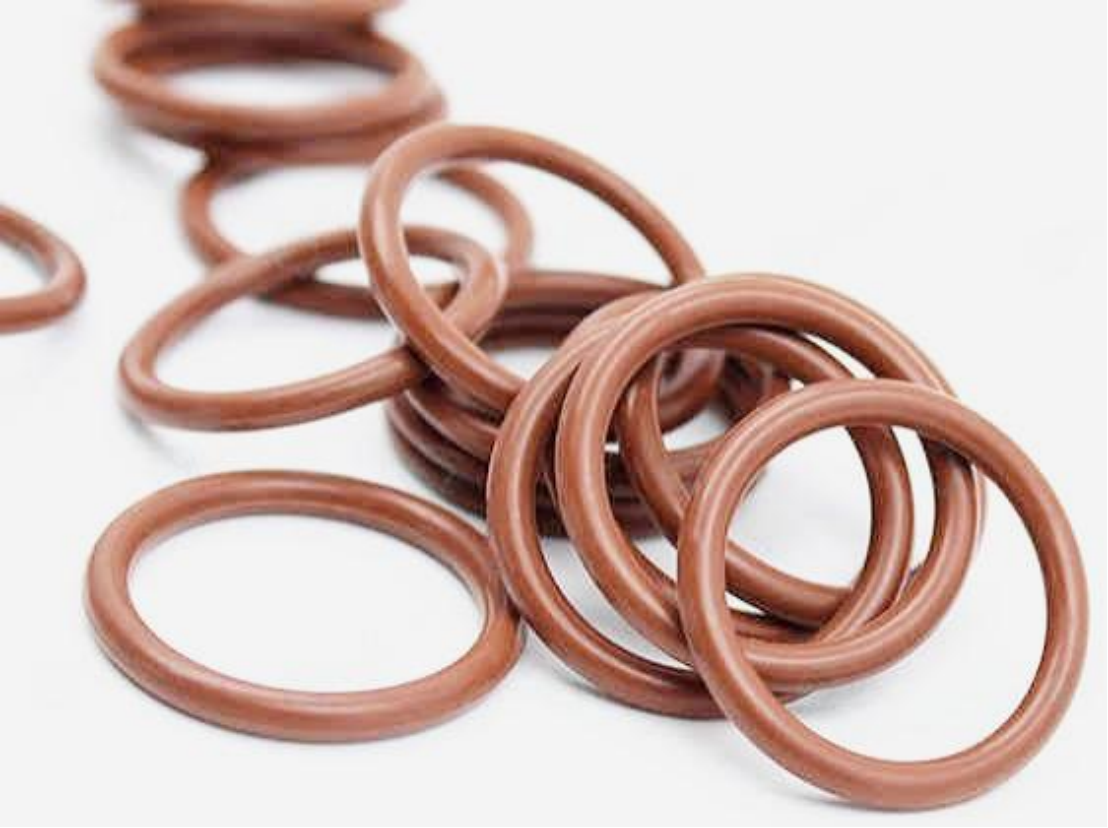
This type generally corresponds to what the market calls "A-type FKM," "standard FKM," or "dipolymer FKM." The typical monomer composition is VDF/VF2 + HFP. Chemours describes Viton™ A-type as a dipolymer fluoroelastomer composed of VF2 and HFP, typically used in O-rings, shaft seals, fuel hoses, and coatings.
Suitable applications: general mineral oils, engine oil, common fuels, most hydrocarbon media, high-temperature aging scenarios. Its advantage is balanced overall performance and controllable, mature cost.
Risk points: Dipolymer FKM is not resistant to all fuels, all solvents, or all chemicals — it is especially sensitive to methanol, ethanol, MTBE, and other oxygenated fuels, as well as strong alkalis, amines, and low-molecular-weight esters. Standard FKM can show significant swelling and reduced performance under these conditions. In Chemours' chemical resistance data, Viton™ A shows about 90% volume change after 168 hours in methanol at 23°C, while F-type, GFLT-S, and ETP-S show around 5%.
Terpolymer FKM typically raises fluorine content by adding TFE. Syensqo's Tecnoflon® FKM material distinguishes dipolymer (~66% fluorine) from terpolymer (~68–70% fluorine), noting the terpolymer system has better chemical resistance due to higher fluorine content.
Within the Viton™ family, B-type and F-type generally belong to terpolymer FKM. Chemours data shows B-type at ~68.5% fluorine and F-type up to ~69.5% fluorine; F-type is positioned for applications needing superior fluid resistance, fuel permeation barrier properties, seals, gaskets, and O-rings.
Suitable applications: automotive fuel systems, aromatic-containing fuels, alcohol-containing fuels, fuel hose linings, fuel injection system seals, aerospace fuel seals, chemical-resistant hydrocarbon/aromatic media.
Risk points: Increased fluorine content usually comes at the cost of reduced low-temperature flexibility. Chemours' selection materials note that as fluorine content rises, fluid resistance improves but low-temperature flexibility declines.
This can be framed as the article's central argument: high-fluorine FKM is more resistant to fuels/solvents but low-temperature sealing may suffer; low-fluorine FKM is softer but not necessarily fuel-resistant.
The following table of Chemours data is well-suited to illustrate this as a chart or short video. Note: this is a specific standard formulation's nominal test values and should not be directly treated as representing all suppliers' rubber material specifications. Chemours also notes this data is based on standard 75 Durometer A, N990 carbon black filled vulcanizate test results.
Type |
Typical Fluorine Content |
Low-Temp Flexibility (TR-10) |
Volume Change in Methanol (23°C×168h) |
Selection Notes |
A-type / Standard Dipolymer FKM |
66% |
-17°C |
90% |
Balanced type, not suitable for high oxygenated-fuel requirements |
B-type / Terpolymer FKM |
68% |
-13°C |
40% |
Better fluid resistance than A-type |
F-type / High-Fluorine Terpolymer FKM |
70% |
-6°C |
5% |
Excellent fuel/oxygenated-fuel/permeation resistance, but poorer low-temp performance |
GLT-S / Low-Temperature FKM |
64% |
-30°C |
90% |
Good low-temp performance, but poor alcohol-fuel resistance, not as good as F/GFLT |
GFLT-S / Low-Temp Fuel-Resistant FKM |
67% |
-24°C |
5% |
Balances low temperature and fuel/oxygenated-fuel resistance |
ETP-S / Specialty Chemical-Resistant FKM |
67% |
-12°C |
5% |
Suited for amines, strong alkalis, ketones/esters, and other harsher media |
Data source: Chemours' fluid swelling data comparing A, B, F, GLT-S, GFLT-S, ETP-S types against TR-10.
Standard A/B/F-type FKM perform well at high temperature and in oils/fuels, but low temperature is not their strength. Chemours data shows A-type TR-10 of -17°C, B-type -13°C, and F-type -6°C — indicating that although high-fluorine F-type has better fuel resistance, its low-temperature sealing capability is comparatively weaker.
How to explain to customers:
"If it's just room-temperature or engine-bay high-temperature environments, standard FKM may be usable; but if it's a cold-region automobile, aviation fuel system, or low-temperature startup condition, that alone won't be sufficient."
The focus of low-temperature FKM is not pure oil resistance but the ability to maintain sealing recovery at low temperatures. In Chemours' peroxide-cured FKM materials, GLT-200S/GLT-600S are described as “best FKM low-temperature flexibility,” while GFLT-200S/GFLT-600S are described as “best combination of low-temperature flexibility and fluids resistance,” used for fuel system adhesion, oxygenated-fuel resistance, and low-temperature flexibility scenarios.
The difference between GLT and GFLT can be explained as follows:
GLT: More biased toward low-temperature flexibility, suitable for applications prioritizing low temperature in fuel, chemical, and petroleum industry seals.
GFLT: Balances low temperature with fuel/oxygenated-fuel resistance, suitable for automotive fuel systems, aviation fuel systems, fuel injection O-rings, etc.
Don't simply understand GLT as a “more advanced FKM”: GLT's volume change data in methanol may still be quite large, while GFLT is more balanced between low temperature and fuel resistance.
For more demanding low-temperature seals, the market also has ultra-low-temperature FKM. Syensqo's description of the Tecnoflon® VPL series is: ultra-low-temperature FKM can provide excellent low-temperature sealing performance while maintaining resistance to harsh fluids/chemicals, with TR10 ranging from -30°C to -45°C, used in applications including high-performance fuel-injection O-rings, oil-field, and aerospace seal components.
Suitable applications: aviation fuel oil, cold-region automotive fuel systems, fuel injection systems, downhole oil/gas well seals, low-temperature valves.
Many customers say: “My application is gasoline, diesel, or aviation kerosene — FKM should be fine for that, right?” This statement needs to be broken down further.
Standard A-type or dipolymer FKM performs well with many hydrocarbon oils and lubricating oils — this is also one reason FKM is widely used in automotive, aviation, and mechanical seals. In Chemours' materials, typical applications of A-type include fuel hoses and pipes, O-rings, valve stem seals, and shaft seals.
When exposed to methanol, ethanol, MTBE, and other oxygenated fuels, standard A-type FKM risk is notably elevated. In Chemours' fluid resistance chart, oxygenated gasoline is one category where A-type and GLT-S are rated “not recommended,” while F-type, GF-S, GFLT-S, and ETP-S are rated as the best grades.
Sales/technical phrasing:
"When a customer works with gasoline, ethanol gasoline, methanol gasoline, biodiesel, or fuel-vapor-related exhaust components, don't just ask whether it's FKM — ask whether it's high-fluorine fuel-resistant FKM, and whether there is data on fuel aging, volume change, and permeation rate."
Chemours positions Viton™ F-type as suitable for sealing applications requiring fuel permeation barrier properties, and for use in seals, gaskets, and O-rings exposed to automotive fuel.
Suitable applications: automotive fuel lines, fuel pumps, fuel O-rings, fuel vapor evaporation systems, fuel tank valves, aviation fuel seals.
This is a point where chemical valve customers most easily get tripped up. Standard FKM is generally not suitable for strong alkalis, high-pH, or amine-based media. In Chemours' chemical resistance chart, A, B, F, GF-S, GLT-S, and GFLT-S are all rated “not recommended” for “high pH solutions, strong alkalis, organic bases,” while ETP-S is rated the best grade.
Chemours' description of Viton™ Extreme ETP-600S: it is composed of ethylene, TFE, and PMVE, and has resistance to harsh fluids; unlike conventional fluoroelastomers, it has better resistance to small-molecule esters, ketones, and alcohols, and also has resistance to high-pH fluids, alkaline materials, strong alkaline solutions, and amines.
Suitable applications: amine additives, alkaline cleaning solutions, strong alkali valves, chemical pipelines, oil-and-gas-well amine treatment fluids, amine-containing lubricants, certain cleaning fluid systems.
Sales/technical phrasing:
"Acid resistance isn't solved by simply raising the fluorine content in standard FKM. For strong alkalis, amines, ketones, and esters, ETP, FEPM, or FFKM and other more specialized systems need to be considered, and specific media compatibility must be verified through immersion testing."
The cure system is not a minor detail — it affects compression set, water/steam resistance, acid/alkali resistance, low-temperature performance, and metal bonding.
A, B, and F-type FKM are typically cured with bisphenol AF systems. Chemours' materials state that Viton™ A, B, and F-types typically use Bisphenol AF along with a suitable accelerator system for curing; and most fluoroelastomers today use Bisphenol AF crosslinking.
Advantages: Mature processing, good cure speed, excellent compression set performance, suitable for the majority of O-rings, seals, and valve-stem seals.
Shortcomings: Weaker when exposed to steam, hot water, acidic aqueous solutions, strong alkalis, amines, or certain special media — not necessarily the best choice.
Syensqo's materials clearly state that at the same fluorine content, peroxide-cured FKM has better chemical resistance than ionic/bisphenol-cured FKM due to the different cure mechanism, making it suitable for more demanding environments; it also has better low-temperature flexibility, hot-water resistance, compression set, and metal bonding performance.
Chemours also notes that peroxide cure systems allow polymers using low-viscosity GLT-S, GFLT-S, and similar materials to be cured that would otherwise be difficult to cure with bisphenol; while in the GF-S, GBL, and similar systems, peroxide curing provides enhanced resistance to harsh automotive lubricants, steam, and acids.
Suitable applications: low-temperature FKM, GFLT, ETP, water/steam-resistant, acid-resistant applications, harsh lubricants, automotive coolant systems, aviation fuel systems, oil-and-gas chemical seals.
Chemours' materials note that diamine curatives were first used for Viton™ A crosslinking as early as 1957; the cure is slow and compression set is not optimal, but it offers particular advantages for metal-insert bonding and high-temperature extrusion resistance.
In practical communication:
"Customers generally don't need to specifically request amine curing, unless replacing an old product, requiring special metal bonding, or reproducing a historical formulation."
Don't just say “FKM is fuel-resistant.” Follow up by asking: Is it gasoline, diesel, ethanol gasoline, methanol gasoline, or biodiesel, or fuel containing additives? Is low permeation required? Is it for cold-region use? Is it a dynamic seal?
Recommended approach:
Condition |
More Suitable FKM Direction |
Standard gasoline/diesel, conventional oils |
A-type or B-type may be usable |
Ethanol gasoline, methanol gasoline, MTBE and other oxygenated fuels |
F-type, GF, GFLT, ETP-type prioritized |
Fuel low-permeation requirement |
F-type, high-fluorine terpolymer FKM |
Fuel system low-temperature startup |
GFLT, ultra-low-temperature FKM |
Contact with amine additives, alkaline cleaning agents |
ETP-type or higher-grade material evaluation needed |
Chemours' materials indicate F-type is used for sealing applications requiring fuel permeation barrier properties, while GFLT-type balances low-temperature flexibility with fluid resistance.
The focus for aviation fuel seals is usually not just “fuel resistance” but: fuel compatibility + low-temperature sealing + compression set + safety margin.
Recommended approach:
Condition |
More Suitable FKM Direction |
Aviation fuel, fuel pumps, fuel valves |
B/F/GFLT type |
High-low temperature cycling, low-temp startup |
GLT/GFLT/ultra-low-temperature FKM |
Fuel injection O-rings |
GFLT or peroxide-cured ultra-low-temperature FKM |
Simultaneous exposure to fuel and harsh cleaning agents/additives |
GFLT, ETP, or higher-grade material evaluation needed |
Syensqo's typical applications for ultra-low-temperature FKM include high-performance fuel-injection O-rings, oilfield, and aerospace seal components.
Chemical valve customers are the most prone to “FKM misuse,” because what they encounter is often not a single hydrocarbon but a mix of solvents, acids, alkalis, amines, ketones, esters, steam, and cleaning agents.
Recommended approach:
Media |
Standard FKM Risk |
Recommended Direction |
Hydrocarbons, aromatics, mineral oils |
Generally manageable |
Choose A/B/F based on temperature and swelling requirements |
Methanol, ethanol, oxygenated solvents |
A-type risk high |
F-type/GFLT-type |
Hot water, steam, acidic aqueous solutions |
Bisphenol-cured FKM not necessarily optimal |
Peroxide-cured FKM |
Amines, strong alkalis, high pH |
Standard A/B/F/GFLT mostly not recommended |
ETP, FEPM, FFKM, etc. for evaluation |
Ketones, esters |
Standard FKM risk high |
ETP or FFKM evaluation |
Chemours' chemical resistance chart shows standard A/B/F/GFLT are not recommended for high pH, strong alkalis, and organic bases, while ETP-S is listed as the best grade; the ETP-600S page also clearly states it has resistance to strong alkaline solutions, amines, and high-pH fluids.
FKM can be further subdivided along these dimensions:
Classification Dimension |
Main Types |
Selection Focus |
Monomer system |
Dipolymer FKM, terpolymer FKM, ETP/specialty FKM |
Determines basic media resistance |
Fluorine content |
66%, 68%, 70%, specialty low-temperature/balanced types |
Determines the balance between fuel resistance, solvent resistance, and low temperature |
Low-temperature capability |
Standard FKM, GLT, GFLT, ultra-low-temperature FKM |
Determines cold-region, aviation, low-temp startup sealing |
Fuel-oil capability |
Standard fuel-resistant, high-fluorine fuel-resistant, low-permeation FKM |
Determines automotive fuel and aviation fuel service life |
Chemical resistance |
Standard acid-resistant, amine/strong-alkali-resistant, ETP types |
Determines whether chemical valves fail quickly |
Cure system |
Bisphenol cure, peroxide cure, amine cure |
Determines compression set, steam/acid/water resistance, low temperature, and adhesion process |
Conclusion to convey to customers:
"FKM is not a universal material — even within the FKM family, types are not interchangeable. For automotive fuel, aviation fuel, and chemical valve customers, the biggest thing to avoid is writing only 'FKM.' Instead, clearly specify the FKM type, fluorine content, cure system, low-temperature indicators, and media-aging data."

Welcome to HOVOO, a Chinese seal factory. Production of PU, Rubber and PTFE seals. The seals include O-ring, piston seal, rod seal, Gray ring and gas seal.


 EN
EN
 AR
AR CS
CS DA
DA NL
NL FI
FI FR
FR DE
DE EL
EL IT
IT JA
JA KO
KO NO
NO PL
PL PT
PT RO
RO RU
RU ES
ES SV
SV TL
TL IW
IW ID
ID LV
LV SR
SR SK
SK VI
VI HU
HU MT
MT TH
TH TR
TR FA
FA MS
MS GA
GA CY
CY IS
IS KA
KA UR
UR LA
LA TA
TA MY
MY
