33-99No. Mufu E Rd. Gulou District, Nanjing, China [email protected] | [email protected]
33-99No. Mufu E Rd. Gulou District, Nanjing, China [email protected] | [email protected]

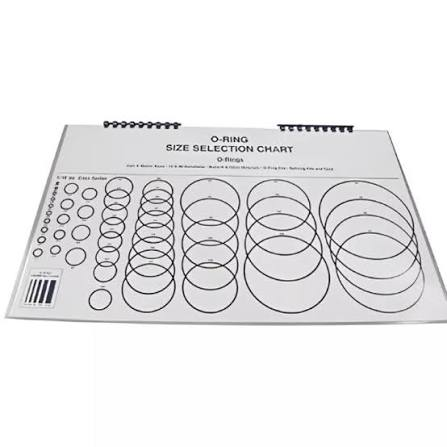
The core is not "asking the customer for a pile of parameters" — it's letting sales and customer service judge three things in the shortest time: can it be quoted quickly as a standard part, is engineering selection needed, and is there an existing failure or compliance risk.
An O-ring's basic dimensions are usually defined by inner diameter d1 and cross-section diameter d2 (also called wire diameter); ISO 3601-1 also organizes the O-ring dimension and tolerance identification code system around inner diameter, cross-section.
When a customer just wants to buy a common O-ring, sales should at minimum get the following 6 items:
Required Field |
What the Customer Should Provide |
Purpose |
Dimension |
ID × wire diameter, or OD × wire diameter, or spec number, e.g. AS568, ISO 3601, GB/T 3452, JIS B 2401 |
Judges whether it's a standard stock spec, whether opening a new mold is needed |
Material |
NBR, FKM, EPDM, VMQ, HNBR, FFKM etc.; if unknown, state the contacted media |
Core basis for material selection |
Hardness |
Shore A, e.g. 70A, 75A, 80A, 90A; if unknown, state "not sure" |
Determines compression deformation, assembly difficulty, extrusion resistance |
Media contacted |
Oil, water, air, steam, fuel, refrigerant, acid/alkali, solvent, food, pharma liquid etc. |
Core basis for material selection |
Temperature and pressure |
Working temperature, highest/lowest temperature, working pressure, peak pressure |
Judges material, hardness, whether a back-up ring is needed |
Quantity and lead time |
Sample quantity, batch quantity, annual usage quantity, expected delivery time |
Quote, inventory, production schedule |
These 6 items can support a preliminary quote, but cannot guarantee a correct type selection. O-ring reliability depends on installation groove, compression rate, clearance, motion form, surface roughness, lubrication and pressure direction factors; e.g. extrusion risk under pressure directly correlates with sealing clearance and material hardness, and may need increased hardness or added back-up rings when necessary.
Field |
Customer Should Provide |
Sales Judgment Point |
ID |
mm or inch |
Preferred dimension field |
Cross-section CS |
mm or inch |
Preferred dimension field |
Outer diameter OD |
Auxiliary provide |
OD = ID + 2×CS, can be used for cross-check |
Standard number |
AS568, ISO 3601, GB/T 3452, JIS B 2401, DIN 3771 etc. |
Judges standard library and tolerance system |
Tolerance requirement |
General, tightened, per drawing |
Judges whether custom or inspection control is needed |
Whether a sample exists |
Yes/No; whether it's an old, deformed, or failed part |
An old part's dimension may already be stretched, compressed, or swollen — cannot be treated fully as the design dimension |
Whether a drawing exists |
2D/3D/groove diagram/assembly diagram |
Prioritize drawing review when a drawing exists |
Sales judgment rule: when the customer only gives "OD is however much, thickness is however much," must ask back whether it's the free-state dimension or the post-assembly measured dimension. Old O-rings commonly have compression set, swelling, wear, and the measured dimension deviates from the original spec, should not be installed directly per this.
Field |
Customer Should Provide |
Why Important |
Static/dynamic seal |
Static seal, reciprocating motion, rotary motion, oscillating motion |
Determines compression rate, friction, wear and material choice |
Installation position |
Face seal, axial seal, radial seal, piston seal, rod seal, flange seal, valve-stem seal |
Determines groove structure |
Motion speed |
Reciprocating speed, rotation speed, frequency, stroke |
Necessary for a dynamic seal to evaluate friction and wear |
Whether lubricated |
Dry friction, oil lubrication, water lubrication, grease lubrication |
Affects wear, friction and compatibility |
Surface material |
Metal, plastic, glass, ceramic etc. |
Affects wear, friction and compatibility |
Surface roughness |
Ra value or machining method |
Especially critical for high-speed/dynamic seals |
O-rings are usually classified by relative-motion type into static seals and dynamic seals: almost no relative motion is a static seal; reciprocating, rotary, or oscillating motion is a dynamic seal. Special attention: although an O-ring can be used for some dynamic applications, dynamic scenarios generally only suit medium operating conditions; higher speed, higher pressure, or long-term wear scenarios may need a dedicated seal member, not a general O-ring.
Field |
Customer Should Provide |
Example |
Media name |
Specific liquid/gas name |
Hydraulic oil, water, air, steam, gasoline, diesel, refrigerant, cold-chain fluid, alcoholic, acid/alkali |
Media composition |
Chemical name, concentration, additive |
"30% ethylene glycol water solution + antifreeze" is more useful |
Media state |
Liquid, gas, steam, powder |
Gas/vacuum sealing needs additional consideration of permeation and compression set |
Whether mixed media |
Multiple media or cleaning agents |
Food, medical, chemical, CIP/SIP common |
Contact method |
Long-term immersion, intermittent contact, splash contact, cleaning contact |
Determines material safety margin |
Whether ozone/UV/outdoor |
Yes/No |
Affects EPDM, NBR, CR and other material selection |
Material selection cannot just look at broad statements like "oil resistant, high-temperature resistant." Elastomer materials are affected by media, oxygen, ozone, pressure and temperature and other external factors, and may present swelling, shrinkage, hardening, cracking or tearing.
Field |
Customer Should Provide |
Sales Judgment Point |
Normal working temperature |
Long-term temperature |
Selects the material's primary basis |
Highest temperature |
Peak temperature |
Judges whether short-term overheating is sufficient |
Lowest temperature |
Cold-startup, low-temperature environment |
Judges low-temperature elasticity and embrittlement risk |
Temperature duration |
Short-term, periodic, long-term |
Affects compression set and aging risk |
Temperature cycling |
Whether hot/cold alternates |
Affects compression set and leak risk |
Temperature is not an isolated parameter. High temperature will erode the elastomer's chemical resistance, low temperature can cause elasticity loss and form a leak path. So sales cannot only ask "how heat-resistant does it need to be" — should follow up: how much for long-term, how much peak, how long sustained, and whether it cycles hot/cold.
Field |
Customer Should Provide |
Sales Judgment Point |
Working pressure |
MPa, bar, psi |
Judges whether the common hardness is enough |
Peak pressure |
Instant highest pressure |
Judges pressure-shock and groove design |
Pressure direction |
One-way, two-way, internal pressure, external pressure |
Determines back-up ring position and groove design |
Pressure variation |
Stable, pulsed, frequent startup |
Pressure shock combines with extrusion risk |
Whether vacuum |
Vacuum degree |
Affects gas permeability, compression set, material outgassing risk |
Whether high-pressure gas |
Helium, air, natural gas etc. |
Explosive-decompression relevant, need to note permeation, gas expansion |
The higher the pressure, the more you can't just "swap for a harder material." An O-ring's extrusion limit under pressure is jointly determined by the sealing clearance and hardness; if pressure and clearance combined exceed material capability, hardness needs to be raised, clearance reduced, or a back-up ring added.
Field |
Customer Should Provide |
Why Important |
Groove type |
Axial groove, radial groove, live-plug groove, rod groove, end-face groove |
Determines O-ring compression direction |
Groove width |
mm |
Judges whether expansion space is sufficient |
Groove depth |
mm |
Judges compression rate |
Groove ID |
Shaft diameter, bore diameter, groove-bottom diameter |
Judges stretch rate and compression rate |
Fit clearance |
Clearance between piston and cylinder, shaft and hole |
Affects extrusion risk |
Surface roughness |
Ra or machining method |
Affects sealing lifespan and leakage |
Chamfer and assembly path |
Whether sharp corners, threads, holes exist |
Key for high-pressure scenarios |
Whether back-up ring allowed |
Single, double back-up ring, not allowed |
Determines whether other sealing forms need changing |
Groove information decides whether the O-ring "can seal well" and "can seal at all." The O-ring needs to obtain initial sealing capability through compression, while groove depth, clearance, and line diameter jointly determine the compression rate; dynamic seals generally need lower compression to lower friction.
Field |
Customer Should Provide |
Sales Judgment Point |
Specified material |
NBR, FKM, EPDM, VMQ, HNBR, FVMQ, FFKM, PTFE encapsulated etc. |
Whether it can be priced per customer specification |
Hardness |
70A, 75A, 80A, 90A etc. |
Affects assembly, compression, extrusion resistance |
Color |
Black, brown, green, red, transparent etc. |
Color cannot serve as material basis |
Low-temperature requirement |
Whether cold-startup, low-temperature seal |
Judges NBR/FKM/VMQ/HNBR applicability |
Compression set requirement |
Whether long-term compression cannot leak |
Common in static seal, vacuum, medical, food equipment |
Wear resistance requirement |
Dynamic seal, frequently moving |
Judges whether other seal form is needed |
Existing product material |
What material currently used, whether failed |
Judges replacement, upgrade, or cost reduction |
Common material pre-screening can be done this way, but must still recheck with specific media and temperature: general mineral oil/hydraulic oil → NBR, HNBR, FKM (temperature high or life requirement high should preferentially evaluate HNBR/FKM); fuel oil, gasoline, diesel → FKM, FVMQ, FFKM (need to confirm fuel composition, alcohol additives); hot water, steam, ethylene-glycol coolant → EPDM (doesn't fit most petroleum-based oils); food equipment → FDA-related material, VMQ, EPDM, FKM etc., must confirm food-contact regulation and test report; high-temperature chemical media → FKM, FFKM, PTFE-encapsulated, cost difference is large, must confirm specific chemical; low-temperature seal → VMQ, FVMQ, low-temperature NBR, low-temperature FKM, low-temperature elasticity is more critical than room-temperature hardness; high-pressure hydraulic → 90A NBR/FKM/HNBR + back-up ring, need to see pressure, clearance, groove.
Scenario |
Customer Should Explain |
Sales Should Follow Up |
Food contact |
FDA, LFGB, EU 1935/2004, 3-A etc. |
Is it material compliance or finished-product testing? Is a test report needed? |
Drinking water |
NSF/ANSI/CAN 61, WRAS, KTW, ACS etc. |
Contact water temperature, country/market, certificate valid range |
Medical/pharma |
USP Class VI, ISO 10993, DMF, extractables/leachables |
Is it raw-material screening, component verification, or ultimately medical-device filing? |
Automotive |
IATF 16949, PPAP, IMDS, RoHS, REACH |
Is a PPAP grade, material data, batch traceability needed? |
Aerospace/military |
AS568, AMS, MIL, full-dimension report |
Drawing, spec number, full-dimension report |
Environmental compliance |
RoHS, REACH, PAHs, halogen, phthalate |
Applicable country and customer specification |
Batch traceability |
COC, COA, material certificate, batch number |
Is it required every batch, or is stock kept |
Food contact cannot only write "food grade." US FDA 21 CFR 177.2600 specifies material requirements for elastomer products for repeated food contact used in production, processing, packaging, transport or holding of food; drinking water more commonly references the health impact of drink-water system components as specified by NSF/ANSI/CAN 61; medical, USP <88> covers biological reactivity of elastomers, plastics and other polymer materials; ISO 10993-1 is used for risk-management framework for biological evaluation of medical devices; automotive companies commonly require an IATF 16949 quality management system, PPAP, IMDS and customer-specific specifications; AIAG and ISO/TS 16949:2016 explain it defines the quality management system requirements for global automotive industry organizations.
Replacement part: priority ask: is there an old part, drawing, spec number, equipment model, current-use material, failure reason. Suits quick quote, but be alert: the old part's dimension may already be deformed, best also provide groove dimension or drawing.
New design: must ask: sealing structure, media, temperature, pressure, motion form, groove, certification, life requirement. A new design cannot only quote per "ID × wire diameter" — otherwise later leak risk is high.
Customer Situation |
Sales Action |
Customer provides AS568, ISO 3601, GB/T 3452, JIS B 2401 or other spec number |
Directly check stock and standard pricing |
Customer provides ID × wire diameter |
Match standard spec; confirm tolerance if close to a standard dimension |
Customer only provides OD |
Follow up wire diameter or ID |
Customer only sends a photo |
Request supplemental dimensions, drawing or sample |
Customer provides an old part |
Recommend simultaneously measuring the groove, avoid ordering per a deformed dimension |
Customer requires a special dimension |
Judge whether an existing mold exists; if not, evaluate mold-opening, MOQ, lead time |
Customer Statement |
What's Unclear |
Should Follow Up |
"Need oil resistance" |
Oil type not clear |
Hydraulic oil, machine oil, diesel, gasoline, silicone oil, synthetic oil? How much temperature? |
"Need high-temperature resistance" |
Temperature range not clear |
How much long-term? How much peak? How long sustained? |
"Need corrosion resistance" |
Chemical name unclear |
Chemical name, concentration, temperature, whether mixed media? |
"Need food-grade" |
Standard unclear |
FDA, LFGB, 3-A, NSF? Is a report needed? |
"Need medical-grade" |
Contact grade unclear |
Is it human contact? Contact time? Is USP/ISO 10993 needed? |
"Need automotive-grade" |
Quality-document unclear |
Is IATF, PPAP, IMDS, RoHS/REACH needed? |
When any of the following occurs, sales should not directly promise "this material has no problem" — should transfer to engineering or technical confirmation.
High-Risk Signal |
Reason |
Dynamic seal, high-speed rotation, frequent reciprocating |
O-ring may wear, generate heat, twist |
High pressure, pressure pulsation, large clearance |
May extrude, cut, need back-up ring or structure change |
Steam, strong acid/alkali, solvent, fuel, brake fluid, coolant |
Material compatibility risk high |
Low-temperature startup or hot/cold cycling |
May have low-temperature compression set |
Vacuum or gas seal |
Need to consider permeation, outgassing, compression set |
Food, medical, drink water, automotive, aerospace |
Compliance and traceability requirement high |
Customer has leak, swelling, cracking, wear issue with existing part |
Failure analysis needed, not simply swap the same spec |
Field |
Customer to Fill In |
Customer name/project name |
___ |
Applied equipment/component name |
___ |
Is it a replacement or new design |
Replacement / New design / Not sure |
Whether a drawing exists |
Yes / No |
Whether a sample exists |
Yes / No |
Whether existing spec/part number exists |
___ |
Expected quantity |
Sample: ___ pcs; batch: ___ pcs; annual usage: ___ pcs |
Expected lead time |
___ |
Field |
Customer to Fill In |
Inner diameter ID |
___ mm/inch |
Wire diameter CS |
___ mm/inch |
Outer diameter OD |
___ mm/inch |
Standard spec |
AS568/ISO 3601/GB/T 3452/JIS B 2401/other |
Tolerance requirement |
General / tightened / per drawing |
Drawing number |
___ |
Whether alternative standard dimensions allowed |
Yes / No / need confirmation |
Field |
Customer to Fill In |
Seal type |
Static seal / dynamic seal |
Installation form |
Face / axial / radial / live plug / rod / flange / valve stem / other |
Motion method |
No motion / reciprocating / rotary / oscillating |
Motion speed or frequency |
___ |
Whether lubricated |
Dry friction / oil lubrication / water lubrication / grease lubrication / not sure |
Media |
___ |
Media concentration/formula |
___ |
Working temperature |
Normal: ___; lowest: ___; highest: ___ |
Working pressure |
Normal pressure: ___; highest: ___; peak: ___ |
Whether vacuum |
Yes/No; vacuum degree: ___ |
Whether pressure shock |
Yes / No / not sure |
Whether outdoor, ozone, UV environment |
Yes / No |
Field |
Customer to Fill In |
Groove width |
___ mm |
Groove depth |
___ mm |
Groove-bottom diameter |
___ mm |
Shaft diameter/bore diameter |
___ mm |
Fit clearance |
___ mm |
Pressure direction |
One-way / two-way / internal pressure / external pressure |
Surface roughness |
Ra ___ |
Whether allows using a fitted drawing |
Yes / No / not sure |
Whether assembly passes threads, sharp corners, chamfer |
Yes / No |
Field |
Customer to Fill In |
Specified material |
NBR/FKM/EPDM/VMQ/HNBR/FFKM/other |
Specified hardness |
___ Shore A |
Color requirement |
Black/brown/green/red/white/transparent/other |
Whether food-grade certification required |
FDA/LFGB/3-A/other/not needed |
Whether drinking-water certification required |
NSF/WRAS/KTW/ACS/other/not needed |
Whether medical-grade required |
USP Class VI/ISO 10993/other/not needed |
Whether automotive-grade required |
IATF 16949/PPAP/IMDS/other/not needed |
Whether RoHS/REACH required |
Yes / No |
Whether COC/COA material report required |
Yes / No |
Whether batch traceability required |
Yes / No |
Field |
Customer to Fill In |
Existing product material |
___ |
Failure after how long in use |
___ |
Failure phenomenon |
Leak / swelling / shrinkage / cracking / hardening / softening / wear / broken / discoloration |
Whether failure photo exists |
Yes / No |
Whether material has been changed |
Yes / No |
Problem to be solved hopefully |
Cost reduction / life extension / oil resistance / prevent leak / certification / other |
Can be sent directly to the customer:
To quickly confirm the O-ring spec, please provide the following information: Dimension: inner diameter × wire diameter, or outer diameter × wire diameter; if a drawing/sample exists please send together. Material and hardness: e.g. NBR 70A, FKM 75A; if not sure please state the contact media. Contact media: oil, water, air, steam, fuel, chemical liquid or food value. Temperature and pressure: long-term working temperature, highest/lowest temperature, working pressure and peak pressure. Installation method: static seal or dynamic seal, if dynamic seal please state rotational or reciprocating motion. Groove/installation: e.g. groove dimension, mating component or equipment model, if available please provide. Certification requirement: is food-grade, medical-grade, drinking-water, automotive-grade, RoHS/REACH etc. needed. Quantity and lead time: sample quantity, batch quantity, expected lead time.
Priority |
Field |
No-Time Handling |
P0, essential |
Dimension, quantity, purpose, media, temperature, pressure |
Cannot make a reliable selection, can only do a rough inquiry |
P0, essential |
Static/dynamic seal |
Cannot judge groove, compression rate, friction risk |
P1, high-risk essential |
Groove dimension, clearance, pressure direction |
High pressure, dynamic seal, failure problems must be supplemented |
P1, high-risk essential |
Certification and report requirement |
Food, medical, automotive, drinking water must be confirmed |
P1, high-risk essential |
Existing product failure information |
Must be collected if leaked or damaged already |
P2, business essential |
Packaging, lead time, annual usage, target price |
Used for quoting and supply arrangement |
Only asking dimension, not asking media. Dimension only decides whether it can be installed — it doesn't decide whether it can hold pressure, is oil resistant, water resistant, or steam/chemical resistant.
Only asking material, not asking temperature. The same material's media-resistance table can differ greatly between room temperature and high temperature.
Only asking pressure, not asking clearance. Whether it extrudes under high pressure doesn't only depend on pressure — it also depends on groove clearance, hardness, and whether there's a back-up ring.
Treating color as material. Black is not necessarily NBR, brown is not necessarily FKM, transparent is not necessarily silicone. Color can only serve as auxiliary information.
Treating "food-grade/medical-grade/automotive-grade" as a single material attribute. This type of requirement is essentially about matching regulation, report, system, traceability, and customer specification — the specific standard must be clarified.
Directly copying the old O-ring dimension. An old part may already be compression-set, stretched, expanded or shrunk — best combine with groove dimension and drawing confirmation.
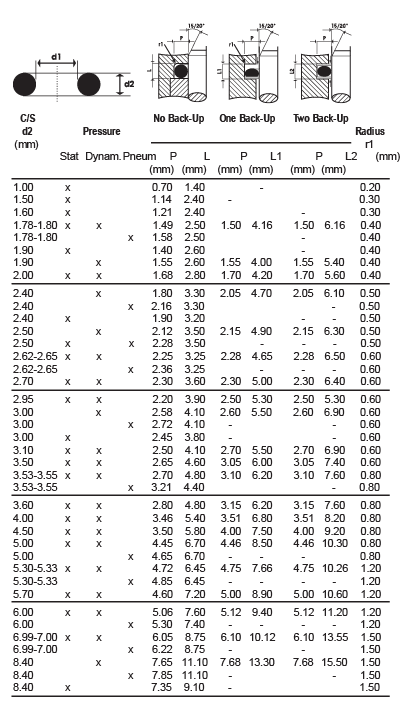

Welcome to HOVOO, a Chinese seal factory. Production of PU, Rubber and PTFE seals. The seals include O-ring, piston seal, rod seal, Gray ring and gas seal.


 EN
EN
 AR
AR CS
CS DA
DA NL
NL FI
FI FR
FR DE
DE EL
EL IT
IT JA
JA KO
KO NO
NO PL
PL PT
PT RO
RO RU
RU ES
ES SV
SV TL
TL IW
IW ID
ID LV
LV SR
SR SK
SK VI
VI HU
HU MT
MT TH
TH TR
TR FA
FA MS
MS GA
GA CY
CY IS
IS KA
KA UR
UR LA
LA TA
TA MY
MY
