33-99No. Mufu E Rd. Gulou District, Nanjing, China [email protected] | [email protected]
33-99No. Mufu E Rd. Gulou District, Nanjing, China [email protected] | [email protected]

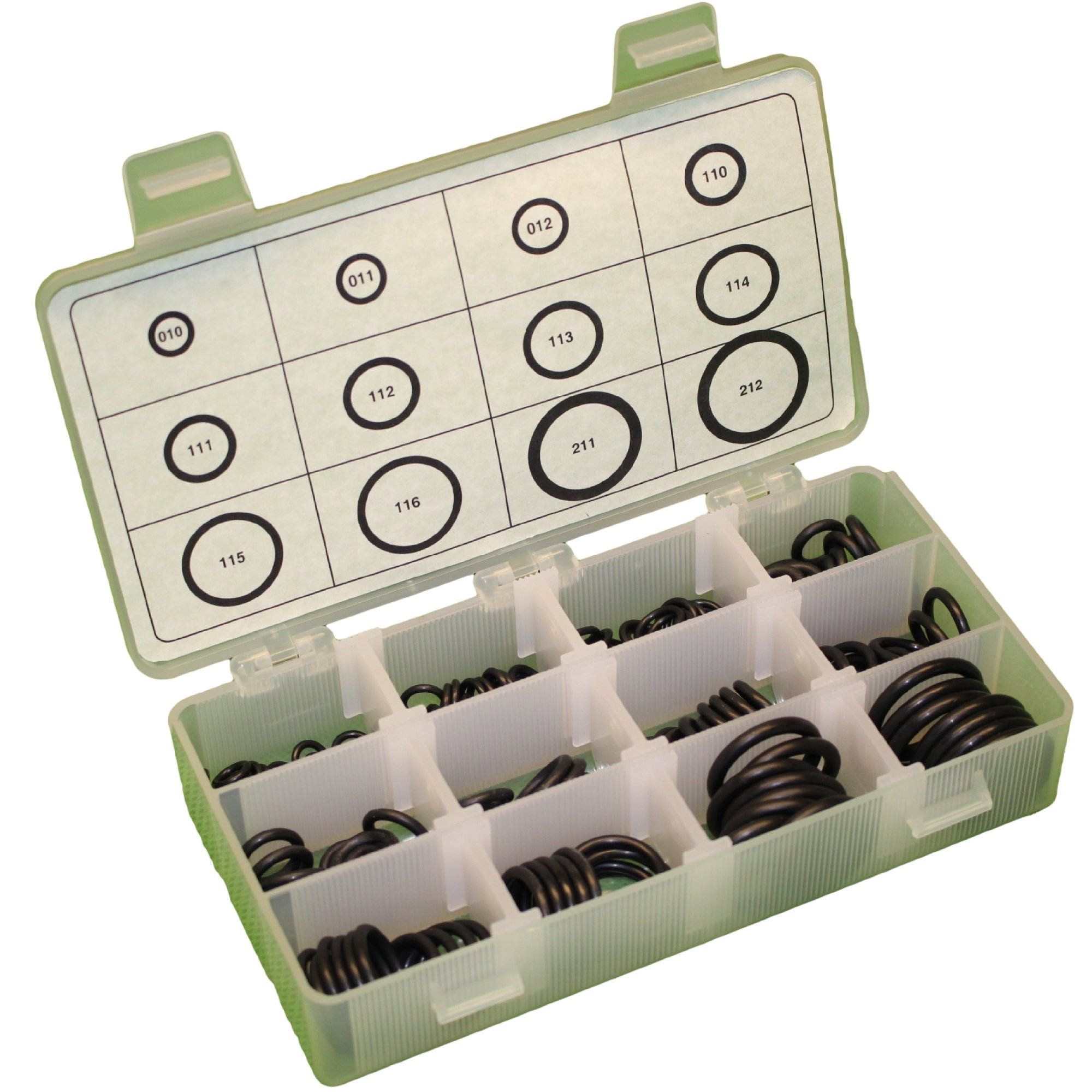
EPDM O-rings suit water, hot water, low-pressure steam, ethylene/propylene-glycol coolant, brake fluid/ethylene-glycol-type brake fluid, and outdoor ozone-aging environments; they generally do not suit mineral oil, lubricants, hydraulic oil, gasoline, diesel and other petroleum-based oils and fuels.
EPDM, i.e. ethylene-propylene-diene rubber, is an elastomer formed from ethylene, propylene and a small amount of a third monomer. Material references generally attribute EPDM's typical advantages to: ozone resistance, weathering resistance, cold resistance, and heat resistance; and note peroxide-cured EPDM generally has better heat resistance and compression set performance than sulfur-cured EPDM.
EPDM's material-selection logic can be summarized in one engineering phrase: water can't get in, oil comes straight out.
Water is a strongly polar medium, while EPDM's main chain is a non-polar hydrocarbon rubber network — hydrophobic, and water, hot water, and ethylene-glycol coolant liquids have low compatibility with EPDM's network, so EPDM's volume change in water systems is small and its sealing performance stays stable. Material manuals also list EPDM among materials usable for hot water, steam, ethylene-glycol-type brake fluid, polar solvents, ozone, and weathering environments.
Mineral oil, lubricating oil, and fuel are the opposite. They are mainly non-polar or weakly polar hydrocarbon media, similar in solubility parameter to EPDM's main chain, and easily expand into the rubber interior, causing swelling, softening, tensile-strength decline, and compression-set increase. In an O-ring seal, this directly manifests as leakage, extrusion, or failure. Therefore EPDM is not "corroded" in a simple sense — it is dissolved and swollen by oil-based media. O-ring material manuals also clearly list EPDM's incompatible media as oils, fats and petroleum products, including oils, grease, and mineral oils.
Condition |
Suitability |
Notes |
Cold water, room-temperature drinking water, process water |
Very suitable |
Water treatment, valves, water pumps, water meters, filters, purified-water equipment; drinking water must follow NSF, WRAS, KTW, ACS and other applicable certification numbers — not all EPDM auto-qualifies for drinking-water use; NSF's database also confirms only recognized products qualify. |
Hot water |
Very suitable |
EPDM is a common material for thermal water systems, suits warm-water pipes, boiler makeup, domestic hot water, circulation, radiator, connectors. |
Steam |
Suitable with conditions |
Suits low- or medium-intensity steam, short-term steam cleaning; long high-temperature/high-pressure steam should switch to peroxide-cured EPDM, and verify pressure, temperature, and compression-set lifespan. |
Ozone, outdoor, sunlight, weathering, air aging |
Very suitable |
EPDM's main chain and side chain are more resistant to ozone and weathering than NBR, suits outdoor valves, HVAC equipment, life water, roof piping, cooling tower connectors. |
Ethylene-glycol/propylene-glycol-type brake fluid |
Very suitable |
Suited to DOT 3, DOT 4, DOT 5.1 and other ethylene-glycol type brake fluids; materials list EPDM as best suited to ethylene-glycol type brake fluid, with the highest temperature depending on the specific grade. |
Automotive coolant |
Very suitable |
Suits water + ethylene/propylene-glycol coolant systems, used for heat exchange interface, thermostat, coolant pump, radiator connector, expansion tank cap. |
Food and beverage, water-based media |
Suitable, but selection needs verification |
EPDM is commonly used in food and drink-water-contact scenarios; food data also notes over-sulfur-cured EPDM typically better than sulfur-cured for oxidation resistance and compression set. |
Mineral oil, lubricant, engine oil, gearbox oil |
Not suitable |
This is EPDM's typical weakness — mineral oil dissolves, softens, and swells EPDM, causing seal failure, so preferentially consider NBR, HNBR, or FKM. |
Gasoline, diesel, kerosene, aviation fuel |
Not suitable |
Fuel oil rapidly swells EPDM, particularly severe risk; should select FKM, HNBR or a special material. |
Aromatic and chlorinated solvents |
Not suitable |
Benzene, toluene, dichloromethane, trichloroethylene etc. |
High-concentration strong oxidizers |
Needs individual verification |
High-concentration chlorine water, sodium hypochlorite, chlorine dioxide, peroxides or ozone disinfectants. |
For water-treatment, pump/valve, fittings, meter, and filtration-equipment customers, the value of EPDM O-rings lies in:
First, good water resistance. In cold water, hot water, softened water, brine, low-concentration alkaline cleaning solutions and other water-based media, EPDM is generally more stable than NBR. NBR's strength is oil resistance, but it is often not the first choice in hot water, steam, and ozone-aging environments.
Second, better resistance to hot water and steam than most general oil-resistant rubbers. Water treatment and heating systems often experience thermal cycling, flushing, sterilization, and intermittent steam-cleaning conditions. For long-term hot water or steam, peroxide-cured EPDM should be preferentially selected, because its heat resistance and compression set are more suited to long-term sealing.
Third, suited to outdoor and ozone-air environments. Water plant, pump station, cooling tower, rooftop pipe connections, and outdoor valve trim are frequently exposed to sunlight, rain, ozone, and temperature-cycling environments. EPDM's weathering, ozone, and heat-cycle resistance can lower failure risk.
Note: "ozone resistant" mainly refers to atmospheric ozone aging resistance, and does not equal all EPDM being able to withstand long-term immersion in high-concentration ozone or strong oxidizing disinfectants; if the media contains high-concentration sodium hypochlorite, chlorine dioxide, peroxides or ozone water, individual compatibility verification is needed.
In HVAC systems, EPDM O-rings suit the following positions: pipe joints, flange seals, circulating pump/valve stem static seals, filter housings, cooling water unit connectors, fan-coil pipe connections, geothermal manifolds, heat-pump hot water systems.
Common media in HVAC systems include chilled water, hot water, ethylene-glycol/propylene-glycol antifreeze, and condensate. EPDM performs generally well against this class of water-based media. Its advantage is not "can withstand all chemicals" but is a very good match against the water, hot water, steam, ozone, and polar-media class of environment.
Two problems need extra attention when selecting for HVAC: first, whether the system might be contaminated with mineral oil, compressor oil, lubricant, or oily anti-corrosion agents, since once so, EPDM risk rises sharply. Second, whether temperature and pressure cycling is frequent — a high-temperature circulating water system's large compression-set problem should preferentially select a low-compression-set EPDM formula, not just look at the label "EPDM."
In the automotive industry, EPDM's boundary is very clear.
Belongs to EPDM's advantage zone, where the coolant system media is generally water and ethylene/propylene-glycol antifreeze. EPDM O-rings can be used for heat exchanger interfaces, water pump seals, thermostat housing, coolant pipe quick connects, expansion tank, EGR coolant pipe, etc. What is emphasized here is the coolant, not engine oil.
EPDM suits DOT 3, DOT 4, DOT 5.1 and other ethylene-glycol or polyglycol-type brake fluid. Brake fluid material shows DOT 3/DOT 4 brake fluid is mostly glycol ether or polyglycol systems, while DOT 5 is a silicone-oil system, and DOT 5.1 also belongs to the glycol system; the actual material selection must still follow the vehicle manufacturer's brake-system specification.
EPDM is generally not applicable to engine oil, gearbox oil, ATF, mineral hydraulic oil, gasoline, diesel, fuel vapor and similar conditions. In this class of media, EPDM easily dissolves, causing dimensional-fit failure and reduced sealing pressure. Preferentially consider NBR, HNBR, FKM or other oil-resistant materials for these conditions.
When food and beverage industries use EPDM, two things must be distinguished: material compatibility and regulatory certification.
From material compatibility, EPDM suits drinking water, beverages, steam cleaning, hot water flushing, some alkaline cleaning agents, and water-based food media; food-sealing material references also list EPDM as commonly used for food and drinking-water-contact material, emphasizing the need to consider media, temperature, and cleaning process.
From regulatory certification, general industrial EPDM does not equal food-grade EPDM. Food equipment should select the compound with corresponding certifications such as FDA 21 CFR 177.2600, EC 1935/2004, 3-A, NSF 51/61, and confirm color, extractables, traceability and cleaning process.
Also note: EPDM is not an oily food material. Garlock's FDA EPDM gasket material clearly notes it is not recommended for use with fat-class foods or butter, and marks its property as elastic sealability. Therefore, if food oil, milk fat, dairy products, or high-fat foods are contacted, don't just conclude "food-grade EPDM" — one must confirm the specific food category and certification scope; NBR, FKM, silicone, or PTFE may need to be selected instead.
The following scenarios are not recommended to use EPDM O-rings:
Mineral oil not suitable: engine oil, lubricant, gear oil, mineral hydraulic oil, compressor oil.
Fuel not suitable: gasoline, diesel, kerosene, aviation fuel, fuel vapor.
Oil/fat foods need caution: edible oils, dairy fats, dairy products, high-fat foods, unless the specific EPDM formulation has passed corresponding extraction and regulatory testing.
Aromatic and chlorinated hydrocarbons not suitable: benzene, toluene, xylene, trichloroethylene, etc.
High-concentration strong oxidizer needs verification: high-concentration chlorine water, sodium hypochlorite, chlorine dioxide, peroxides or ozone disinfectants.
Oil-water mixed systems need caution: for example if circulating water gets long-term mixed with lubricant, hydraulic oil, or anti-rust agent, EPDM may fail due to oil contamination.
Water, hot water, steam, coolant, brake fluid: preferentially consider EPDM.
Long-term hot water or steam: preferentially select peroxide-cured EPDM.
Drinking water and food industries: certification must be checked, not just the material name.
If there's oil, don't default to EPDM. As long as the condition contains mineral oil, fuel, lubricant, hydraulic oil, immediately switch to considering NBR, HNBR, FKM or other oil-resistant materials. EPDM's typical failure is not a sudden rupture, but gradual swelling, softening, compression set increasing, and eventually water leakage or seepage.
Final confirmation: check the complete operating condition. Media name, concentration, temperature, pressure, dynamic/static seal, cleaning agent, disinfectant, oil contamination, groove dimension and compression rate all affect the result. Chemical compatibility charts are generally based on ideal test conditions; actual application temperature, pressure, formulation, and groove design will noticeably change performance.

Welcome to HOVOO, a Chinese seal factory. Production of PU, Rubber and PTFE seals. The seals include O-ring, piston seal, rod seal, Gray ring and gas seal.


 EN
EN
 AR
AR CS
CS DA
DA NL
NL FI
FI FR
FR DE
DE EL
EL IT
IT JA
JA KO
KO NO
NO PL
PL PT
PT RO
RO RU
RU ES
ES SV
SV TL
TL IW
IW ID
ID LV
LV SR
SR SK
SK VI
VI HU
HU MT
MT TH
TH TR
TR FA
FA MS
MS GA
GA CY
CY IS
IS KA
KA UR
UR LA
LA TA
TA MY
MY
